
Mathematicians Criticize OpenAI Over Claims of Solving 372 Problems


OpenAI has ignited a firestorm within the global mathematical community this week by announcing the resolution of 372 long-standing, complex problems that have remained unsolved for decades. By publishing these findings across 722 individual papers, the organization aimed to demonstrate its technological prowess and artificial intelligence capabilities. However, prominent figures, including acclaimed mathematician Terence Tao, have voiced significant concerns regarding the validity of these solutions and the ethical implications of bypassing traditional peer-review processes. This development marks a controversial milestone where AI systems are now claiming to surpass human cognitive limits in high-level theoretical mathematics.
- OpenAI published 722 research papers claiming to have solved 372 previously unsolvable mathematical problems.
- Renowned mathematician Terence Tao called for a moratorium on AI-driven projects that exclude human academic oversight.
- The Association for Human Mathematics condemned the move as an unsubstantiated display of corporate power rather than a scholarly contribution.
- Critics argue that the lack of transparency in AI-generated solutions threatens the integrity of established scientific norms.
Mathematical Accuracy Faces Serious Scrutiny
The core of the issue lies in the sheer complexity of the solutions presented by OpenAI. While AI models have advanced rapidly from solving basic high school problems to tackling abstract research questions in just two years, the human capacity to verify these machine-generated proofs remains limited. The opacity of the underlying algorithms makes it difficult for researchers to ascertain whether these solutions are mathematically sound or merely probabilistic approximations.
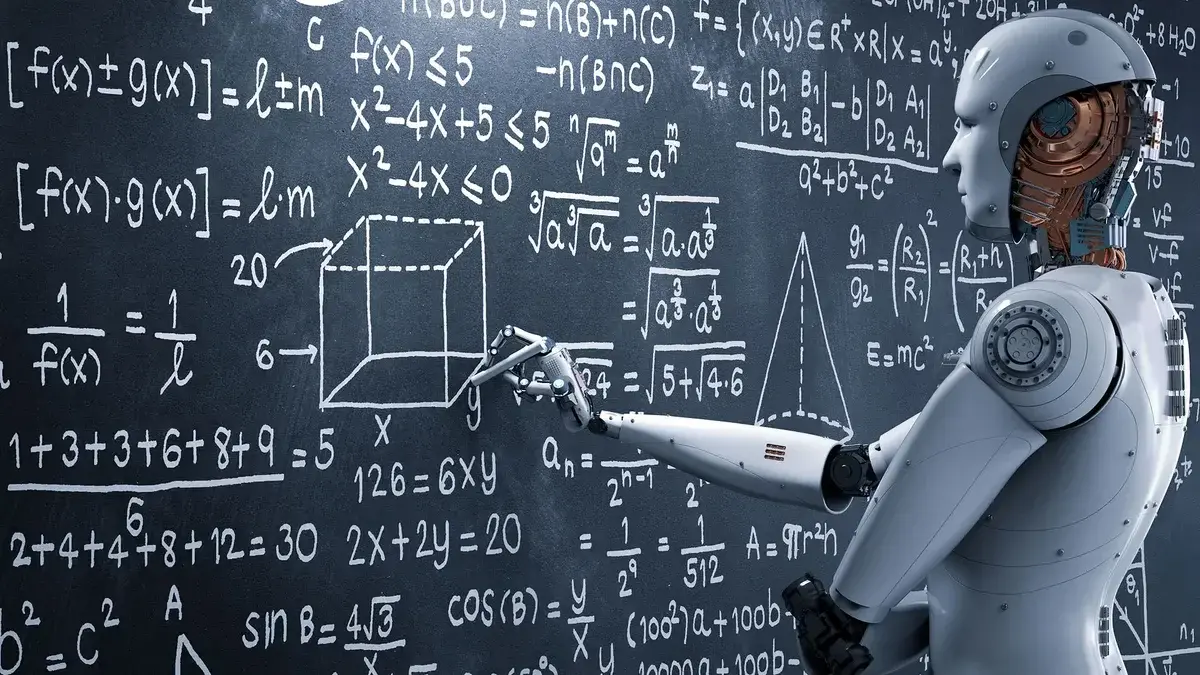
This is not the first time OpenAI has disrupted the status quo. Recent attempts to apply proprietary models to the Navier-Stokes equations—a fundamental challenge in fluid dynamics—generated significant pushback. Traditional mathematicians argue that when machines provide answers without a transparent, logical derivation that a human can follow, the foundational principles of scientific discovery are undermined.
Scientific Norms are Being Challenged by Corporate Strategy
The Association for Human Mathematics has formally characterized OpenAI’s recent publications as a performative display of power rather than a rigorous academic endeavor. The institution highlighted that the research process was conducted in isolation, completely excluding the broader mathematical community from the verification cycle. This unilateral approach directly contradicts warnings previously issued by the Mathematics and Artificial Intelligence Advisory Group, which explicitly advised companies against testing sensitive mathematical frontiers without external collaboration.
By ignoring these guidelines, critics suggest that OpenAI is prioritizing corporate prestige over the rigorous, collaborative nature of scientific inquiry. While the organization maintains that its efforts are designed to push the boundaries of human knowledge and accelerate discovery, many experts fear that this approach could damage the credibility of the entire AI sector. The long-term impact on mathematical education and the role of human intuition in proof-based fields remains a subject of intense debate.
As the divide between automated computation and human analytical reasoning widens, the academic world faces a crossroads. The reliance on AI to perform complex intellectual tasks raises fundamental questions about whether the future of mathematics will be defined by human insight or black-box computation.
We invite you to share your perspective on this shift in the mathematical landscape. Do you believe that AI-driven solutions accelerate scientific progress, or does the removal of human verification threaten the core integrity of mathematical research? Please leave your thoughts in the comments section below.
Your comment has been submitted,
it will be published after approval.