
New Steam Machine Emerges in Geekbench with SteamOS Benchmarks

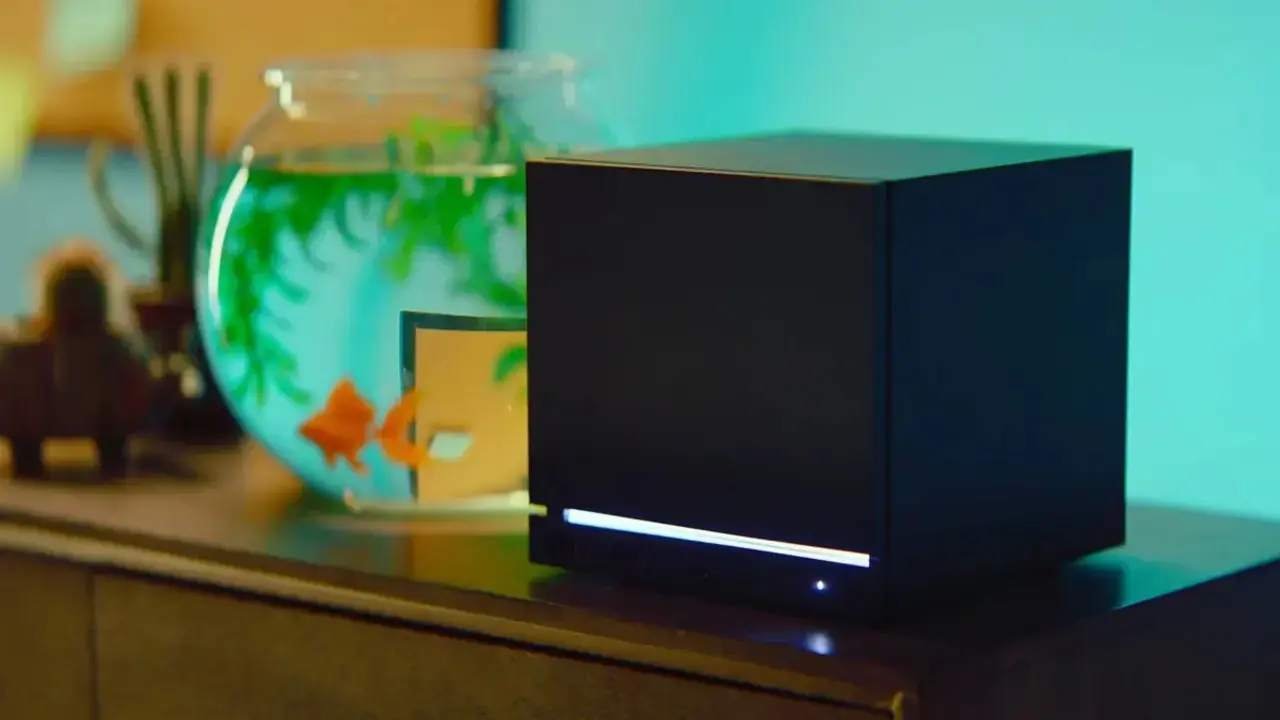
Valve’s upcoming console, codenamed Fremont, has resurfaced in the Geekbench database after a ten-month hiatus, signaling that the device is nearing its final production stage. Unlike previous sightings that relied on Windows-based testing, these latest benchmarks were conducted directly on SteamOS, the console’s native operating system. Recorded on June 15, 2026, the data suggests that the hardware is now being distributed to external reviewers for final assessment. This transition to the official operating system environment confirms that Valve has moved past the early prototyping phase and is preparing the Steam Machine for its market debut.
- The new Steam Machine console now runs benchmarks using the native SteamOS platform instead of Windows.
- The device features a custom AMD processor built on the high-performance Zen 4 architecture.
- Benchmark results indicate the new hardware provides nearly double the processing power of the current Steam Deck.
SteamOS Integration Validates Development Progress
The appearance of these results on the Geekbench platform provides concrete evidence of the console’s evolution. When the first Fremont prototypes appeared in the public eye last August, the hardware was constrained by a Windows software stack. Seeing the system successfully complete rigorous testing cycles on SteamOS indicates that Valve has finalized its core software optimization for the device.
The shift to native SteamOS testing confirms that the hardware is ready for final consumer release.
Recent updates to the SteamOS 3.8.9 Beta, which include specific support for next-generation hardware, align perfectly with these leaked benchmarks. Industry experts suggest that the current test units have already reached select media partners, and one of these units was likely synced to the public database inadvertently by a tester. This development marks the most significant milestone for the project since its initial announcement.
AMD Custom Silicon Powers the Device
At the heart of the new Steam Machine lies the “AMD Custom CPU 1772,” a specialized chip leveraging AMD’s potent Zen 4 architecture. The processor utilizes a six-core, twelve-thread configuration paired with 16 MB of L3 cache to handle demanding workloads. While the base clock speed sits at 3.2 GHz, the chip is capable of boosting up to 4.86 GHz during intense gaming sessions.
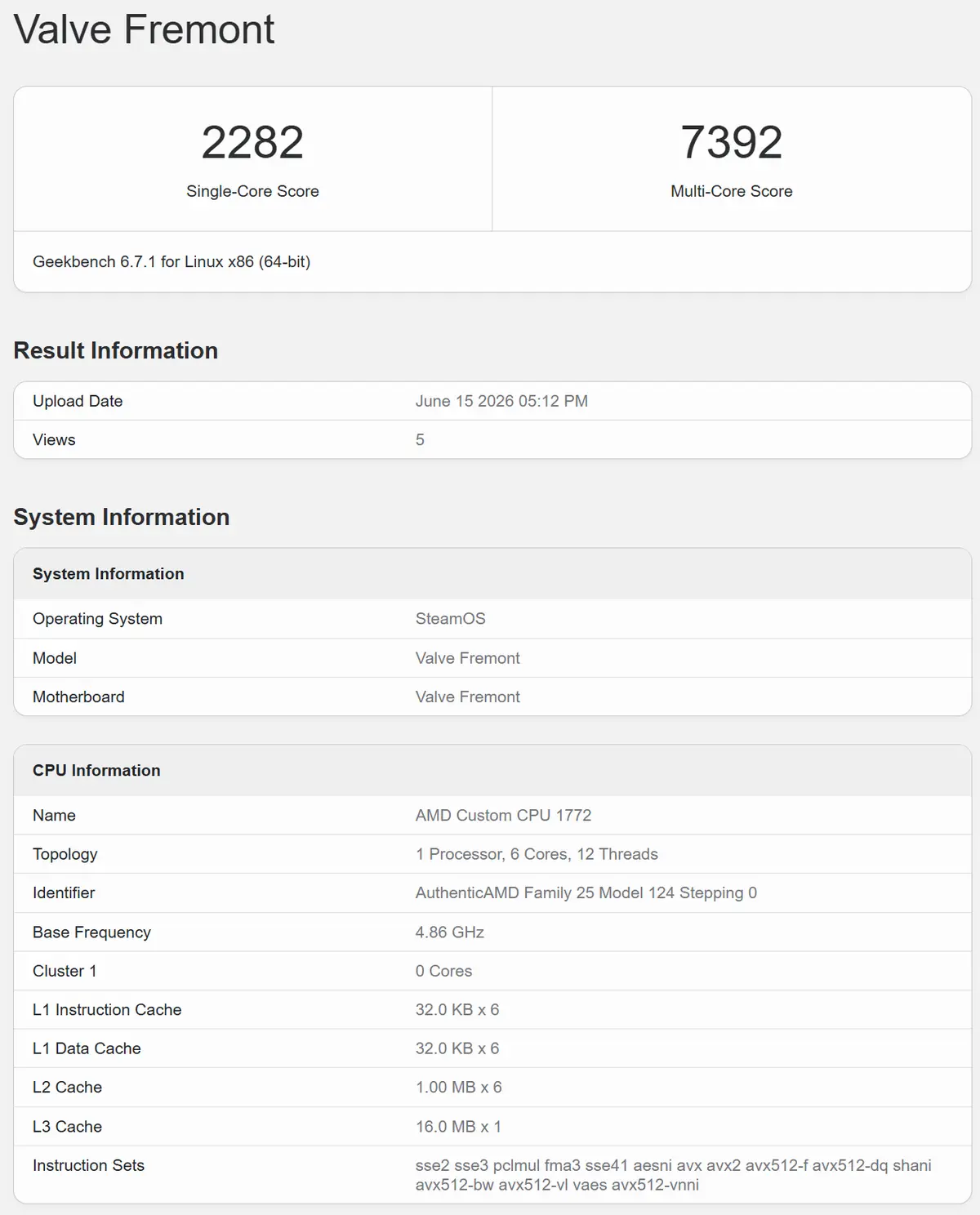
In terms of raw performance, the device achieved a single-core score of 2,334 and a multi-core score of 7,392. These figures demonstrate impressive efficiency for a chip operating with a 30W TDP, placing it in direct competition with the most advanced mobile gaming processors currently on the market.
Performance Capabilities Surpass Current Handhelds
The new Zen 4 architecture delivers twice the processing power of the Steam Deck OLED.
A comparative analysis of these scores reveals that the Fremont console outperforms several current-generation home consoles in single-core performance. This massive leap in computing power ensures that users can enjoy modern AAA titles on large-screen televisions without compromise. Furthermore, the robust CPU performance provides the necessary overhead for complex tasks, such as high-fidelity emulation and heavy multitasking, which have previously been limitations for smaller portable devices.
What are your expectations for Valve’s latest hardware, and do you believe this new console will effectively challenge existing living room gaming setups? Share your thoughts and predictions in the comments section below.
Your comment has been submitted,
it will be published after approval.