
Open Source NVIDIA NVK Driver Adds DLSS Support

The open-source community has reached a significant milestone in Linux gaming as the NVK Vulkan driver for NVIDIA graphics cards officially introduces support for DLSS. Announced alongside the Mesa 26.2 update, this development allows Linux users to leverage NVIDIA’s proprietary AI-driven image upscaling technology through an open-source framework. Driven by the collaborative efforts of Valve and various independent contributors, this integration marks a major shift for the NVK project. By bridging the gap between open-source infrastructure and closed-source performance features, developers are ensuring that Linux users can finally enjoy high-end upscaling capabilities without relying on official, proprietary driver suites.
- The Mesa 26.2 update officially incorporates DLSS functionality into the open-source NVK Vulkan driver.
- This integration enables users to utilize NVIDIA’s proprietary upscaling libraries within an open-source software environment.
- The NVK project continues to pursue the development of a fully open-source Vulkan alternative for NVIDIA hardware.
- This advancement effectively reduces the performance disparity between proprietary drivers and open-source alternatives on Linux platforms.
Linux gamers can now access advanced AI upscaling features without requiring closed-source driver dependencies.
NVK Driver Supports Modern Graphics Technologies
As a community-driven initiative within the Mesa graphics stack, the NVK driver aims to provide a robust Vulkan implementation for NVIDIA GPUs. The project seeks to eliminate the need for proprietary binaries while maintaining performance parity with modern industry standards. Over the past year, the NVK development team has accelerated the integration of complex features, bringing the driver closer to full maturity.
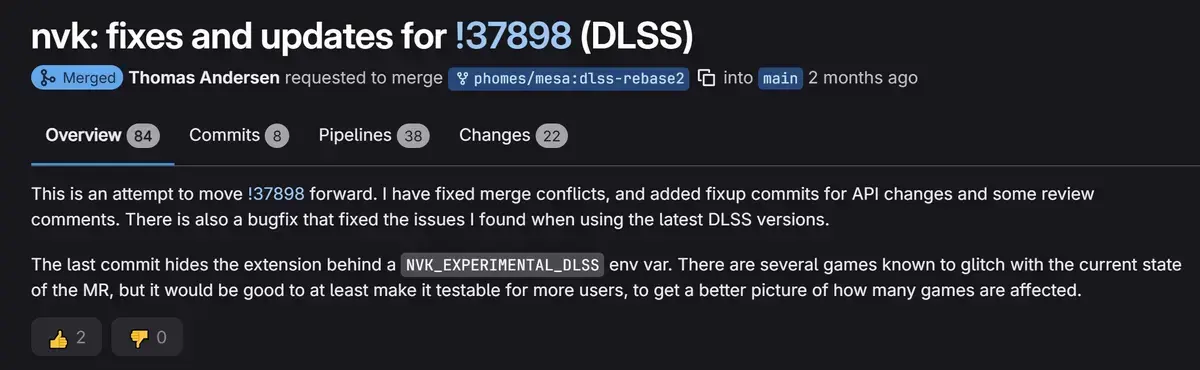
While the implementation of DLSS still necessitates the use of NVIDIA’s proprietary binary libraries, the underlying architecture represents a major architectural achievement. By enabling the usage of Tensor cores on GeForce RTX cards, the driver allows users to render games at lower internal resolutions before upscaling them to higher display targets. This process significantly improves frame rates while maintaining high visual fidelity, mirroring the experience found on Windows-based systems.
Mesa 26.2 Update Marks a New Era
Currently available within the Mesa 26.2 development branch, this feature is expected to reach full stability in the coming months. Developers are working diligently to ensure that the implementation is seamless for end-users, viewing this release as a critical step toward feature-parity for Linux gaming. As the open-source ecosystem continues to evolve, the ability to bypass software limitations imposed by hardware manufacturers remains a primary goal for the community.
Open-source developers are successfully dismantling traditional software barriers set by hardware manufacturers.
The integration of proprietary technologies into open-source drivers represents a complex but necessary evolution for the Linux desktop experience. As we look toward the future of GPU software, it remains to be seen how these developments will influence the broader gaming industry and the adoption of Linux as a primary gaming platform.
We would love to hear your thoughts on this breakthrough for Linux gaming. Do you believe the integration of proprietary features into open-source drivers is the right path forward? Share your experiences and predictions in the comments section below.
Your comment has been submitted,
it will be published after approval.