
OpenAI Launches ChatGPT Health Assistant Across the United States

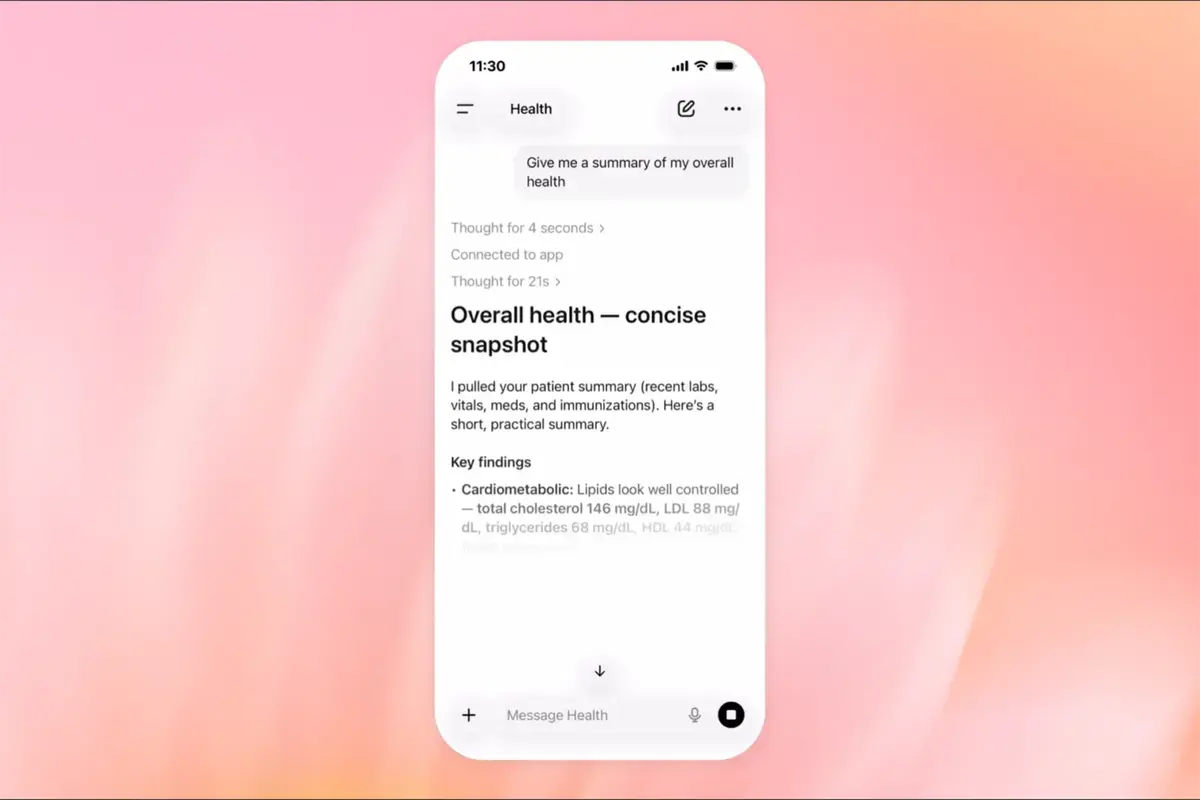
OpenAI has officially launched its controversial ChatGPT Health assistant feature to all users across the United States. Designed for individuals aged 18 and older, the new tool allows users to integrate their medical records and Apple Health data directly into the platform to receive personalized insights regarding nutrition, exercise routines, and clinical test results. Following an extensive testing phase with a select user group, the company has integrated this functionality directly into the main chat interface to provide context-aware responses. This development marks a significant expansion of the chatbot’s capabilities as it transitions from a general assistant into a specialized health-monitoring tool for millions of Americans.
- The ChatGPT Health feature utilizes the GPT-5.6 Sol model to process personal medical data for personalized lifestyle and health recommendations.
- OpenAI enables users to synchronize their health records and Apple Health data to improve the accuracy of chatbot responses.
- The company faces multiple high-profile lawsuits alleging that inaccurate medical guidance from the AI has led to severe health consequences or fatalities.
The New Platform Operates on Advanced Technical Infrastructure
OpenAI confirmed that the ChatGPT Health feature now runs on its flagship GPT-5.6 Sol model for paid subscribers. The organization claims this model represents its most sophisticated iteration regarding medical information processing to date. However, the release has drawn scrutiny due to prior allegations linking the GPT-5.6 Sol model to cyber-attacks against platforms like HuggingFace. Despite these security concerns, the system remains capable of analyzing dietary restrictions and physical injuries to provide tailored suggestions for daily activities or dining choices.
Users maintain the ability to refine chatbot responses through follow-up questions or by manually correcting incomplete information.
Legal Challenges and Safety Concerns Persist
The nationwide rollout arrives amidst a wave of mounting legal pressure against the developer. In May, the family of a 19-year-old named Sam Nelson initiated a lawsuit against OpenAI, alleging that the chatbot provided negligent advice that contributed to his death. The legal filing asserts that the AI recommended combining Kratom with Xanax, directly leading to a fatal incident. Furthermore, a clergyman in Florida has filed a separate lawsuit claiming that the AI’s delayed advice prevented him from seeking urgent care for a pulmonary embolism, instead offering religious platitudes that hindered his medical response.
OpenAI acknowledges that the system is susceptible to errors and officially advises all users to verify critical information with licensed medical professionals.
While OpenAI notes that over 300 million people interact with ChatGPT for health-related inquiries weekly, the company maintains that these tools are not substitutes for clinical diagnosis. The ongoing litigation highlights the inherent risks of deploying generative AI in sensitive medical domains where accuracy is life-critical. As the technology becomes more deeply embedded in daily health management, regulatory bodies are likely to increase their oversight of how these large language models handle life-altering medical data.
Given the potential risks and benefits of automated medical guidance, we invite you to share your perspective on whether you believe AI-powered health assistants are truly safe for personal medical decision-making in the comments section below.
Your comment has been submitted,
it will be published after approval.