
Poseidon Aerospace Unveils Giant 1,814kg Autonomous Cargo Drone

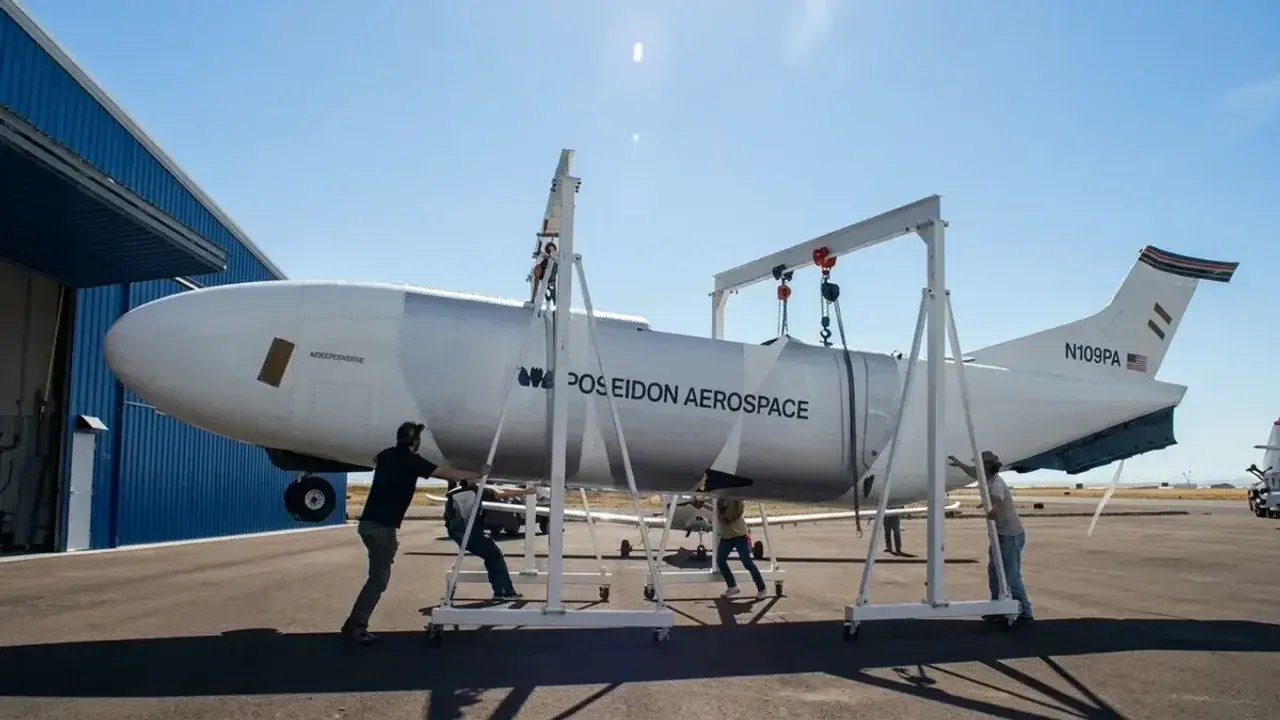
Poseidon Aerospace has officially introduced the Egret, a massive autonomous cargo drone designed to revolutionize the logistics industry. Developed by former Amazon and Lockheed Martin engineers David Zagaynov and Parker Tenney in San Francisco, this unmanned aerial vehicle features a 15.24-meter wingspan and a significant payload capacity of 1,814 kilograms. By eliminating the cockpit, the company has successfully optimized the aircraft’s structural efficiency, focusing entirely on freight transportation. The project aims to make high-volume air cargo delivery significantly more affordable and accessible by utilizing advanced autonomous technology to replace traditional manned aircraft in specific logistics roles.
- The Poseidon Aerospace Egret drone features a 15.24-meter wingspan and carries up to 1,814 kilograms of cargo.
- The removal of the cockpit increases internal volume and reduces structural weight by eliminating life-support systems.
- The company secured 60 million dollars in funding led by TQ Ventures to advance its autonomous aviation technology.
- The project utilizes a ground control station where operators manage flight paths through live camera feeds.
Autonomous Trucks Are Transforming the Sky
The vision behind the Egret project is to create what developers describe as autonomous trucks of the sky. By removing the pilot, the aircraft avoids the weight, space, and safety complexities associated with human-crewed flight. This design evolution is the culmination of lessons learned from previous iterations, including the V0 prototype and the Seagull, a carbon-fiber seaplane drone that has already undergone demonstrations with the US Navy and Special Operations Command.
These early prototypes provided the engineering team with critical insights into flight dynamics and operational efficiency. By scaling these concepts to the Egret, the team aims to establish a new standard for cost-effective, long-range heavy lifting that bypasses the limitations of traditional logistics networks. The transition from smaller test models to this heavy-lift platform represents a significant leap forward for the company.
Ground Control Systems Ensure Operational Safety
Although the Egret is designed for autonomous operation, it remains under the supervision of human operators. The aircraft is managed via a remote ground control station, which allows pilots to monitor flight surfaces and live video feeds in real-time. This configuration ensures that critical decision-making remains in human hands while maintaining the efficiency benefits of an unmanned structure.
The upcoming test flights in Oregon are expected to be a milestone for the company, as they will potentially cement the Egret’s status as the largest cargo drone operating within the United States. While technical specifications regarding cruise speed, fuel efficiency, and exact flight range remain undisclosed, the industry is closely watching these upcoming trials to determine the drone’s true impact on the logistics sector. The successful validation of communication protocols between the ground station and the aircraft will be the next major hurdle for the engineering team.
Financial Backing Supports Future Aviation Development
The development of this ambitious technology is bolstered by 60 million dollars in funding led by TQ Ventures. This capital infusion will allow Poseidon Aerospace to expand its hangar facilities and accelerate its testing schedule. As the logistics industry seeks more sustainable and cost-efficient transportation methods, the success of the Egret could redefine how heavy freight is moved across the country.
As autonomous technology continues to reshape the aviation industry, we invite you to share your thoughts: Do you believe autonomous cargo drones will eventually dominate the logistics sector, or will they remain a niche solution for specific transport needs?
Your comment has been submitted,
it will be published after approval.