
ROKETSAN’s ÇAKIR Cruise Missile Successfully Strikes Targets From Land

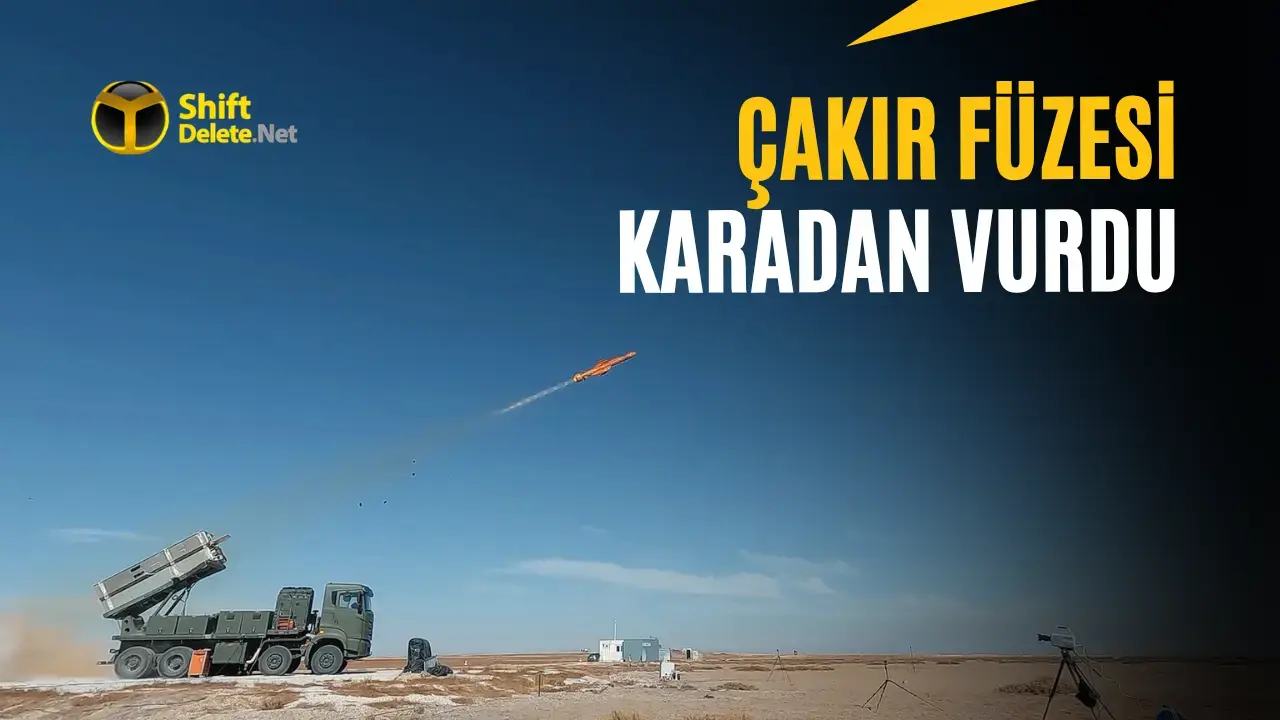
Turkish defense giant ROKETSAN has successfully conducted a new series of rigorous tests for its state-of-the-art ÇAKIR cruise missile, marking a significant milestone in the weapon system’s development. During two separate firing exercises, the missile was launched from a land-based platform and successfully engaged both land and maritime targets with pinpoint accuracy. These recent trials not only confirmed the system’s operational flexibility but also validated its enhanced range capabilities powered by an upgraded propulsion system. By demonstrating its capacity to be launched from ground vehicles, the ÇAKIR cruise missile expands its utility, proving its readiness to serve across diverse multi-domain combat scenarios.
- The ÇAKIR cruise missile successfully engaged both land and naval targets during ground-based launch tests.
- A newly integrated propulsion system effectively increased the operational range of the missile.
- The missile utilizes the domestically produced KTJ-1750 turbojet engine developed by Kale Arge.
- The system features advanced IIR seeker technology that enables precise engagement against various target profiles.
The System Demonstrates Versatility Across Platforms
Originally engineered for deployment from air and naval assets, the expansion of the ÇAKIR platform to include ground-based launches represents a major tactical shift. According to technical specifications provided by ROKETSAN, the missile is designed for seamless integration with fixed-wing and rotary-wing aircraft, unmanned aerial vehicles (UAVs), unmanned surface vessels (USVs), and tactical land vehicles. This architectural modularity ensures that the same missile family can be utilized by different branches of the armed forces, providing commanders with unprecedented flexibility in mission planning.
Advanced Technology Enhances Strike Capability
The recent tests highlighted the missile’s capability to operate effectively against varied target sets, ranging from strategic coastal installations to mobile naval assets. Central to this performance is the New Generation IIR (Imaging Infrared) seeker, which provides high-resolution guidance even in challenging environments. Furthermore, the missile supports in-flight target updates and mission abort commands via a secure data link, ensuring that the weapon can adapt to dynamic battlefield conditions. With a range exceeding 150 kilometers, the ÇAKIR provides a robust standoff capability that minimizes risk to the launching platform.
Domestic Engineering Drives Performance
Powering this sophisticated missile is the KTJ-1750 turbojet engine, an indigenous solution developed by Kale Arge. This engine allows the missile to execute complex flight paths by navigating through pre-programmed three-dimensional waypoints. The combination of low observability, high-precision guidance, and advanced mission planning software makes the ÇAKIR a formidable asset in modern warfare. By validating these capabilities in the field, ROKETSAN has solidified the missile’s role as a key component of Turkey’s evolving cruise missile inventory, ready to address threats from underground bunkers to open-sea maritime vessels.
How do you think the integration of land-based cruise missile platforms will change regional defense strategies? Share your thoughts on the impact of this new technology in the comments section below.
Your comment has been submitted,
it will be published after approval.