
SanDisk Targets 512TB SSD Capacity by 2027

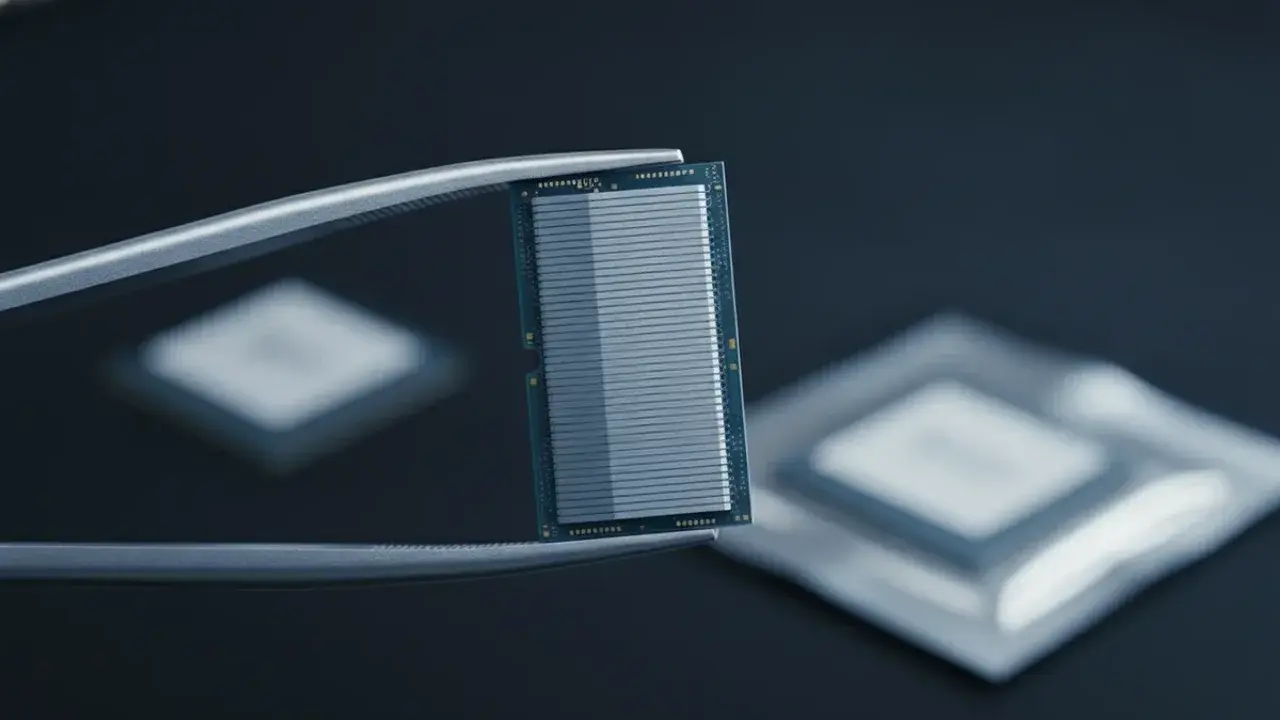
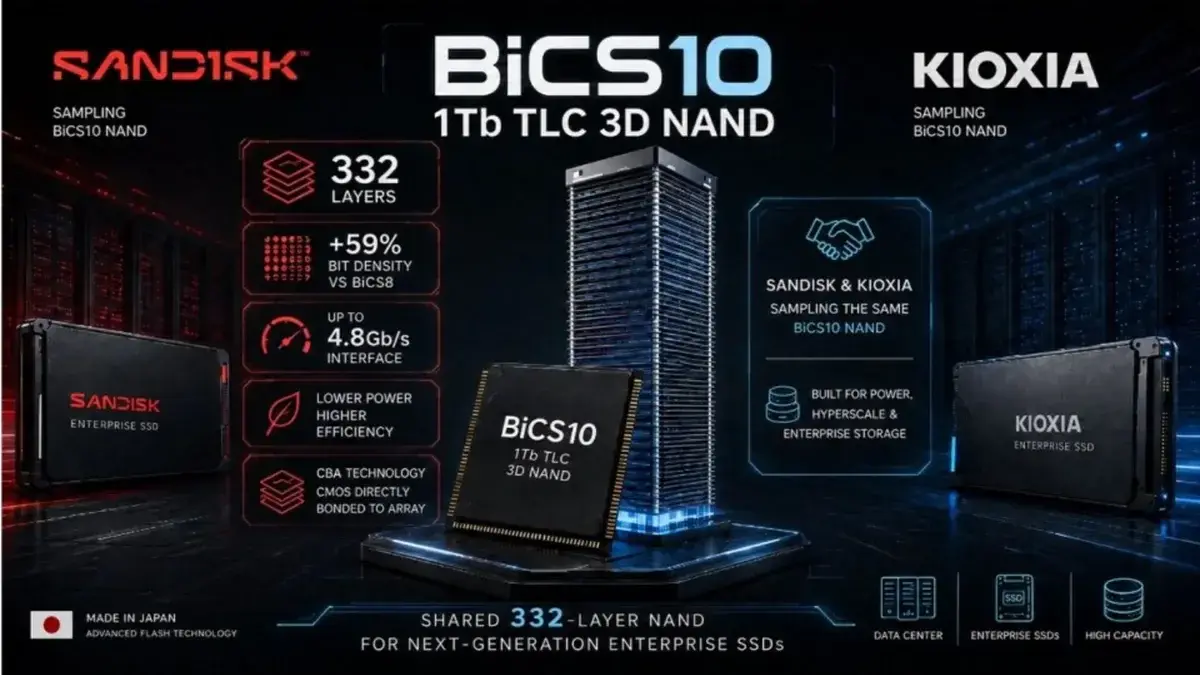
SanDisk, in partnership with Kioxia, has officially commenced the sampling process for its 10th-generation 3D NAND flash memory, known as BiCS10. This cutting-edge 1Tb TLC chip integrates 332 layers, achieving an impressive area density of over 29Gb per square millimeter. This technological advancement represents a 59 percent increase compared to the current BiCS8 generation in mass production. By leveraging these improvements in stacking and circuit architecture, SanDisk aims to bring 256TB SSD models to the market by 2026, followed by massive 512TB capacity drives in 2027 to address the growing demands of enterprise data centers.
- The BiCS10 architecture utilizes 332 layers to increase memory density by 59 percent over previous generations.
- SanDisk plans to launch 256TB SSDs in 2026 and 512TB models in 2027.
- The new Toggle DDR6.0 interface delivers a 33 percent performance boost with data transfer speeds reaching 4.8Gb/s.
- Enterprise-grade 512TB drives are projected to cost over $300,000 based on current market trends.
New Architecture Improves Efficiency and Performance
The BiCS10 architecture is built upon a CMOS direct bonding structure, which allows for significantly higher integration levels. A critical component of this design is the integration of the Toggle DDR6.0 interface, enabling data transfer rates of 4.8Gb/s. This represents a substantial 33 percent improvement in throughput over previous iterations, ensuring that high-capacity drives can handle intensive enterprise workloads without becoming a bottleneck.
Energy efficiency remains a cornerstone of the new design, featuring a 10 percent reduction in input power consumption and a 34 percent decrease in output power usage.
By prioritizing advanced layering and circuit design over simply increasing bits per cell, SanDisk has managed to optimize reading energy by 29 percent. This strategy ensures that reliability and durability standards are maintained even as storage density reaches unprecedented levels. Furthermore, the company has outlined a roadmap to transition most of its capacity-focused product lines toward QLC technology by 2028.
Market Analysts Forecast High Enterprise Costs
The potential pricing for these upcoming high-capacity storage solutions remains a major point of discussion in the tech industry. Current market data for existing high-capacity enterprise drives, such as Solidigm’s 122.88TB D5-P5336 series, provides a clear benchmark. With such drives currently retailing between $49,000 and $64,000, industry experts anticipate that a 512TB drive could debut with a price tag exceeding $300,000 in 2027.
The intense competition among major manufacturers like Kioxia, Samsung, Micron, and Solidigm continues to drive innovation while NAND supply constraints keep price points elevated.
Samsung is also aggressively pursuing the high-capacity market, having announced its own plans for 256TB Gen 5 drives in 2026 and 512TB PCIe 6.0 units shortly thereafter. While these massive drives represent a significant leap for data center architecture, their adoption will likely be limited to specialized enterprise environments until production scales and costs stabilize over time.
Given the extreme projected costs for these 512TB SSDs, we invite you to share your thoughts in the comments section: do you believe this technology will fundamentally reshape data center infrastructure, or will the high price tag limit its impact to only the most elite tier of enterprises?
Your comment has been submitted,
it will be published after approval.