
Surging RAM Costs Force Budget Android Phones Out of Market


A severe crisis in the global memory market is forcing smartphone manufacturers to reconsider their product portfolios, as surging RAM prices make budget-friendly Android phones increasingly unsustainable to produce. According to a recent industry report by Omdia, the cost of memory components has doubled since the third quarter of 2026, leading to a 22% contraction in the availability of sub-$400 devices globally. As manufacturers struggle to maintain profitability, many are forced to either abandon the entry-level segment entirely or drastically reduce the quality of hardware components, marking a significant shift in the competitive landscape of the mobile industry.
- Memory expenses now account for up to 64% of total production costs for budget-tier smartphones.
- The market for affordable Android devices has decreased by 22% due to rising component prices.
- Manufacturers are reducing the quality of cameras, displays, and processors to offset rising memory costs.
- Shipments for premium smartphones priced above $400 are projected to grow by 5.7% by the end of the year.
Many technology companies are choosing to remove their most affordable smartphone models from production lists entirely.
Rising Memory Costs Force Producers to Implement Savings
The financial pressure exerted by soaring RAM prices is compelling tech giants to adopt aggressive cost-cutting measures across their hardware lineups. To preserve thinning profit margins, companies are frequently substituting high-quality display panels with inferior alternatives and integrating smaller, less capable camera sensors into their newer devices. Furthermore, the industry has seen an uptick in the use of outdated, legacy chipsets in supposedly “new” smartphone models. 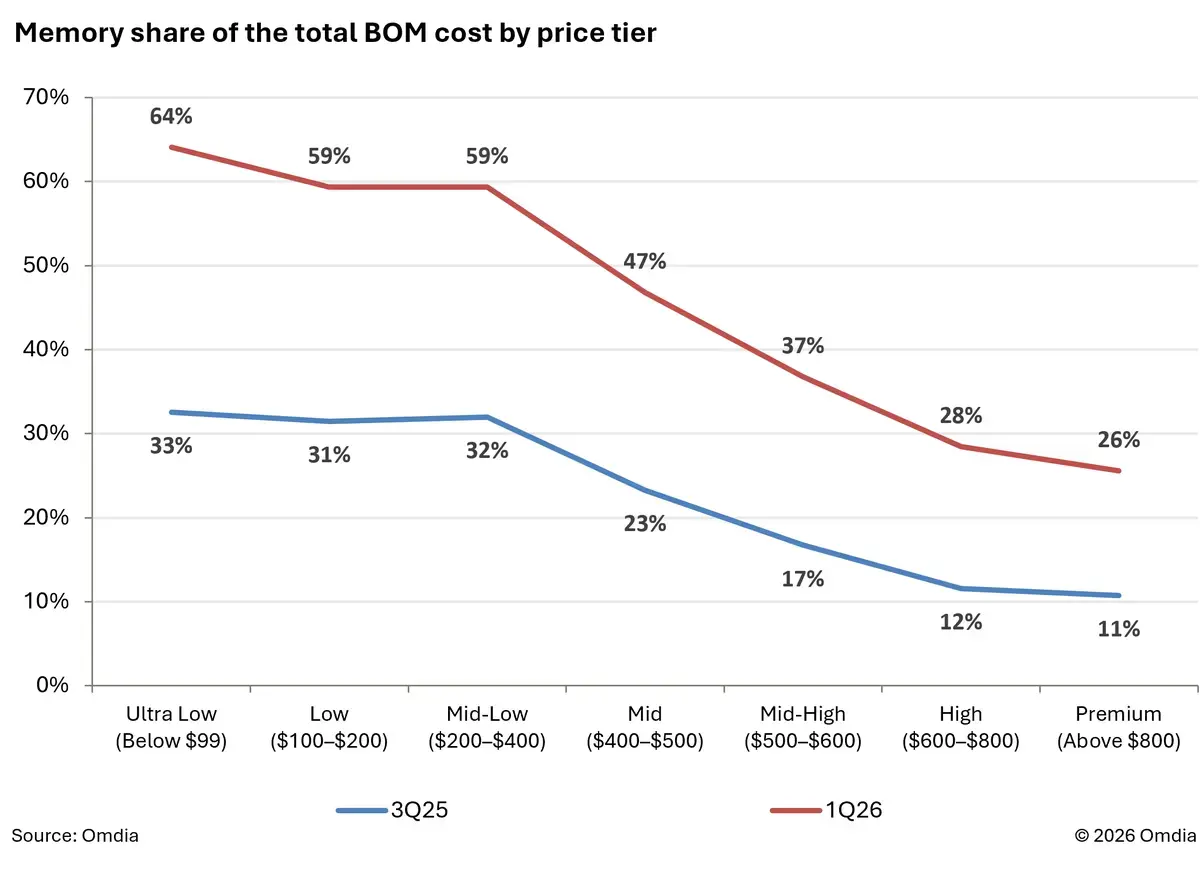 Consequently, consumers are often finding that their latest hardware purchases rely on technology that has been stagnant for several years, effectively diminishing the value proposition of entry-level devices.
Market Dynamics Are Undergoing Significant Changes
Market analysts have identified the $400 price point as a critical threshold in the current mobile ecosystem. While devices priced below this bracket face existential economic threats, demand for premium handsets exceeding this price remains robust. Manufacturers are currently caught in a difficult dilemma: they must either raise prices for end-users or exit the budget category to prioritize the more profitable mid-to-high-end market segments. This strategic pivot highlights the broader industry trend of prioritizing high-margin hardware as the cost of base components becomes prohibitive for low-cost manufacturing.
Sustained high prices for memory components suggest that affordable options for budget-conscious users will continue to disappear in future quarters.
Older Hardware Becomes More Attractive to Consumers
The trend of releasing “crippled” or stripped-down budget phones has inadvertently made older, pre-owned devices more appealing to the average user. Rather than settling for a new model that lacks modern performance, many consumers are turning toward refurbished units or previous-year flagship devices that offer superior hardware specifications for a similar price. Brands like Motorola have already begun incorporating older, proven processors into their current lineups to mitigate expenses, a move that signals a cooling interest in hardware innovation at the lower end of the market. As these cost-saving measures proliferate, the concept of a “new” smartphone is losing its traditional meaning for entry-level buyers.
Do you believe it is better for manufacturers to increase prices while maintaining hardware quality, or should they continue to cut features to keep phones affordable? Share your thoughts with us in the comments section below.
Your comment has been submitted,
it will be published after approval.