
Turkey Announces New Import Tax Rates for Electronics and Automotive


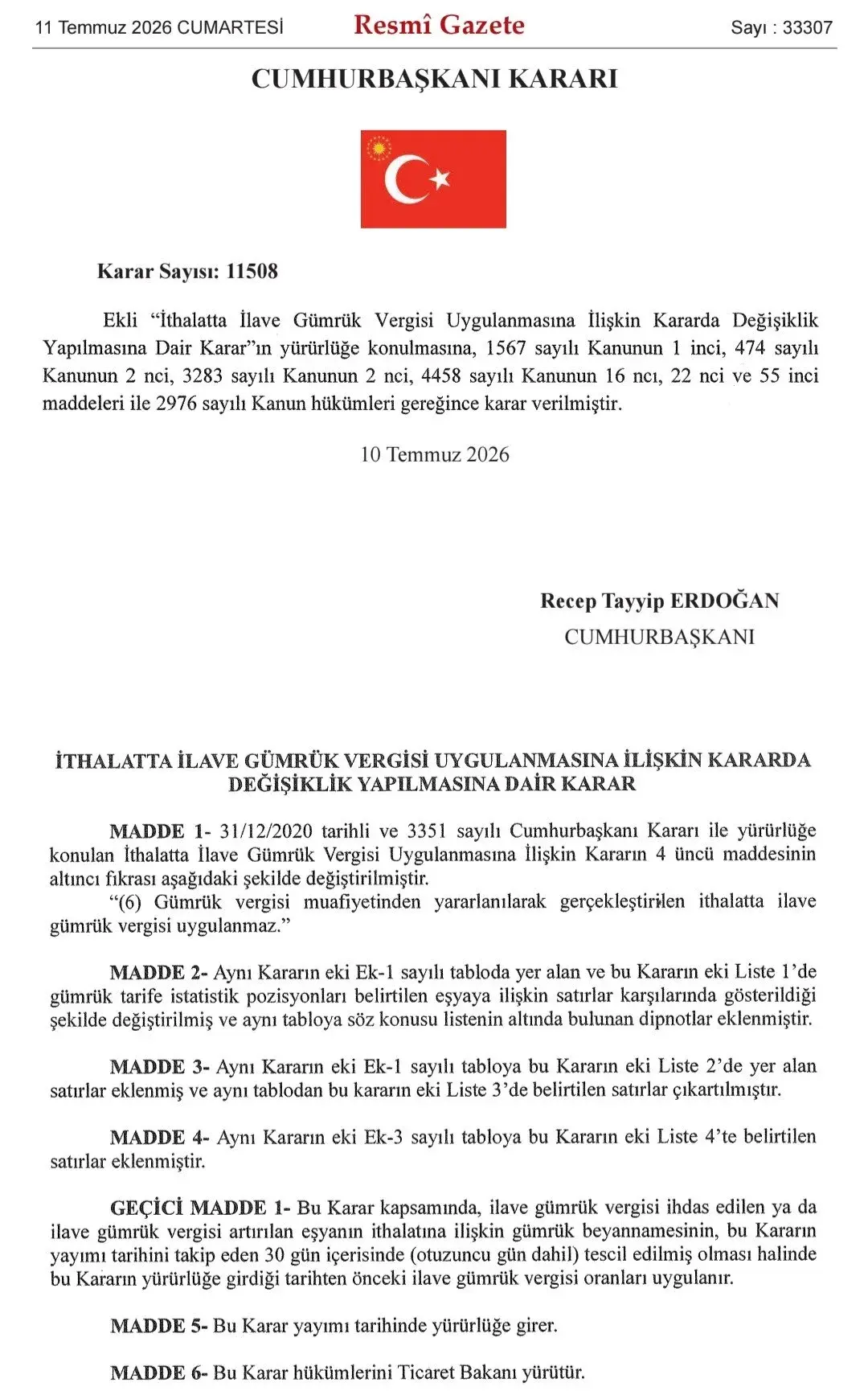
The Turkish government has officially implemented a comprehensive update to additional customs duty rates for a wide range of imported goods, effective as of July 11, 2026. According to Presidential Decree No. 11508 published in the Official Gazette, the new import tax regulations impact sectors ranging from automotive components and electronic devices to lithium accumulators and consumer toys. This regulatory adjustment aims to modify the financial landscape for international trade by establishing specific tax brackets based on the Harmonized System (HS) codes and the origin country of the imported merchandise. As the country seeks to balance its trade dynamics, businesses must now navigate a complex structure where duties can reach up to 30 percent for specific categories.
- The new Presidential Decree adjusts additional customs duties for various product groups including automotive parts and electronics.
- Tax rates for affected goods are determined based on specific product codes and the country of origin.
- Importers may utilize a 30-day transition period to apply previous tax rates for customs declarations registered after the publication date.
New Tax Rates Impact Various Industry Sectors
The regulatory changes introduce a tiered system of taxation for the automotive and spare parts industry, with rates fluctuating between 10 and 30 percent. Similar financial adjustments have been applied to the electrical and electronic sectors to align with the latest trade policies. Specialized equipment, including cooling systems and refrigerator components, now faces additional duties ranging from 15 to 30 percent, while LED lighting products are subject to rates between 10 and 20 percent.
Essential industrial components such as lithium accumulators, heavy-duty outdoor tires, and professional power tools have been assigned the highest bracket, with duties peaking at 30 percent. Conversely, the toy industry faces a standardized 25 percent levy. Other categories, including plastics, rubber, cabling, and various connection equipment, will see moderate increases between 5 and 15 percent, depending on their technical specifications and source of origin.
The implementation of these higher tax brackets represents a significant shift for supply chain costs across the domestic market.
Exemptions and Transition Processes Are Defined
The decree includes specific provisions to prevent double taxation, noting that imports already benefiting from existing customs duty exemptions will remain unaffected by these additional charges. This safeguard is intended to protect specific trade agreements and preferential regimes that were already in place before the current update.
A 30-day transition window has been provided to facilitate a smooth adjustment for businesses currently managing active supply chains. Customs declarations registered within this timeframe following the July 11 publication will be processed under the previous tax regime. Once this transition period concludes, the new, higher duties will be applied across all relevant import transactions without exception.
Companies are urged to review their customs declarations immediately to ensure compliance with the updated tariff structures.
Given the broad scope of these new tax regulations, how do you anticipate these changes will influence the final retail prices of electronics and vehicle parts in the coming months? Share your thoughts and predictions in the comments section below.
Your comment has been submitted,
it will be published after approval.