
Turkey Implements New Installment Regulation: Limits Set for Electronics, Travel

Millions of consumers across Turkey who opt for promissory note sales and alternative payment methods, rather than traditional credit cards or consumer loans, are now subject to revised purchasing rules. The Ministry of Trade has recently implemented a comprehensive New Installment Regulation within the scope of retail trade, directly impacting household budgets and payment plans. This pivotal adjustment sets new upper limits for installment payments across a wide array of categories, ranging from electronic products and white goods to furniture and holiday expenses, aiming to bring more structure and control to consumer spending.
- The Ministry of Trade has introduced comprehensive new regulations governing installment payment options for purchases made without credit cards or consumer loans.
- Electronic products now face tiered installment limits, with televisions priced under 5,000 TL allowing up to 9 months, while those above 5,000 TL are capped at 4 months, and tablets/computers at 6 months.
- Major white goods and furniture purchases have been standardized, permitting a maximum of 9 months for installment payments, irrespective of the product’s price.
- The tourism sector benefits from the most generous terms, allowing travel and accommodation expenses to be paid over a maximum period of 18 months.
Technology Products Now Face New Installment Limits
The new directive particularly focuses on consumer electronics, a segment where purchasing habits often involve significant outlays. A tiered system has been introduced for television purchases, specifically based on the product’s label price. This structured approach aims to manage the financial burden on consumers by differentiating installment periods between entry-to-mid-range and high-end devices, thereby controlling the overall debt load.
Televisions, Computers, and Tablets Will Have Specific Terms
Under the newly defined rules, the maximum installment periods applicable to various electronic product categories have been precisely outlined. For televisions priced below 5,000 Turkish Lira, consumers will now be able to spread their payments over a maximum of nine months. However, for televisions with a price tag of 5,000 TL or more, the installment period has been significantly shortened, capped at a maximum of four months. Furthermore, for popular items such as tablets and computers, a uniform maximum installment period of six months has been established, applying regardless of the device’s price point. These measures reflect a strategic effort to regulate consumer debt in a rapidly evolving electronics market.
White Goods and Furniture Purchases Are Standardized at Nine Months
For consumers looking to furnish or renovate their homes, the categories of white goods and furniture are critical. Major appliances like refrigerators, washing machines, and dishwashers, along with smaller electrical home appliances, will not be subject to a price threshold for installment limits. Instead, a standard maximum of nine months has been set for all purchases within this category. This means that regardless of the cost of the item, consumers can plan their payments over a consistent period.
Similarly, the furniture sector also adopts this nine-month maximum installment period. This standardization across durable consumer goods aims to create a predictable and manageable payment schedule for households, easing the planning process for significant domestic investments. 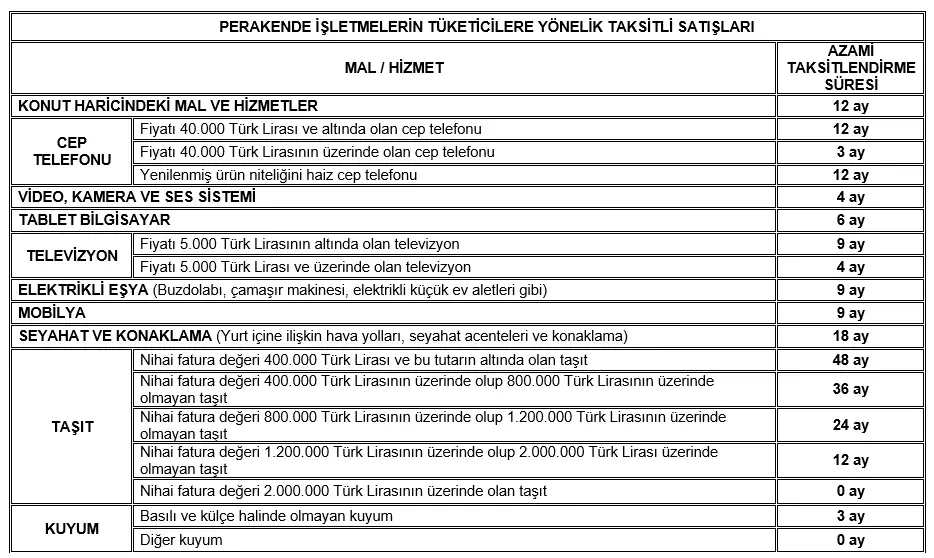 This consistent approach provides clarity and stability for both consumers and retailers in these essential market segments.
Travel and Accommodation Offer Extended Flexibility Up to 18 Months
In a move to support the tourism sector and facilitate holiday planning for citizens, the Ministry of Trade’s new package grants the most extensive installment options for travel and accommodation expenses. Under the new regulations, payments for holidays, travel, and lodging made through promissory notes can be stretched over a maximum period of 18 months. This initiative is particularly beneficial for domestic tourism, as it allows consumers to distribute seasonal costs over a much longer timeframe, offering considerable financial flexibility. This extended payment window is expected to encourage more people to plan and undertake travel, boosting activity within the hospitality and travel industries while providing consumers with more manageable payment solutions for their leisure activities.
What are your thoughts on these new installment regulations for electronics, white goods, and travel? How do you think these changes will impact your purchasing decisions and household budget planning? Share your experiences and opinions in the comments below!
Your comment has been submitted,
it will be published after approval.