
TUSAS Begins Mass Production of AYAZ Kamikaze UAV

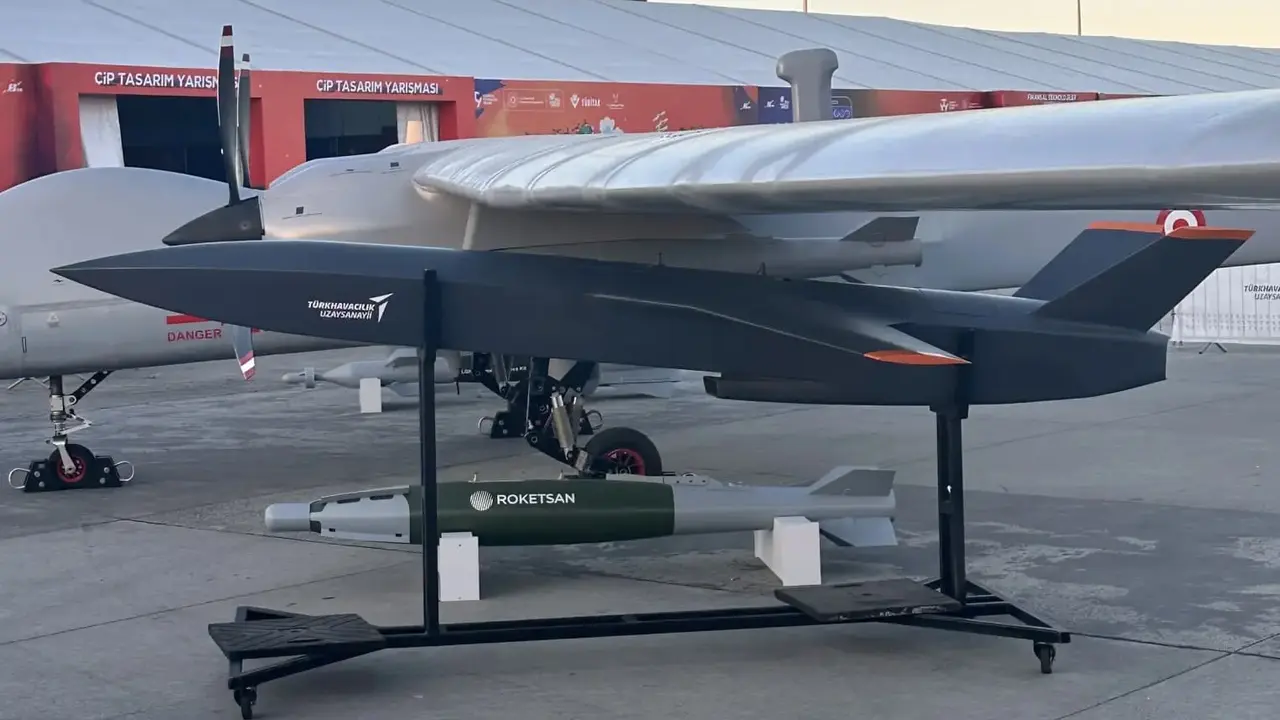
Turkish Aerospace Industries (TUSAS) has officially commenced the mass production phase of the AYAZ kamikaze UAV, marking a significant milestone in the company’s autonomous systems portfolio. TUSAS General Manager Mehmet Demiroğlu confirmed that the development and testing cycle for the loitering munition has concluded successfully. Following rigorous evaluation in controlled environments and various military exercises, the platform is now ready for deployment. The AYAZ system, designed for high-precision strikes, is expected to play a critical role in future aerial operations, with plans already underway for its participation in upcoming military drills scheduled for October 2026.
- TUSAS has shifted the AYAZ program from the development stage to active mass production.
- The manufacturer targets production volumes reaching into the thousands of units to meet demand.
- The system features a range exceeding 200 kilometers to facilitate deep-strike capabilities.
- A modular design approach allows for accelerated manufacturing timelines similar to automotive industry standards.
TUSAS Adopts High-Volume Manufacturing Strategies
The production model established for the AYAZ kamikaze UAV represents a departure from traditional, low-volume aerospace manufacturing techniques. By leveraging a compact and modular design, TUSAS aims to implement an assembly line structure comparable to the automotive sector. This strategic pivot is intended to facilitate the rapid manufacturing of the UAVs, with officials targeting production figures in the thousands. Furthermore, the company has indicated that this scalable production infrastructure could potentially be replicated in partner nations, should the need for localized manufacturing arise to support international requirements.
Tactical Capabilities Focus on Operational Range
Engineered as a specialized loitering munition, the AYAZ is built to operate effectively within contested airspace. The platform boasts a confirmed operational range exceeding 200 kilometers, allowing it to strike targets well behind enemy lines. Its design prioritizes a low-visibility profile, which enhances survivability in areas heavily defended by modern air defense systems. Unlike the versatile SHIMSEK family, which handles target practice and electronic warfare missions, the AYAZ is purpose-built strictly for kamikaze strike operations, ensuring maximum efficacy in its primary role.
Autonomous Systems Portfolio Continues to Expand
With the integration of the AYAZ into its production line, TUSAS is further diversifying its comprehensive range of unmanned aerial vehicles. The company envisions these systems operating as integral components of a larger, multifaceted autonomous air warfare architecture, working in tandem with both manned and unmanned platforms. While the company has reported significant interest from both domestic and international stakeholders, it has yet to disclose specific procurement contracts or finalized delivery schedules. As the program progresses, industry observers expect further updates regarding deployment timelines and potential export agreements. The transition to serial production underscores the commitment of TUSAS to bolstering national defense capabilities through advanced, cost-effective aerial technologies.
What impact do you think the high-volume production of the AYAZ kamikaze UAV will have on modern asymmetric warfare tactics? Share your insights and join the discussion in the comments section below.
Your comment has been submitted,
it will be published after approval.