
TUSAŞ Reveals Updated Technical Specifications for ANKA-3 Combat Drone

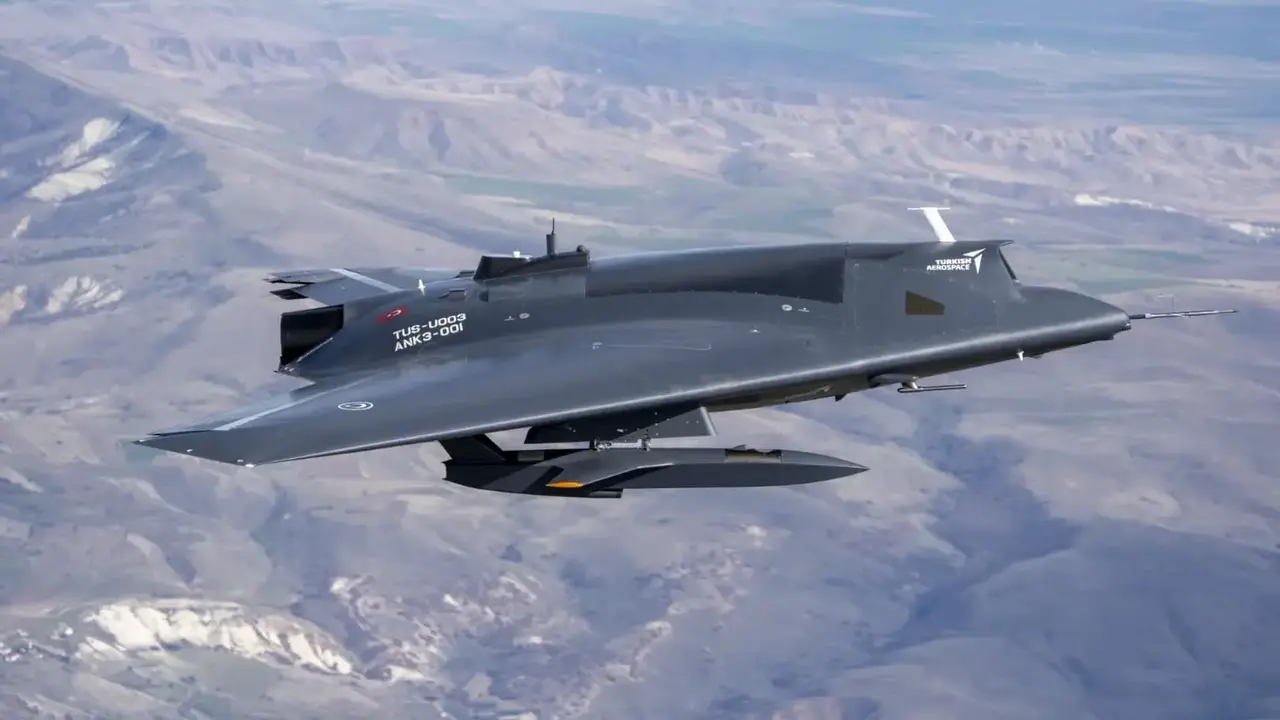
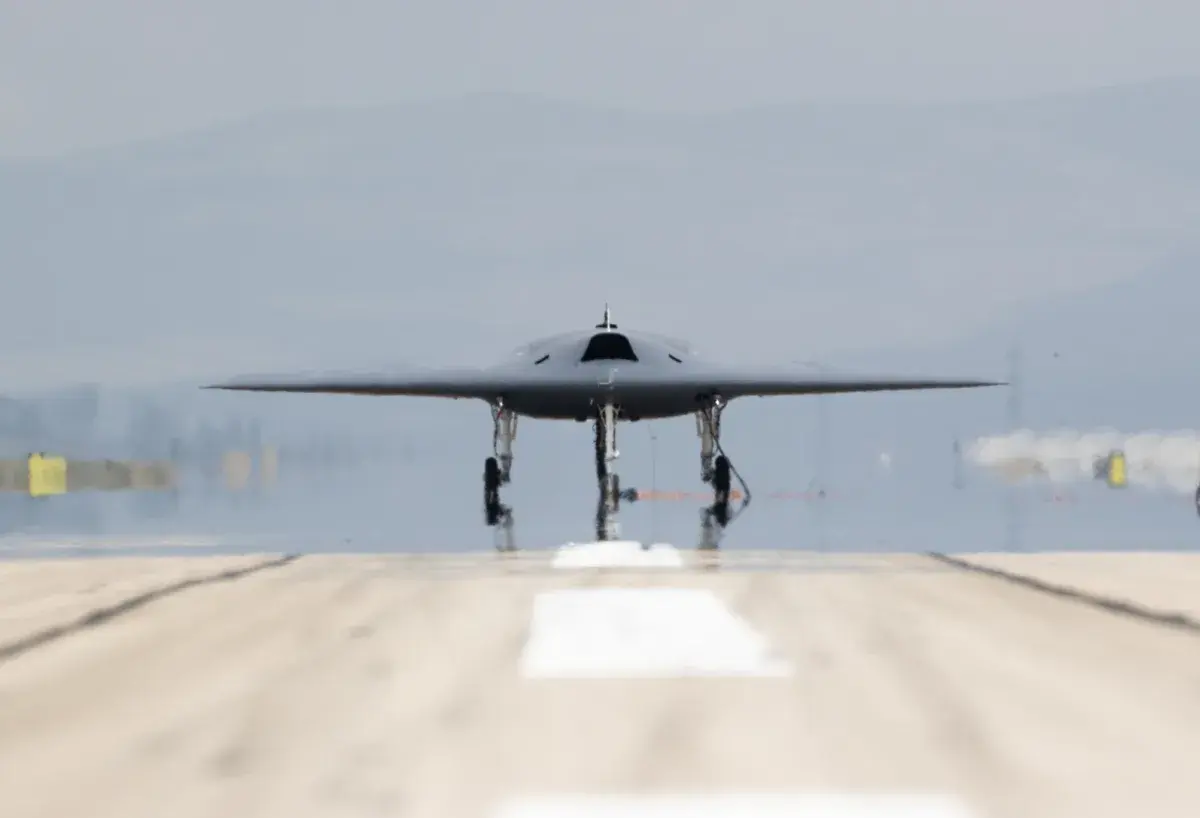
Turkish Aerospace Industries (TUSAŞ) has officially unveiled the updated technical configuration for the ANKA-3 Combat Unmanned Aircraft System, marking a significant milestone in the development of the platform’s serial production model. By providing comprehensive data regarding its payload capacity, operational radius, and integrated mission systems, TUSAŞ has clarified the tactical profile of this flying-wing, low-observable aircraft. Designed for a diverse array of missions ranging from air-to-ground strikes to electronic warfare and collaborative operations with manned fighters, the ANKA-3 is positioned to enhance aerial superiority. These updated specifications reflect the company’s ongoing efforts to refine the combat capabilities and multi-role versatility of the ANKA-3 drone system.
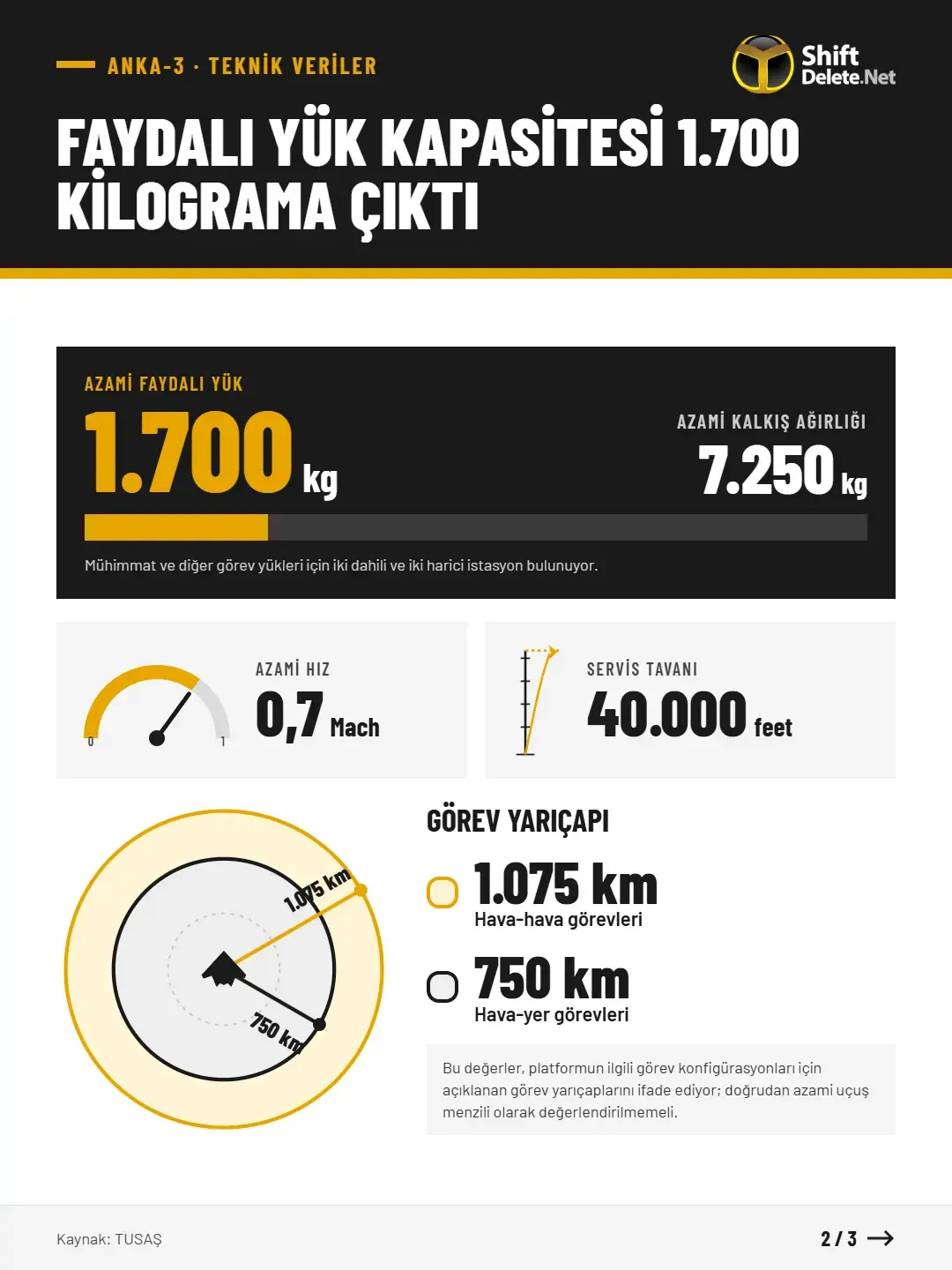
- The ANKA-3 features a maximum takeoff weight of 7,250 kilograms and a payload capacity of 1,700 kilograms.
- The platform achieves a 1,075-kilometer operational radius for air-to-air missions and a 750-kilometer radius for air-to-ground strikes.
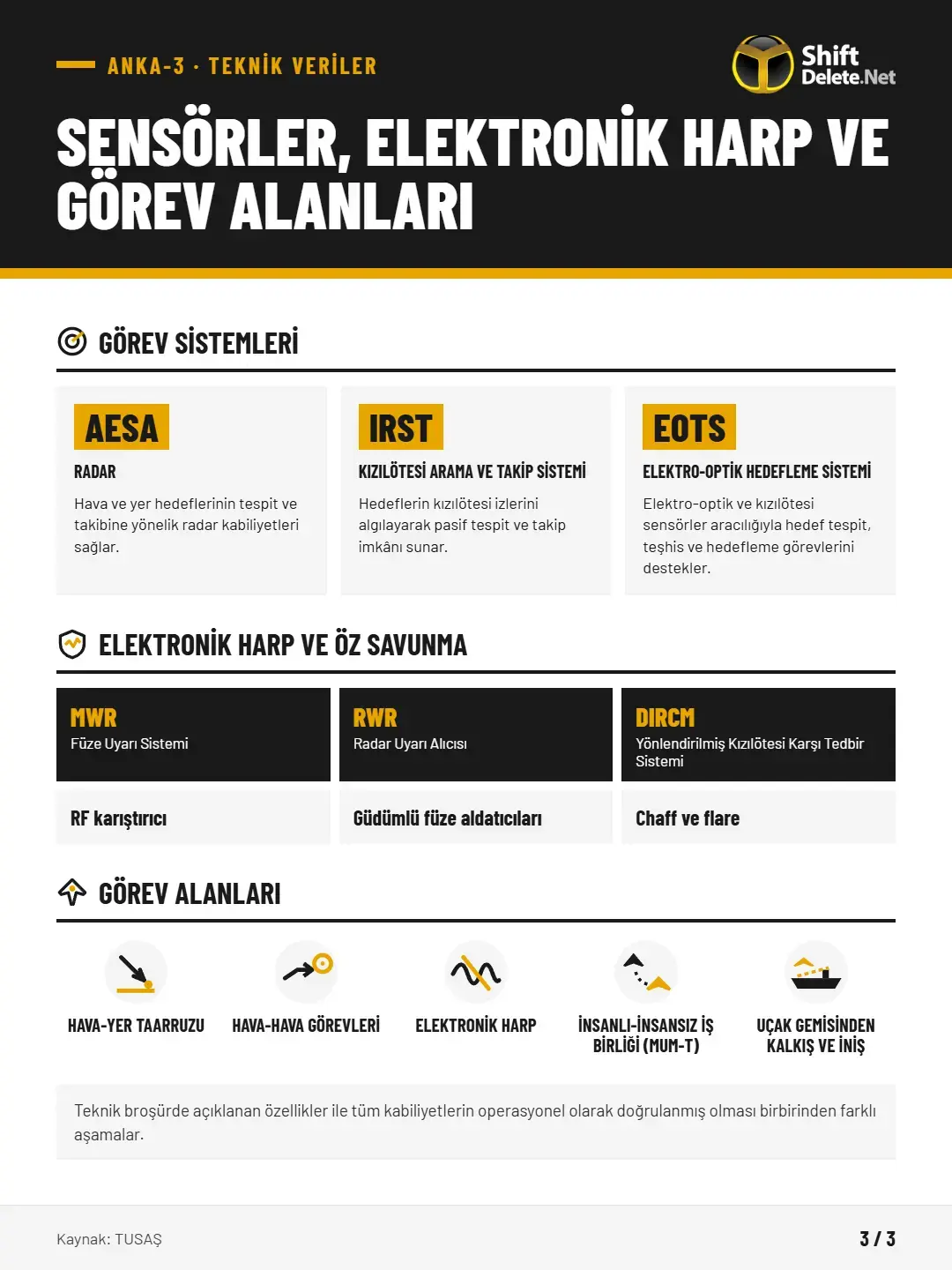
- Advanced sensor suites including AESA radar, IRST, and EOTS systems are integrated to enhance target detection and tracking performance.
- The design supports Manned-Unmanned Teaming (MUM-T) and includes specific provisions for carrier-based operations.
Payload Capacity is Reaching 1,700 Kilograms
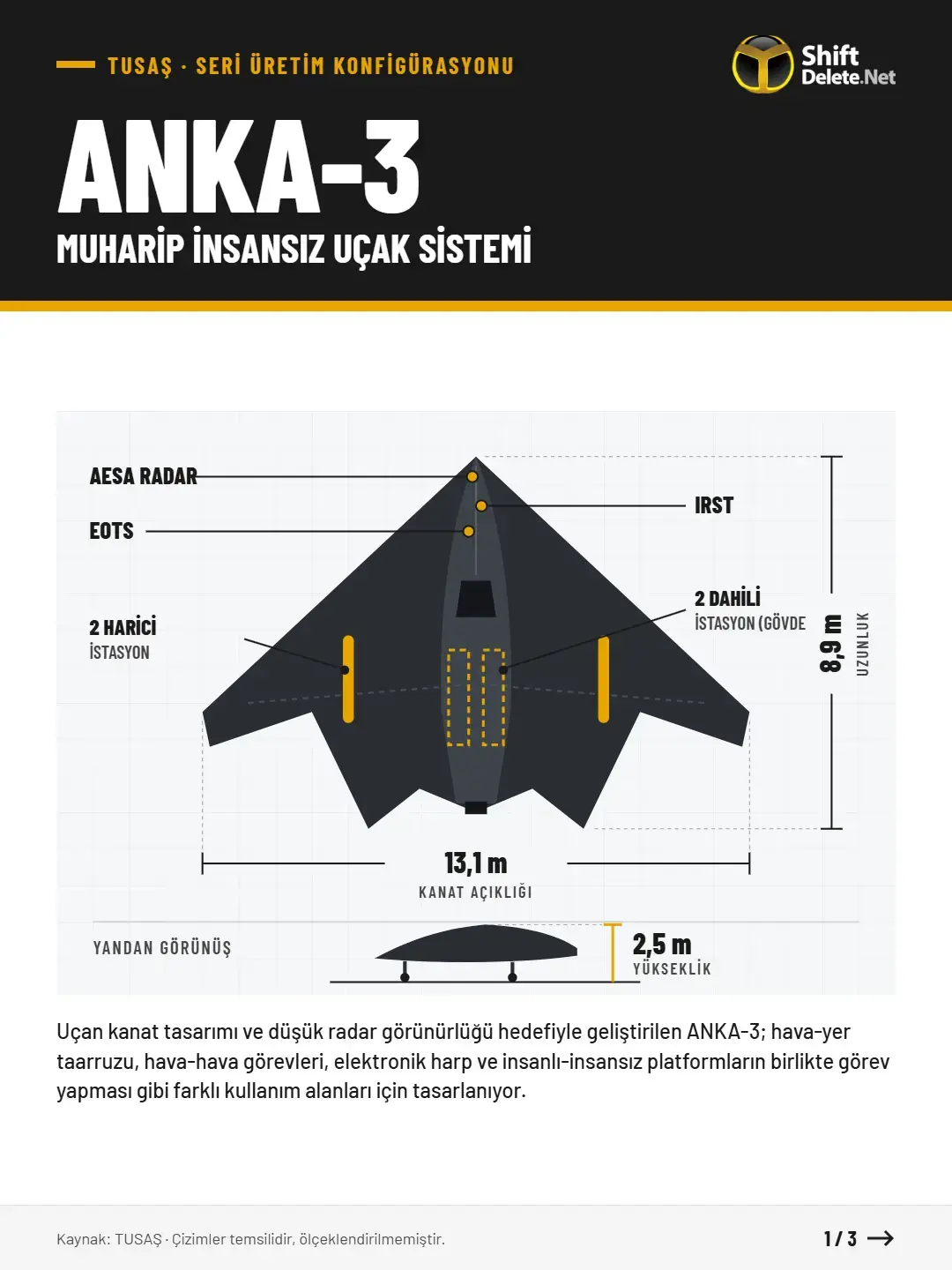
According to the latest technical data, the ANKA-3 is engineered with a maximum takeoff weight of 7,250 kilograms, allowing for a substantial 1,700-kilogram payload capacity. The aircraft measures 8.9 meters in length with a wingspan of 13.1 meters and a height of 2.5 meters. With an operational ceiling of 40,000 feet and a maximum speed of 0.7 Mach, the platform is built for high-altitude endurance and performance.
To maintain its low radar cross-section, the drone features two internal weapons stations, complemented by two external stations for additional mission-specific equipment. This configuration provides the flexibility needed to carry a wide variety of precision-guided munitions and specialized sensors required for modern combat scenarios.
Operational Radius Extends Across Different Mission Profiles
The operational range of the ANKA-3 is tailored according to the specific mission type assigned to the aircraft. For air-to-air missions, the platform boasts a 1,075-kilometer mission radius, while air-to-ground operations cover a radius of 750 kilometers. These figures highlight the intent to utilize the drone far beyond simple ground attack roles, enabling it to participate in complex aerial combat.
Advanced Sensor Suites Support Enhanced Mission Capabilities
The integration of sophisticated mission systems is central to the ANKA-3’s design. The platform includes an Active Electronically Scanned Array (AESA) radar for precise target identification, alongside an Infrared Search and Track (IRST) system and an Electro-Optical Targeting System (EOTS). These sensors work in tandem to provide passive detection and high-resolution tracking across various environmental conditions.
Electronic Warfare Systems Improve Survivability
Beyond offensive capabilities, the ANKA-3 is equipped with a robust suite of electronic warfare and self-defense tools. The aircraft carries a Missile Warning System (MWR), Radar Warning Receiver (RWR), and a Directed Infrared Countermeasure (DIRCM) system to mitigate incoming threats. Additionally, the inclusion of RF jammers and decoy dispensers ensures that the platform can operate effectively in high-threat electromagnetic environments.
Manned-Unmanned Teaming Enhances Tactical Flexibility
TUSAŞ is developing the ANKA-3 as a key component of the Manned-Unmanned Teaming (MUM-T) concept, allowing it to operate in conjunction with manned fighter jets for synchronized mission execution. Furthermore, the design includes provisions for carrier-based operations, potentially allowing the drone to launch from and recover on naval vessels. While these features are part of the current technical documentation, their ultimate operational maturity will be confirmed through rigorous flight testing and system verification cycles.
How do you think the integration of the ANKA-3 into the Turkish Air Force’s fleet will change the future of modern aerial combat? Share your insights and thoughts on this development in the comments section below.
Your comment has been submitted,
it will be published after approval.