
WASP-193b exoplanet: The dandelion balloon of the universe

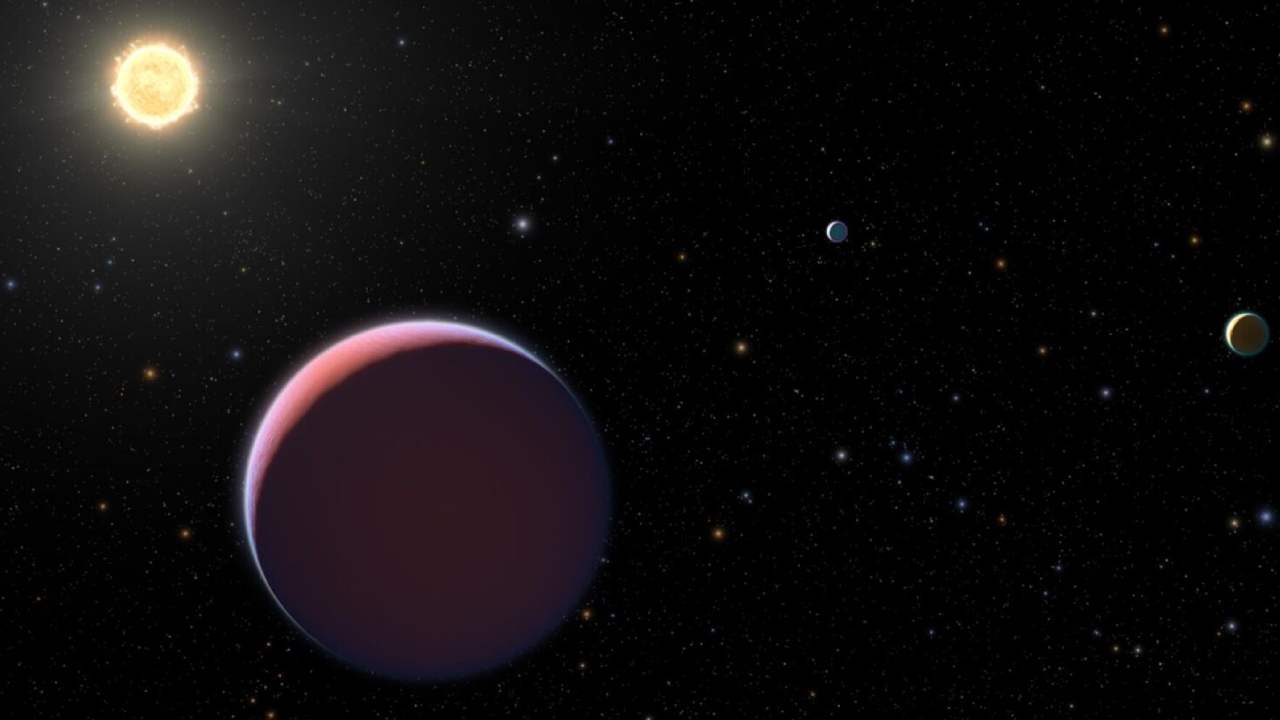
An international team led by astronomer Khalid Barkaoui from the University of Liège in Belgium has announced their study on planetary evolution. According to the research, an exoplanet called WASP-193b, which corresponds to 1% of Earth’s density, has been discovered.
WASP-193b exoplanet discovered
WASP-193b, discovered at a distance of 1,232 light-years, is referred to as a dandelion balloon by the astronomy community. Analysts point out that planets like WASP-193b are rare and emphasize the importance of such discoveries in understanding planetary evolution.
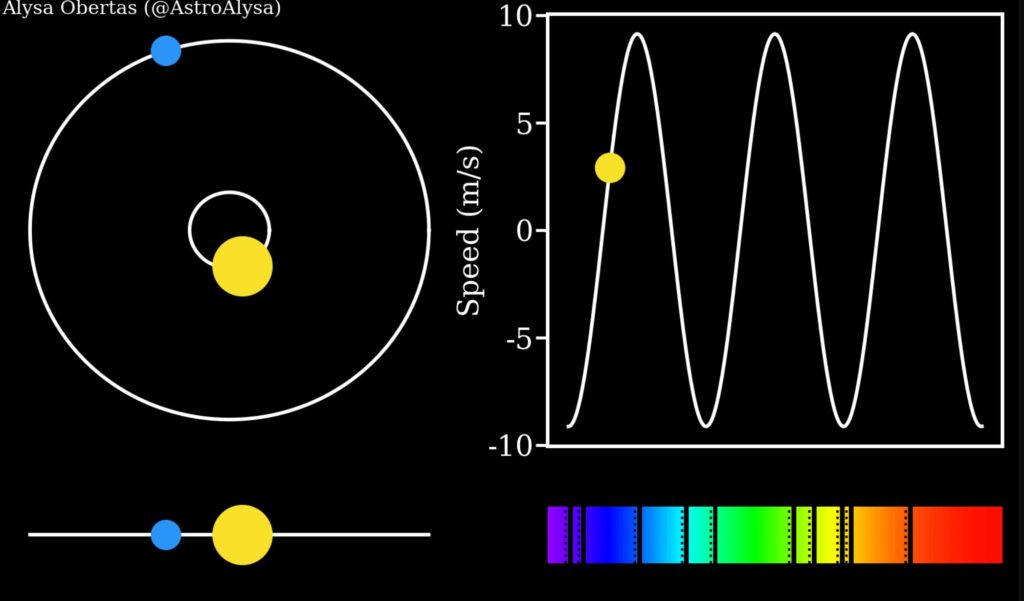
WASP-193b is defined as an outer planet orbiting a Sun-like star named WASP-193. This star has a mass approximately 1.1 times that of the Sun and a radius 1.2 times larger, and it is worth noting that it is very similar to the Sun in terms of temperature and age. However, WASP-193b orbits much closer to its star compared to the planets in the Solar System. Let’s mention that the exoplanet approaches the star every 6.25 days.
NASA has announced: An asteroid worth 10 times the value of the world economy!
Studying how the star’s light changes while the exoplanet orbits allowed Barkaoui and colleagues to calculate the radius and mass of the planet. The radius of the exoplanet is approximately 1.46 times that of Jupiter. However, its mass is incredibly small compared to Jupiter: only 0.139 times.
Researchers examining the findings calculated that the exoplanet has a density of 0.059 grams per cubic centimeter. Let’s note that Earth’s density is 5.51 grams per cubic centimeter. Jupiter’s density, on the other hand, is 1.33 grams per cubic centimeter.
The star is believed to be up to 6 billion years old. Although there may be a mechanism that inflates the exoplanet’s atmosphere due to internal heat, the observed characteristics of the exoplanet cannot be recreated using complex planetary evolution models.
Your comment has been submitted,
it will be published after approval.