
Waymo Toyota Robotaxi Fleet to Start Testing in Japan in 2027

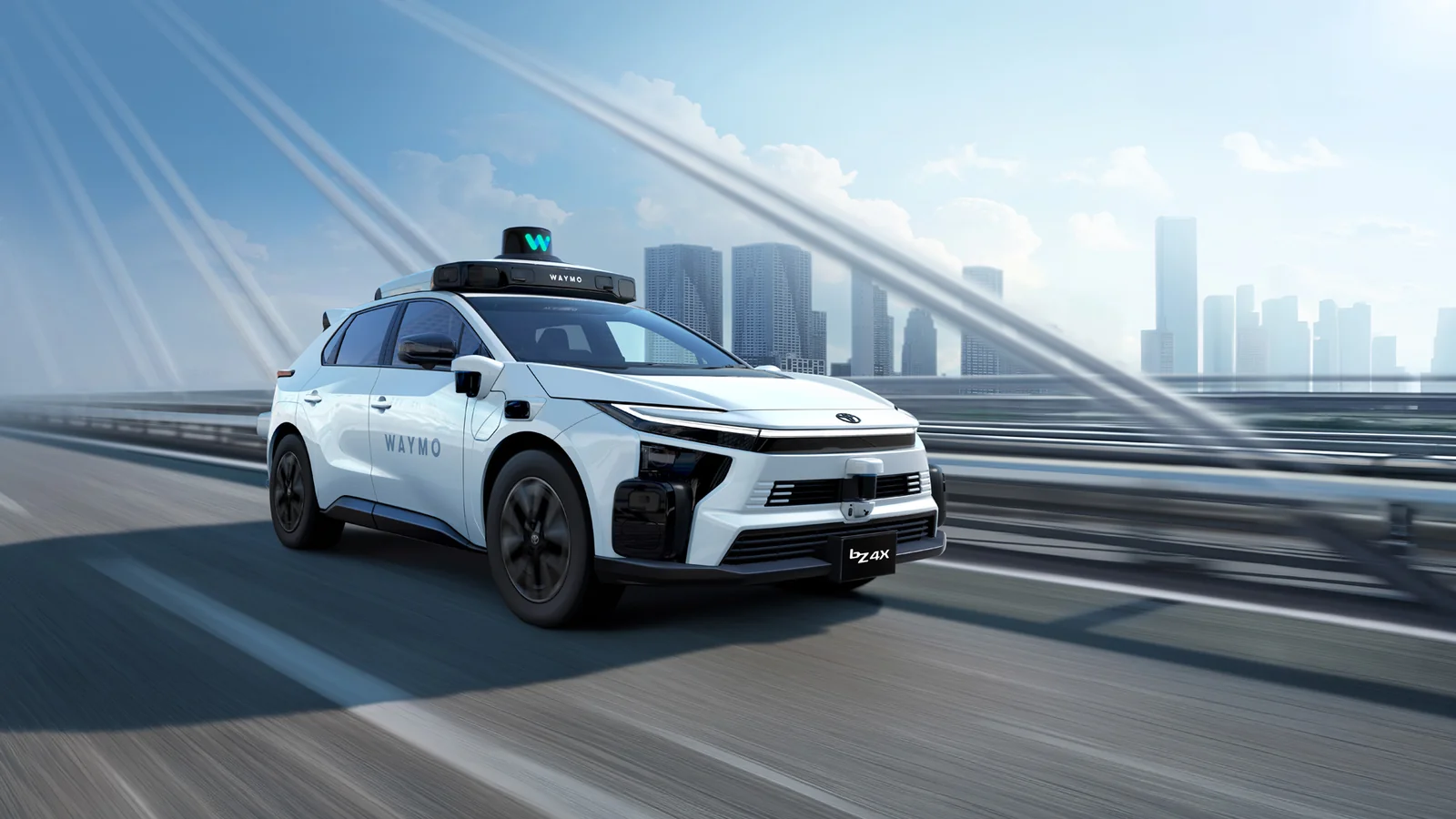
The Waymo Toyota robotaxi deal is now concrete: Toyota and Waymo said on October 30, 2026 that a fleet of autonomous Toyota bZ4X SUVs will begin test and validation operations in Japan in 2027, with the vehicles built at Toyota’s Takaoka plant. Deployment to the United Kingdom and other Waymo markets is planned for the following years.
The announcement builds on the preliminary agreement the two companies signed in April 2025 and, according to the official Toyota and Waymo press release, paves the way for Japan’s first fully autonomous ride-hailing service using high-volume, domestically manufactured vehicles.
How the Waymo Toyota Robotaxi Will Be Built
Toyota will produce the cars at its Takaoka plant in Toyota City, Aichi Prefecture. The entire process happens under one roof, from assembling the base bZ4X to integrating Waymo’s autonomous driving hardware, including the roof-mounted sensor dome. The vehicles are designed for Level 4 autonomy, meaning they drive themselves without a human safety driver within defined service areas.
The ride-hailing version of the bZ4X, sold in North America simply as the Toyota bZ, gets generous rear legroom, automatic doors, a power liftgate and ambient lighting to make getting in and out easier for passengers.
- Vehicle: custom Toyota bZ4X electric SUV with the Waymo Driver
- Factory: Takaoka plant, Toyota City, Japan
- First operations: testing and validation in Japan in 2027
- Next markets: the UK and other Waymo-served markets in later years
Why Japan and the UK Come First
Both Japan and the UK drive on the left, so a right-hand-drive vehicle built in Japan fits both markets. Waymo already has a separate plan for Tokyo: in September, Waymo, taxi app operator GO and Nihon Kotsu said they aim to launch Japan’s first fully autonomous commercial taxi service in Tokyo in 2027, starting small and growing to about 100 vehicles, Reuters reported. Japan’s aging taxi workforce and driver shortage make the market especially receptive to robotaxis.
For Waymo, a high-volume manufacturing partner outside China also matters. As Automotive World notes, tariffs and US connected-vehicle rules complicate its Zeekr-built platform, so a Japan-built bZ4X eases a fleet bottleneck for its international expansion. Waymo’s US fleet has been in the news recently, including a case where a Waymo robotaxi detected armed passengers and alerted police.
Personal Toyota Cars Could Be Next
The companies will also keep exploring autonomous driving technology for personally owned Toyota vehicles, which would take the Waymo Driver beyond robotaxi fleets and into competition with systems like Tesla’s Full Self-Driving. Tesla is pushing its own service, as we saw when we tried the Tesla Robotaxi in San Francisco, and its Cybercab is meant to scale that model.
“In areas where Waymo operates, we’ve demonstrated that we are up to 20x safer than human drivers when it comes to serious crash injuries,” said Dmitri Dolgov, co-CEO of Waymo. Hiroki Nakajima, executive vice president of Toyota, said the collaboration “will help scale that technology and bring it to customers in Japan and beyond through Waymo’s ride-hailing service.”
Together with Woven by Toyota, the partners will also study how data from Waymo’s real-world operations could improve safety for other road users. No prices, fleet sizes or exact launch dates for the Japanese service have been announced yet.
Your comment has been submitted,
it will be published after approval.