
Xiaomi Launches HyperOS 4 Beta Alongside New Foldable Teaser

Xiaomi has officially commenced the beta testing program for its highly anticipated HyperOS 4 interface, marking a significant milestone in the company’s software evolution. The announcement, which took place this week, highlights a strategic focus on enhanced system performance and deep artificial intelligence integration across its mobile ecosystem. During the launch event, the company provided a first look at an upcoming large-screen foldable smartphone, showcasing how the new software adapts to innovative hardware designs. The initial beta rollout targets flagship devices, including the Xiaomi 17 series and the Redmi K90 family, aiming to streamline cross-device interactions for a more cohesive user experience.
- Xiaomi has officially initiated the HyperOS 4 beta program to optimize overall system performance.
- The new interface integrates the Super XiaoAi 2.0 assistant to enhance complex task planning through advanced artificial intelligence.
- The company showcased a new large-screen foldable device prototype during the software presentation.
- The beta testing phase currently supports ten distinct high-end device models including the Xiaomi 17 and Redmi K90 series.
Xiaomi is positioning its new foldable device to challenge industry leaders in the high-end smartphone market.
System Performance and Artificial Intelligence Capabilities are Being Enhanced
With the release of HyperOS 4, Xiaomi has introduced critical improvements to its HyperCore architecture. By refining load calculation and memory pre-loading systems, the company intends to provide a significant boost in performance for the most frequently used applications. These optimizations are applied at both the system kernel and application layers to ensure a more responsive environment.
Animations and interface transitions have been overhauled to appear more fluid, resulting in reduced latency during user interactions. Furthermore, the integration of the Super XiaoAi 2.0 assistant, which is built upon the robust MiMo large language model, empowers users with superior multi-device management tools and more effective task automation capabilities.
Beta Testing Programs are Expanding to Initial Device Models
The first group of devices selected for the beta program includes a diverse range of hardware. Users operating the Xiaomi 17 Ultra, 17 Pro, standard 17, and their various Leica-branded variants are eligible to participate. 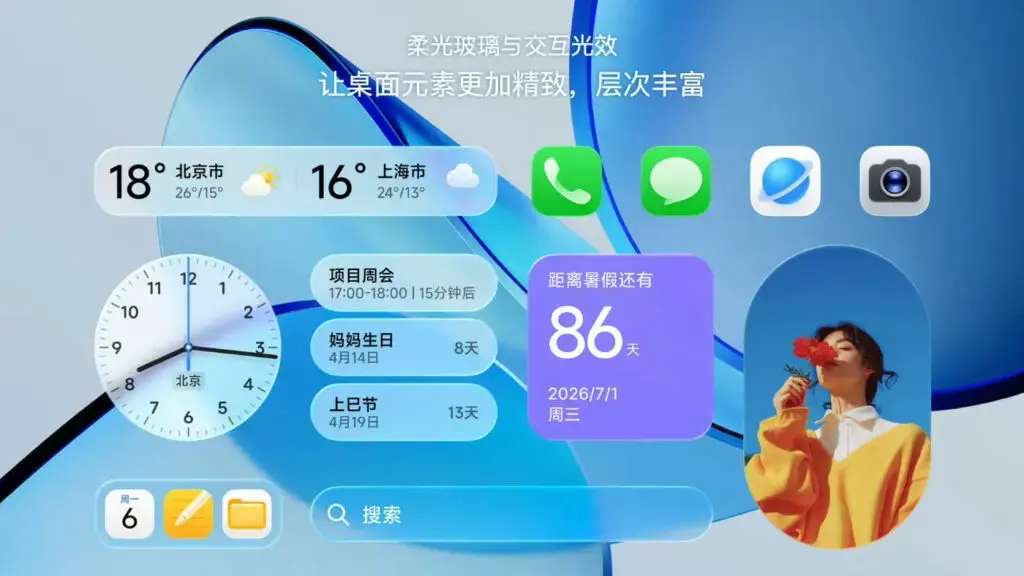 Additionally, the Redmi K90 series and the Pad 8 tablet models are included in this initial rollout, demonstrating Xiaomi’s commitment to standardizing its software experience across its entire flagship portfolio.
Beta testers provide essential feedback on system stability and new AI features that will ultimately define the final release.
Large Foldable Device Designs are Being Revealed for the First Time
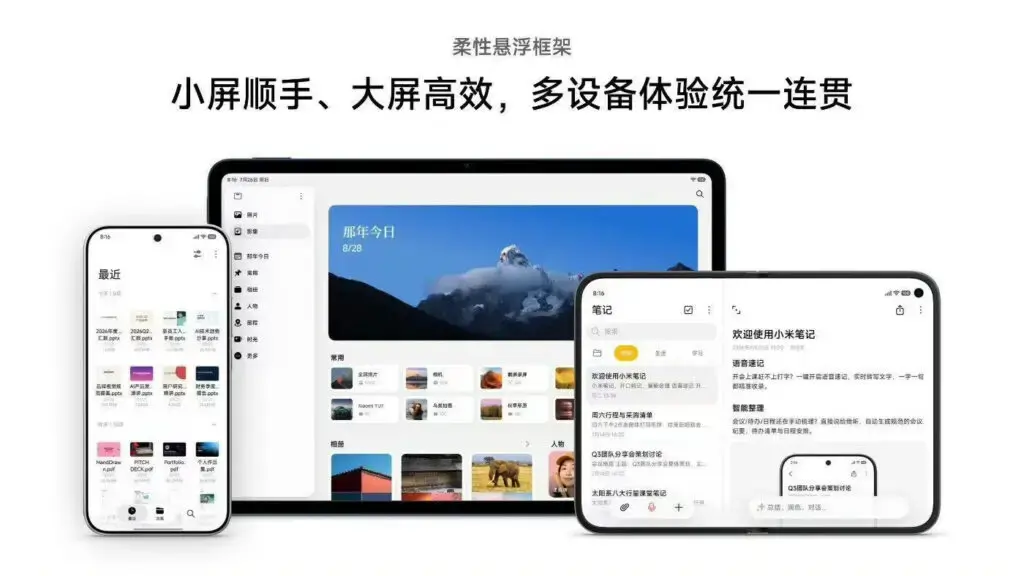
Xiaomi utilized the HyperOS 4 interface demonstration to provide a glimpse of its upcoming large-format foldable smartphone. By showcasing the interface on a device that has not yet been officially released, the company highlighted how software elements are specifically optimized for expansive, folding screen real estate. The seamless integration of hardware and software displayed during the event suggests that the commercial launch of this new foldable device is imminent.
We are curious to hear your thoughts on the new AI-driven features in HyperOS 4 and the potential impact of Xiaomi’s upcoming foldable smartphone on the current market landscape; please share your comments with us below.
Your comment has been submitted,
it will be published after approval.