
2026 Repairability Report Ranks Apple and Samsung at Bottom

The U.S.-based PIRG Education Fund has released its highly anticipated 2026 Failing the Fix report, which evaluates the repairability of smartphones and laptops from leading global manufacturers. By utilizing the European Union’s EPREL system for mobile devices and France’s repairability index for laptops, the study offers a standardized look at how easily consumers can service their own technology. The analysis considers critical factors such as ease of disassembly, the availability of spare parts, access to diagnostic tools, and the longevity of software support. In this year’s assessment, major tech giants Apple and Samsung have faced significant criticism for their low performance, while other brands have demonstrated measurable progress in design accessibility.
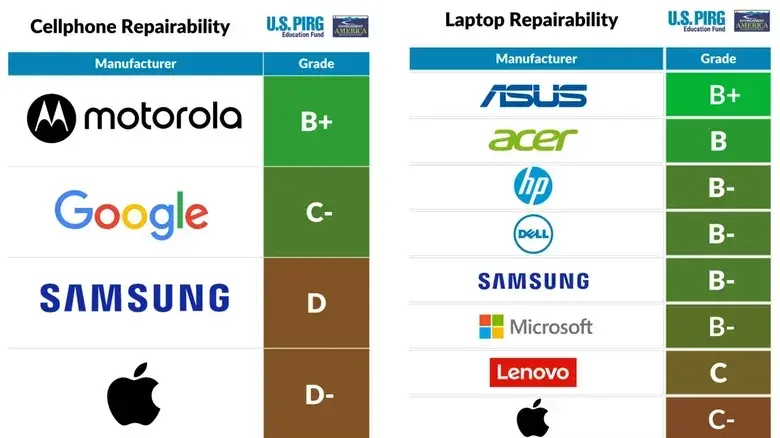
- Motorola secured the top ranking in the smartphone category with a B+ grade while Apple finished at the bottom with a D-.
- Asus leads the laptop market with a B+ rating due to its commitment to accessible hardware design.
- Manufacturers continue to struggle with excessive adhesive use and restrictive part-pairing software that hinders independent repairs.
- Extended software support periods are now being factored into repairability scores to ensure device longevity.
Motorola Leads Smartphone Repairability Rankings
In the smartphone sector, the competitive landscape shows a clear divide between brands that prioritize modularity and those that opt for sealed designs. Motorola has emerged as the industry leader, earning a B+ grade for its approachable repair processes. Google maintained a middle-ground position with a C- rating. Conversely, Samsung and Apple occupied the lowest tiers of the list, receiving D and D- scores respectively. These grades reflect ongoing challenges regarding the physical construction of their flagship devices, which often favor aesthetic sleekness over functional maintenance.
Asus Dominates the Laptop Repair Market
The laptop category presents a different set of leaders, with Asus claiming the top spot with a B+ rating. Acer follows closely in second place with a B, while companies like HP, Dell, and Microsoft remain in the middle of the pack with B- ratings. Lenovo has shown notable improvement, rising to a C grade compared to its previous performance. Interestingly, Apple also occupies the last position in the laptop category with a C- score, highlighting a consistent trend of lower repairability across the company’s entire hardware ecosystem.
Design Choices Limit Repair Efforts
The primary reason for the low scores assigned to companies like Apple and Samsung involves the reliance on heavy adhesives and complex internal layouts. Furthermore, software-based limitations, such as part-pairing, prevent users from replacing components like screens or batteries without triggering unauthorized hardware warnings. Features like Apple’s Activation Lock, while designed for security, often complicate the process of salvaging parts from functional but retired devices. While there have been minor improvements, such as the introduction of the Repair Assistant for the iPhone 16 series and the use of electric-release adhesives in newer models, the industry still has a long way to go.
Samsung has similarly expanded its self-repair initiatives since 2022, with models like the Galaxy S25 Ultra demonstrating a more repair-friendly design. However, the report emphasizes that physical repairability is only one piece of the puzzle. Without sustained long-term software and security updates, even the most durable hardware eventually becomes obsolete. As regulatory bodies continue to push for the right to repair, consumers must weigh these accessibility factors when making their next technology purchase.
We want to hear your thoughts on this year’s findings; do you believe that manufacturers are doing enough to simplify the repair process for their devices, or is there still too much focus on planned obsolescence?
Your comment has been submitted,
it will be published after approval.