
Qualcomm Confirms Two Variants for Snapdragon 8 Elite Gen 6 Pro


Qualcomm has officially addressed industry speculation regarding its next-generation 2nm chipset, the Snapdragon 8 Elite Gen 6 Pro. Contrary to rumors suggesting a fragmented lineup of six different models, the San Diego-based technology leader confirmed that the platform will debut with two primary variants. This rollout, expected to define the performance benchmarks for future high-end smartphones, integrates support for both LPDDR5X and LPDDR6 memory standards. By streamlining its approach, Qualcomm aims to balance cutting-edge processing capabilities with the economic realities of modern semiconductor manufacturing, ensuring that the Snapdragon 8 Elite Gen 6 Pro remains the centerpiece of the flagship mobile market.
- The Snapdragon 8 Elite Gen 6 Pro launches in two distinct versions featuring LPDDR5X and LPDDR6 memory compatibility.
- Premium iterations of the chipset incorporate advanced UFS 5.0 storage technology support.
- Qualcomm implements a binned processor strategy to optimize production costs and improve manufacturing efficiency.
- The new chipset architecture provides the necessary processing power to support emerging tri-fold foldable smartphone designs.
The Snapdragon 8 Elite Gen 6 Pro establishes new performance standards for the global smartphone industry.
Premium Models Provide UFS 5.0 Storage Support
Technical diagrams reveal that the Snapdragon 8 Elite Gen 6 Pro serves as more than just a processor; it acts as a foundational architecture for the next generation of flagship devices. A critical highlight of this release is the native support for UFS 5.0 storage technology, which promises to revolutionize data transfer rates for high-end users.  While this feature offers a significant leap in speed, industry analysts suggest that such high-tier capabilities will be reserved exclusively for premium-priced handsets, allowing manufacturers to differentiate their flagship offerings effectively.
The versatility of this silicon extends beyond traditional smartphones, as it is specifically engineered to handle the rigorous demands of foldable technology. Devices utilizing complex, tri-fold form factors stand to benefit most from the robust processing headroom provided by the chipset. 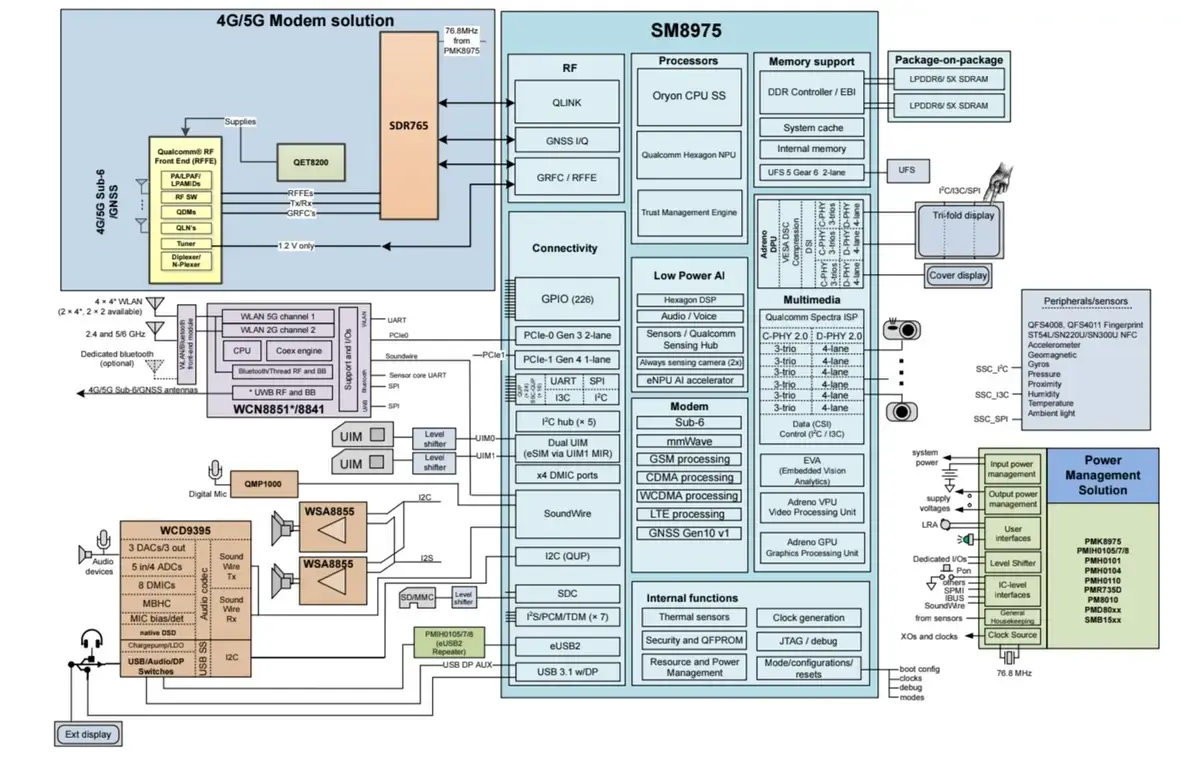 These technical advancements demonstrate how Qualcomm is strategically positioning its hardware to maintain market dominance while catering to evolving consumer hardware preferences.
Binned Versions Reduce Manufacturing Costs
To navigate the challenges posed by rising chip fabrication expenses, Qualcomm is adopting a strategic approach involving binned processors. Rather than relying solely on high-cost, full-specification 8-core chips, the company will offer 7-core variants. These versions operate at slightly lower CPU and GPU clock speeds, a move that successfully enhances production yields and lowers costs for original equipment manufacturers.
This binned processor strategy assists manufacturers in maintaining stable price points for their flagship devices.
It is widely anticipated that top-tier flagships, such as the forthcoming Galaxy S27 Ultra, will utilize the full-performance Snapdragon 8 Elite Gen 6 Pro. Conversely, mid-range flagship killers are expected to leverage the more affordable binned configurations. This dual-pronged strategy, which integrates 2nm and 3nm production options, allows Qualcomm to maintain a massive portfolio that addresses various market segments without sacrificing its competitive edge.
What are your thoughts on Qualcomm’s decision to introduce binned versions of the Snapdragon 8 Elite Gen 6 Pro? Do you believe this strategy will successfully lower smartphone prices, or will it lead to noticeable performance compromises? We invite you to share your opinions in the comments section below.
Your comment has been submitted,
it will be published after approval.