
Innosilicon Delivers Cutting-Edge LPDDR6 Memory IP to Korean Manufacturer


Shanghai-based semiconductor design firm Innosilicon has officially announced that its highly anticipated LPDDR6 memory technology has been successfully delivered to a major South Korean DRAM manufacturer. During a recent industry conference held in Shanghai, the company unveiled its next-generation memory controller IP, which is capable of reaching data transfer speeds of up to 14.4 Gbps, potentially setting a new benchmark for global performance standards. This strategic collaboration highlights Innosilicon’s growing influence in the semiconductor supply chain as the firm focuses on alleviating critical memory bottlenecks faced by the artificial intelligence and high-performance computing sectors.
- Innosilicon has confirmed the delivery of its 14.4 Gbps LPDDR6 memory IP to a prominent South Korean DRAM producer.
- The firm provides a comprehensive portfolio of memory and storage controllers that support nodes ranging from 28nm to 3nm.
- The new high-speed memory solutions aim to resolve performance bottlenecks associated with KV Cache read and write operations in large-scale AI models.
The next-generation LPDDR6 technology provides essential infrastructure for maximizing artificial intelligence inference efficiency.
Innosilicon Develops New Technologies to Overcome Memory Bottlenecks
Innosilicon is leveraging domestic supply chains to meet the soaring global demand for advanced memory hardware. The newly announced LPDDR6 IP is notable for its development using entirely indigenous design tools, ensuring greater control over the fabrication process. 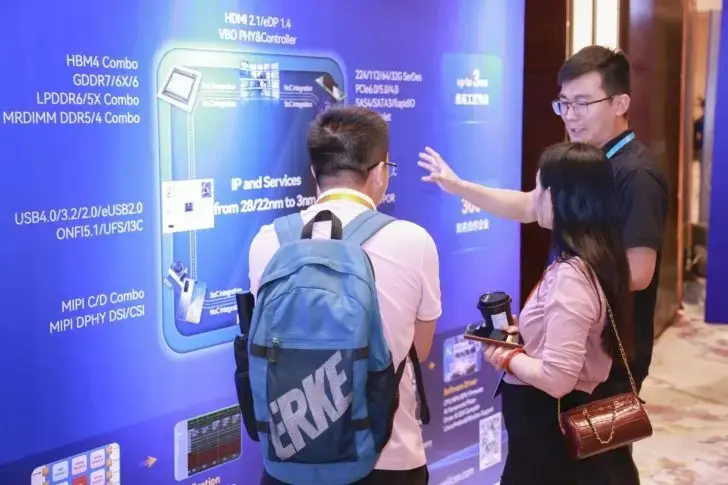 The solution integrates advanced features such as ECS support, dynamic write NT-ODT, and specialized refresh modes to minimize signal loss. These optimizations are crucial for enhancing operational efficiency, particularly in long-context scenarios where large language models require high-speed, reliable data access.
The Product Range Extends Across Various Manufacturing Nodes
During the event, Innosilicon highlighted its versatile design capabilities, which span from 28nm to 3nm process technologies. While the manufacturing capacity for advanced 3nm nodes in China remains a subject of intense scrutiny due to international trade restrictions, the company has demonstrated that its IP architecture is highly adaptable to diverse manufacturing environments. 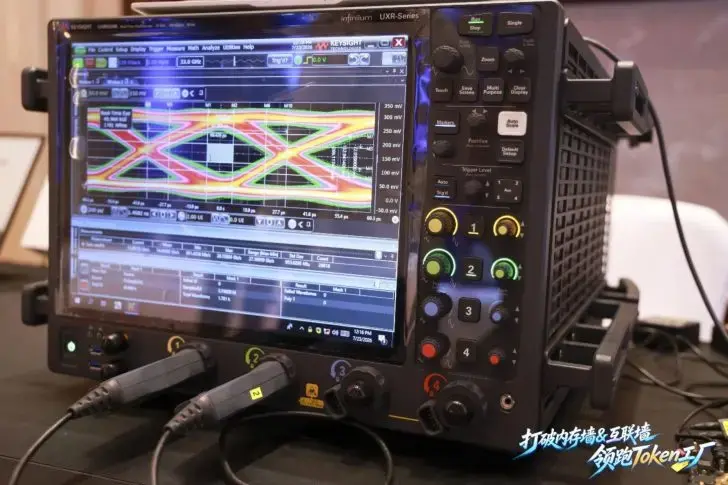 This technical flexibility serves as a cornerstone of the firm’s strategy to maintain its competitiveness in an increasingly fragmented global market.
The role of Chinese design firms is becoming increasingly pivotal as South Korean giants transition toward mass LPDDR6 production.
Global Market Competition Accelerates Rapidly
Industry leaders like SK Hynix are currently targeting the second half of 2026 for the commencement of mass LPDDR6 production. Innosilicon’s entry into this development phase represents a significant shift in the competitive landscape. While sector analysts note that many Chinese firms still maintain a degree of dependency on overseas technologies and that local players like CXMT remain in the early stages of the LPDDR6 race, Innosilicon’s latest IP offerings signify a major effort to bridge the technological gap. As the race for AI-driven memory optimization intensifies, the collaboration between design firms and large-scale manufacturers will likely dictate the pace of future hardware innovation.
What are your thoughts on Innosilicon’s latest LPDDR6 technology announcement? Do you believe this move will effectively shift the balance of power in the global memory market? Please share your insights and predictions in the comments section below.
Your comment has been submitted,
it will be published after approval.