
MSI RTX 5090 Connector Melts During DLSS 5 Stress Testing

Concerns regarding power consumption and thermal stability for NVIDIA’s GeForce RTX 5090 series have intensified following reports of hardware failure. A user reported that an MSI GeForce RTX 5090 Gaming Trio OC suffered catastrophic physical damage to its power connector during intense DLSS 5 Neural Rendering testing. According to GPU-Z monitoring logs, the graphics card maintained a sustained power draw of 613.5 Watts throughout the stress test. This incident highlights potential vulnerabilities in the 12V-2×6 power delivery system when subjected to the extreme and continuous loads required by next-generation neural rendering technologies.
- The MSI GeForce RTX 5090 Gaming Trio OC experienced a melted 12V-2×6 power connector during prolonged DLSS 5 neural rendering stress tests.
- Hardware logs confirm the graphics card maintained a continuous power draw of 613.5 Watts, significantly exceeding standard operational limits.
- The physical damage resulted from extreme thermal stress as the connector failed to manage the sustained electrical load required for AI-driven rendering.
Continuous Power Loads Challenge 12V-2×6 Connector Limits
The MSI Gaming Trio OC is factory-configured with a power limit of 575 Watts, yet the implementation of DLSS 5 technology pushes the hardware far beyond its expected parameters. Under heavy neural processing loads, the GPU quickly surpasses its standard 450-Watt consumption profile. While the PCIe slot provides approximately 75 Watts of power, the remaining substantial load is directed entirely through the 16-pin 12V-2×6 connector. 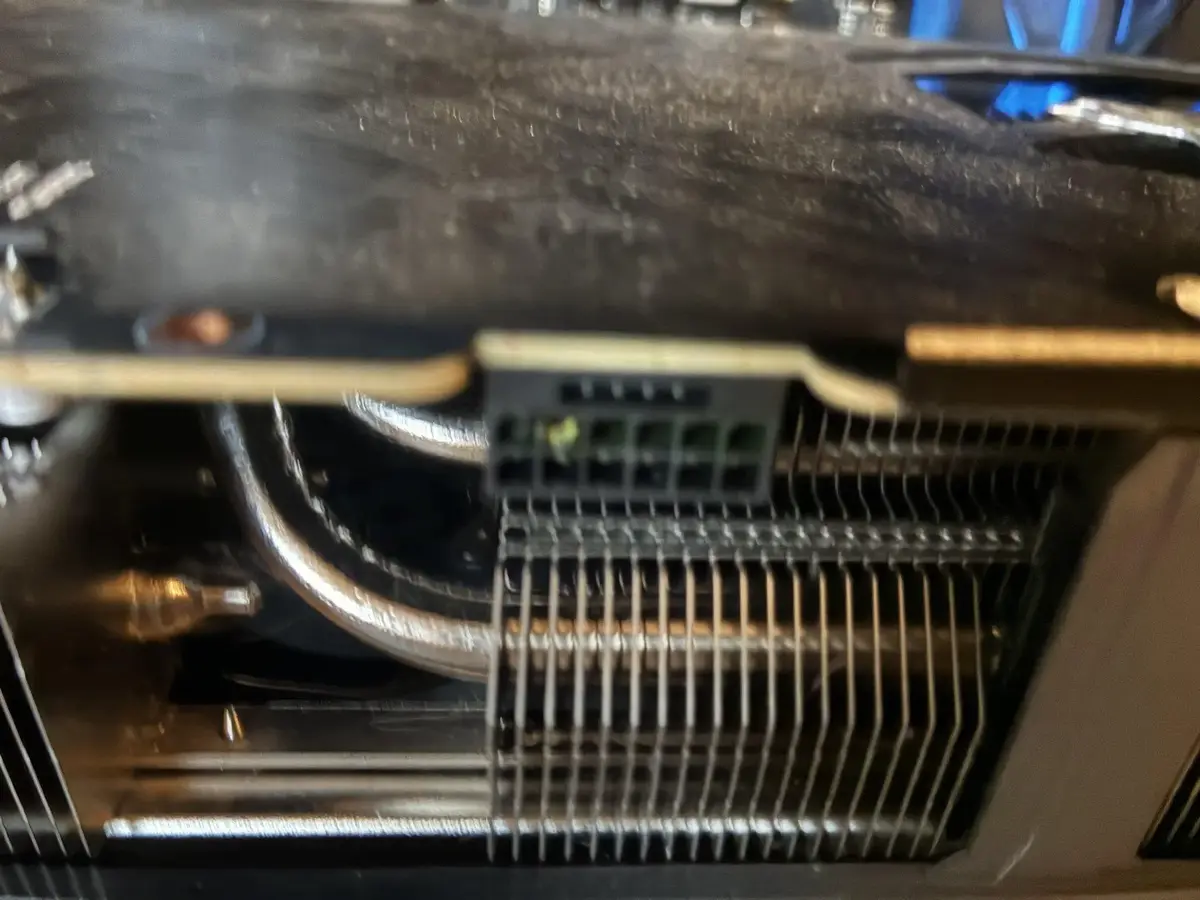 In the documented failure, the system experienced an abrupt shutdown, followed by a strong burning odor, confirming that the plastic socket housing had melted and fused with the cable terminals.
AI Workloads Drastically Increase Energy Demands
Independent analysis of DLSS 5 demonstrates that the architecture places unprecedented demands on GPU hardware components. The continuous stress applied to Tensor cores and memory subsystems during neural processing is the primary driver behind these elevated power consumption levels. For instance, in Hitman 3, activating DLSS 5 causes power consumption to jump from 435 Watts to 520 Watts. Similarly, NBA 2K27 benchmarks show total system loads remaining locked at 613.5 Watts during heavy neural calculations. Data suggests that designs utilizing dual 16-pin connectors manage these loads more effectively, whereas single-connector configurations struggle to dissipate the resulting heat.
Manufacturers Must Address Engineering Challenges
As AI-based processing technologies continue to evolve, high-performance graphics cards are expected to maintain peak power consumption for extended gaming sessions rather than short bursts. This shift presents a significant engineering hurdle for hardware manufacturers. To maintain system integrity, companies must decide whether to implement more aggressive power limitations through firmware and BIOS updates or to pursue radical hardware revisions. Necessary changes may include improved socket cooling solutions or a mandatory transition to dual-connector designs for all flagship models to ensure long-term stability and user safety.
Have you experienced any thermal issues with your high-end GPU or the 12V-2×6 power standard during intensive AI workloads? Share your thoughts and diagnostic experiences in the comments section below.
Your comment has been submitted,
it will be published after approval.