
Honda Develops Wireless Charging Technology for Moving Electric Vehicles

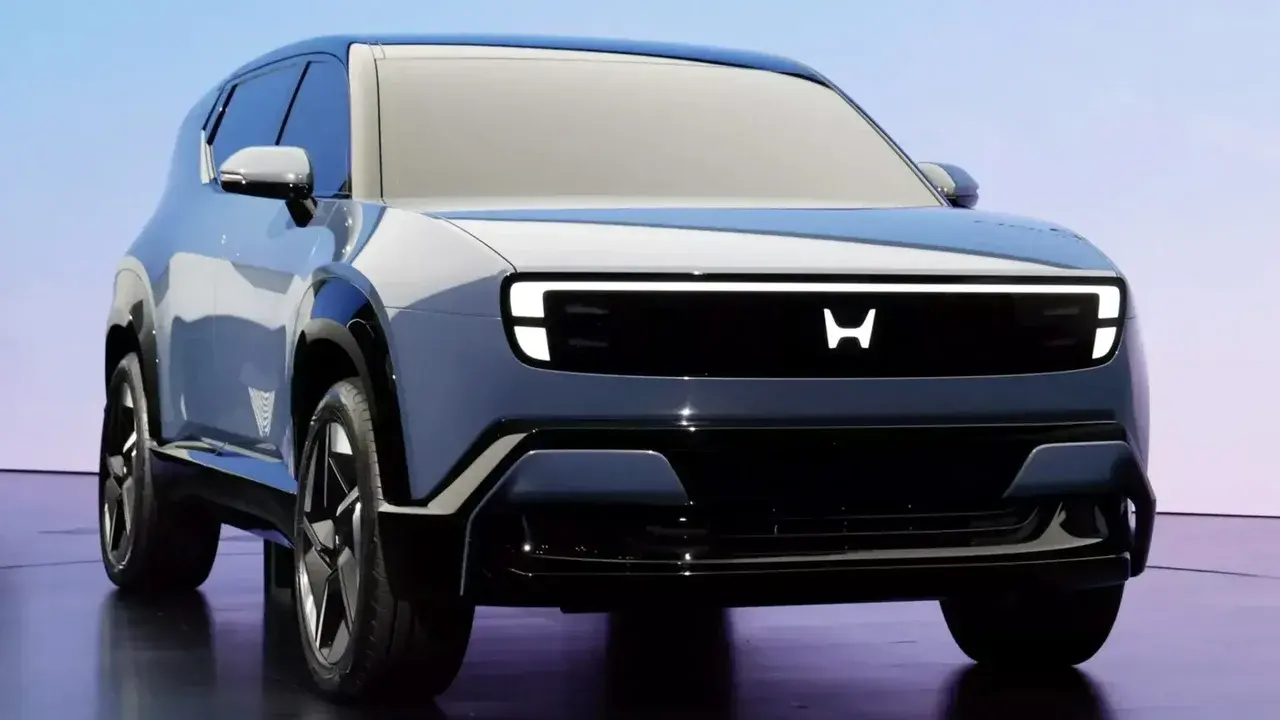
Japanese automotive giant Honda, in collaboration with the Taisei Group, has launched an ambitious project to integrate wireless charging technology directly into road infrastructure, allowing electric vehicles to charge while driving. This innovative system, known as Wireless Power Transfer (WPT), aims to eliminate the reliance on stationary charging stops by utilizing specialized equipment embedded beneath the road surface. By creating a continuous energy link between the pavement and the vehicle, the project seeks to significantly extend the range of electric cars and address the common challenge of frequent battery replenishment. This development marks a pivotal shift in how manufacturers envision the future of sustainable transportation.
- Honda and Taisei Group are currently developing a wireless power transfer system that enables electric vehicles to charge while in motion.
- The technology utilizes high-density receiver units under the vehicle to communicate with energy-transmitting equipment buried within the road.
- Initial field testing will focus on large commercial vehicles to evaluate energy transfer efficiency and road durability.
- Public road trials in Japan are tentatively scheduled to commence by 2027 following private testing phases.
Wireless Power Transfer Systems Function via Electromagnetic Induction
The core mechanism of this system relies on a sophisticated interaction between the vehicle’s chassis and the ground. A high-density transceiver unit is mounted under the electric vehicle, which maintains a constant data and power link with the embedded transmission hardware.  As the vehicle passes over these segments, power is transferred wirelessly to the battery. Unlike rapid plug-in chargers that aim to fill a battery from 10% to 97% in under ten minutes, the Honda approach prioritizes constant, mid-journey replenishment to reduce the overall energy storage burden.
While the concept of dynamic charging is not entirely new—with companies like Stellantis and various Israeli startups having experimented with similar road concepts since 2021—Honda’s involvement brings significant industrial weight to the feasibility of the technology. 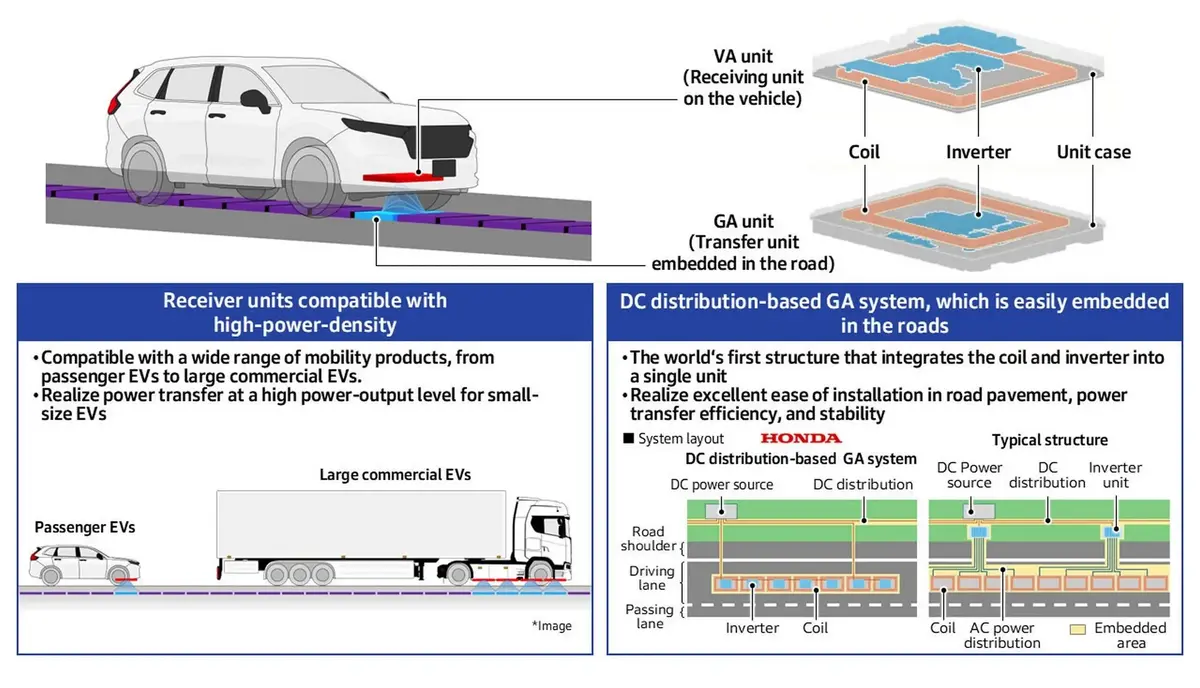 However, the automaker has yet to disclose specific performance metrics, such as the exact amount of energy transferred per mile or the system’s efficiency at varying driving speeds. Consequently, industry experts suggest that this technology will serve as a long-term infrastructure goal rather than a direct replacement for current charging networks in the immediate future.
Commercial Vehicles Will Undergo Preliminary Field Tests
Honda and the Taisei Group have decided to prioritize the commercial transport sector for their initial testing phases. By focusing on heavy-duty vehicles, the consortium aims to better measure the system’s utility for high-consumption transit and logistics fleets. Plans are currently underway to construct a specialized test track by late 2026 to evaluate the long-term resilience of the road surface under heavy traffic loads. 
The target for these commercial trials is to achieve a power transfer capacity of 150 kW, which would provide sufficient energy to support continuous operation for long-haul transport. Although a precise roadmap for mass production remains undisclosed, the progression from private test circuits to public road trials in 2027 represents a critical milestone. By focusing on commercial viability first, Honda hopes to refine the hardware to withstand the rigors of everyday traffic conditions before considering consumer-level implementation.
As we move toward a future where the road itself serves as a power source, we would love to hear your perspective. Do you believe that dynamic charging technology is the missing piece for widespread electric vehicle adoption, or do you think stationary charging infrastructure will remain the primary solution for the foreseeable future? Share your thoughts in the comments section below.
Your comment has been submitted,
it will be published after approval.