
Apple Hits Record Market Share Despite Global Smartphone Decline


According to the latest data released by Counterpoint Research, the global smartphone market experienced a significant downturn in the third quarter, with shipments dropping by 20 percent year-over-year to hit their lowest level in 14 years. This sharp contraction reflects broader macroeconomic challenges, including memory component shortages and rising production costs that have hampered the industry. Despite this downward trend across the board, Apple achieved a historic milestone by capturing a 22 percent market share for the first time during a third-quarter period. The tech giant successfully narrowed the gap with market leader Samsung, demonstrating resilience in a cooling consumer electronics environment.
- Global smartphone shipments reached their lowest third-quarter levels in 14 years due to ongoing memory component shortages.
- Apple secured a record 22 percent share of the global market by leveraging strong demand for its premium device lineup.
- Smartphone manufacturers have shifted their corporate strategies to prioritize profitability margins over total shipment volumes.
Industry Players Face Significant Operational Challenges
The report from Counterpoint Research confirms that the technology sector has now endured two consecutive quarters of suppressed growth due to supply chain bottlenecks and rising component prices. The 20 percent decline in global smartphone shipments highlights a dual crisis: a weakening consumer purchasing power and severe operational hurdles for device manufacturers. 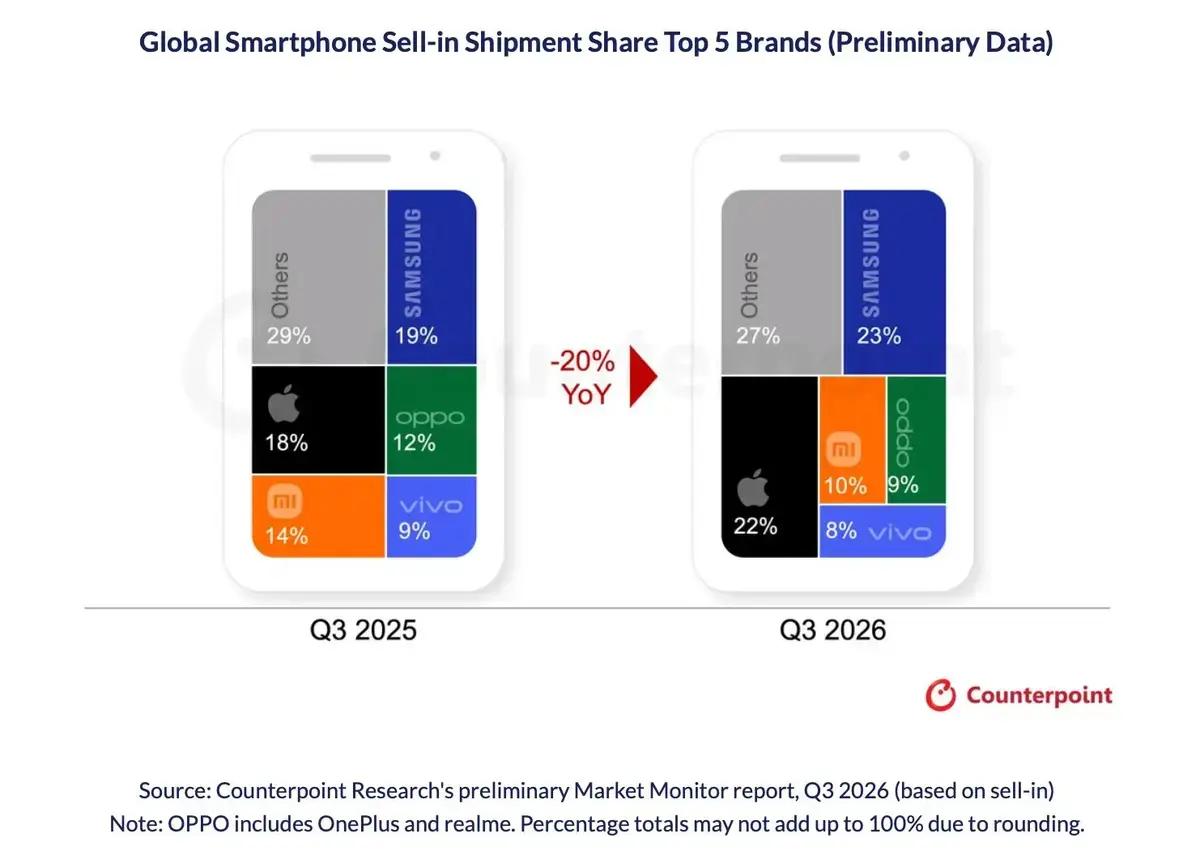 While Apple managed to defy the trend, other major industry players such as Xiaomi, OPPO, and vivo reported significant losses in their respective market shares compared to the same period last year. These companies are now struggling to maintain their competitive edge as supply chain costs continue to fluctuate.
Apple Successfully Executes Its Premium Strategy
The stellar performance displayed by Apple this quarter is largely attributed to the robust rollout of its flagship product lines. Despite the absence of a base model in certain regional configurations, the high-end Pro series saw exceptional traction in critical markets like China and India, which significantly bolstered the company’s total shipment volume. Furthermore, Apple strategically adjusted its pricing models during the final weeks of the quarter to align with industry-wide inflationary trends. This approach proves that the firm is successfully maintaining market dominance by focusing on high-margin hardware rather than relying solely on high-volume unit sales.
Market Analysts Predict Continued Difficult Conditions
Looking ahead, industry experts suggest that the landscape for smartphone manufacturers remains challenging for the remainder of the year. With component prices expected to stay elevated and consumers exhibiting increased caution regarding discretionary spending, companies are likely to continue prioritizing profit preservation over aggressive expansion. In price-sensitive market segments, the combined impact of rising retail prices and persistent supply constraints is expected to persist in the coming months. A full recovery for the sector is largely dependent on a reduction in manufacturing costs and a substantial improvement in global supply chain reliability.
How do you believe this global decline in the smartphone market will influence the future pricing strategies of major tech corporations? We are curious about your thoughts on Apple’s record-breaking performance in such a difficult economic climate, so please share your opinions in the comments section below.
Your comment has been submitted,
it will be published after approval.