
ASELSAN’s DERİNGÖZ Explores the Sunken Streets of Halfeti

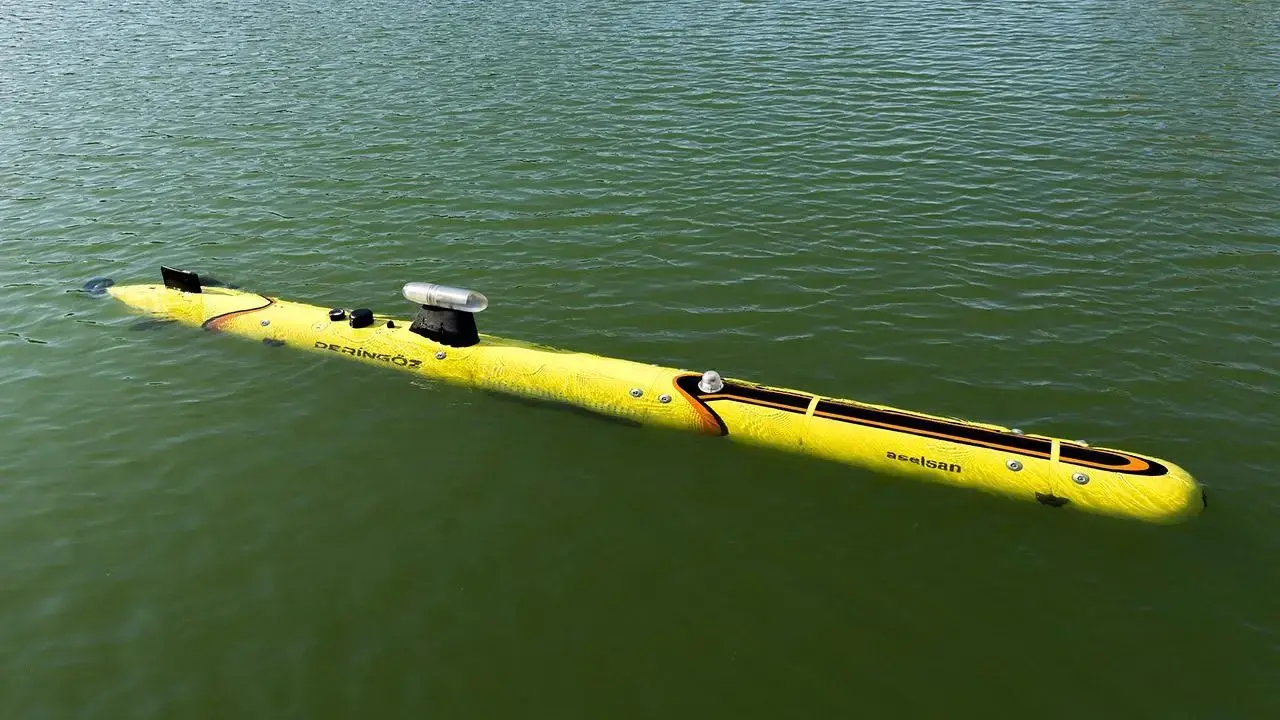
ASELSAN successfully deployed its cutting-edge autonomous underwater vehicle, DERİNGÖZ, into the Euphrates River to document the submerged ruins of Halfeti, Turkey, ahead of the upcoming TEKNOFEST event in Şanlıurfa. As part of a technical demonstration, the locally developed drone navigated the challenging currents of the river to capture high-resolution imagery of the “Sunken City,” revealing ancient streets and historical structures that have remained underwater since the construction of the Birecik Dam. This mission highlights the vehicle’s capability to operate in complex inland water environments, providing a unique look into the cultural heritage preserved beneath the surface.
- ASELSAN deployed the DERİNGÖZ autonomous underwater vehicle to survey the submerged historical sites of Halfeti.
- The vehicle successfully operated in the Euphrates River despite encountering difficult underwater currents and variable water conditions.
- DERİNGÖZ is capable of reaching depths of up to 600 meters while utilizing advanced sonar and optical imaging systems.
- The mission serves as a demonstration of Turkey’s indigenous underwater technology ahead of the TEKNOFEST event.
DERİNGÖZ Navigates Through the Depths of the Euphrates
The historical district of Halfeti, often referred to as a “Cittaslow” or calm city, presents a difficult environment for underwater exploration due to its unique topography and the impact of the Birecik Dam. However, the DERİNGÖZ system proved its operational readiness by effectively scanning the underwater remnants of the settlement. The high-definition data collected during this mission provides researchers and historians with a clear view of the architectural integrity of the submerged structures, which were previously difficult to document with such precision.
Engineers Provide Advanced Sonar Architecture
Designed and manufactured entirely by ASELSAN engineers, the DERİNGÖZ platform serves as a versatile tool for various underwater tasks. Beyond its visual recording capabilities, the vehicle features a robust suite of sensors that allow for independent navigation in GPS-denied environments. By utilizing inertial navigation and acoustic positioning systems, the drone maintains a steady course even in deep or obstructed waters.
The technical specifications of the platform include a 600-meter depth rating, which exceeds the requirements for most inland and coastal exploration missions. Furthermore, the modular design of the vehicle allows operators to integrate specialized equipment for tasks ranging from pipeline inspections and mine detection to search and rescue operations. This adaptability ensures that the platform remains relevant for both civilian infrastructure maintenance and military security requirements.
Autonomous Systems Support Future Maritime Operations
The successful operation in Halfeti indicates that autonomous underwater vehicles are becoming essential for managing critical infrastructure throughout the country. Beyond historical preservation, this technology offers significant advantages for the maintenance of dam walls, the detection of leaks in underwater pipelines, and the securing of port facilities. By shifting the burden of dangerous underwater inspections to autonomous systems, organizations can minimize risks to human divers while increasing the frequency and detail of monitoring efforts.
As Turkey continues to advance its “Blue Homeland” initiatives, the integration of these systems into domestic and military applications marks a significant shift in operational strategy. The performance witnessed in the Euphrates River confirms that the DERİNGÖZ platform has reached a level of maturity suitable for real-world deployment in a variety of challenging environments.
What are your thoughts on using autonomous technology to uncover and preserve historical sites submerged underwater? Share your opinions and insights in the comments section below.
Your comment has been submitted,
it will be published after approval.