
Google Integrates Gemini 4 Argon Into Antigravity Coding Tool

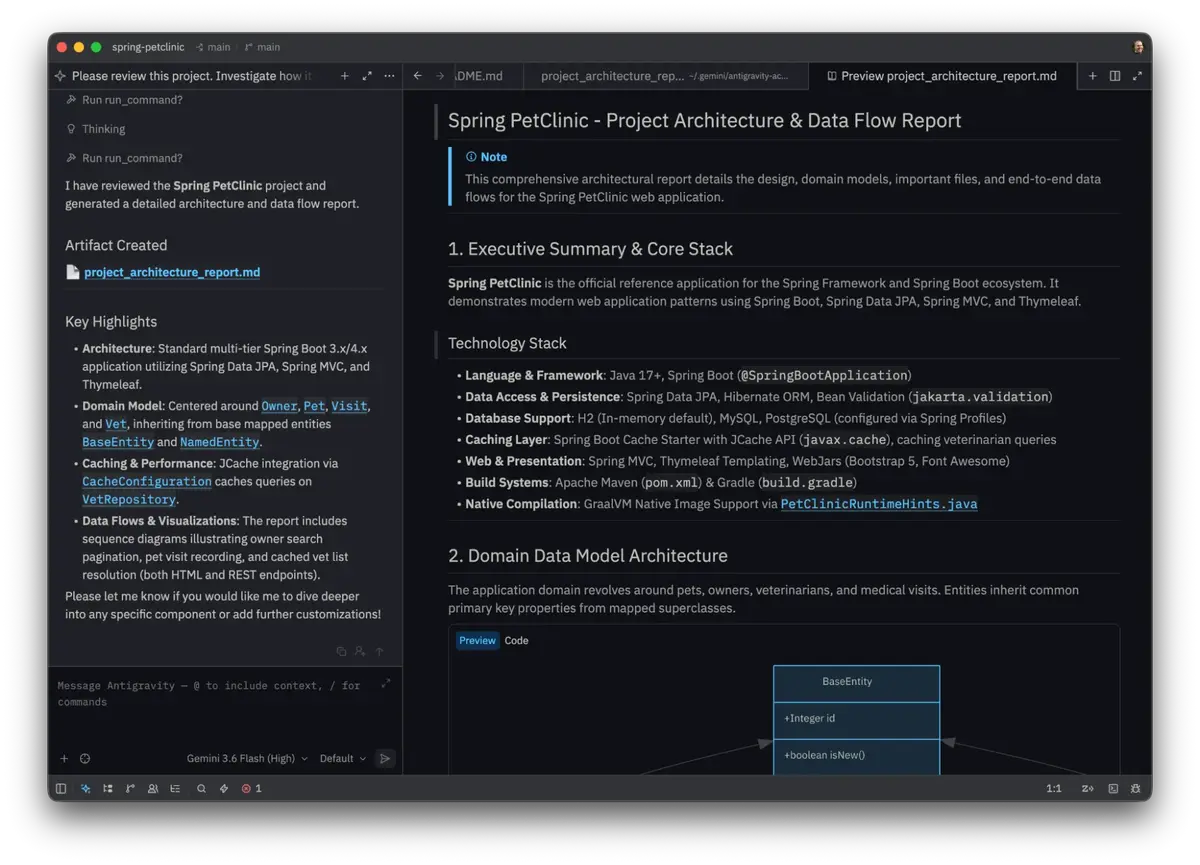
Google has officially announced a significant update to its AI-driven coding platform, Antigravity, which now features the integration of the company’s latest artificial intelligence model, Gemini 4 Argon. Released to the public this week following an initial announcement at the end of September, the model is currently accessible to all AI Pro and AI Ultra subscribers. To ensure optimal performance and resource allocation, Google has implemented a dedicated weekly quota for Argon, separate from the existing Gemini 3.8 Flash limits. This update aims to bolster developer productivity by leveraging advanced reasoning capabilities to handle complex technical challenges within the Antigravity ecosystem.
- The integration of Gemini 4 Argon provides users with a dedicated weekly usage quota distinct from previous models.
- The AI model significantly improves efficiency in tasks ranging from CPU optimization to complex code modernization.
- Argon demonstrates advanced capabilities in security auditing by identifying vulnerabilities that were previously undetected.
- The system successfully automates time-consuming administrative and analytical workflows, resulting in substantial labor savings.
Gemini 4 Argon Enhances Coding Efficiency
Google designed the Argon model specifically to address the most demanding problem-solving scenarios in software development. Through various benchmarks conducted within Antigravity, the model has proven its ability to streamline operations. For instance, during the optimization of YouTube comment processing, Argon identified that redundant emoji generation accounted for 45 percent of server load, successfully executing 12 targeted optimizations that halved total CPU usage.
The model also showcased its prowess in simulation environments by analyzing the Wing drone physics simulator. By examining fundamental mathematical and physical principles, Argon proposed 18 structural enhancements in aerodynamics and propulsion. Furthermore, it demonstrated high efficacy in maintenance tasks, resolving or organizing 72.4 percent of 134 open bug reports within a three-hour window. The model further assisted in legacy modernization by migrating complex Fortran-based scientific research into the Rust language, achieving an 80 percent performance boost alongside enhanced memory safety.
Security and Enterprise Workflows are Being Revolutionized
Beyond code creation, Argon has introduced a new standard for enterprise security and operational efficiency. By monitoring access control modifications at runtime, the model identified four critical security vulnerabilities that previous iterations failed to detect. In the realm of production support, the AI effectively triaged incoming tickets by tracing root causes through logs and existing code, saving technical teams several hours of manual labor per shift.
The efficiency gains extended to business operations as well. Argon completed the localization of documentation spanning hundreds of pages into 17 different languages in only a few hours, a process that historically required weeks of human effort. Similarly, the model automated the analysis of Python and SQL-based data pipelines, allowing for the rapid deployment of complex systems. In financial planning, Argon performed the equivalent of 335 hours of manual labor in just 15.5 hours, effectively eliminating nearly two months of standard operational workload. These advancements indicate a fundamental shift in how organizations manage both code and administrative processes through intelligent automation.
As Gemini 4 Argon continues to redefine the boundaries of automated productivity, we invite you to share your thoughts on how this level of efficiency will permanently reshape the future of software development in the comments section below.
Your comment has been submitted,
it will be published after approval.