
Huawei Unveils UnifiedBus Architecture to Eliminate AI Bottlenecks

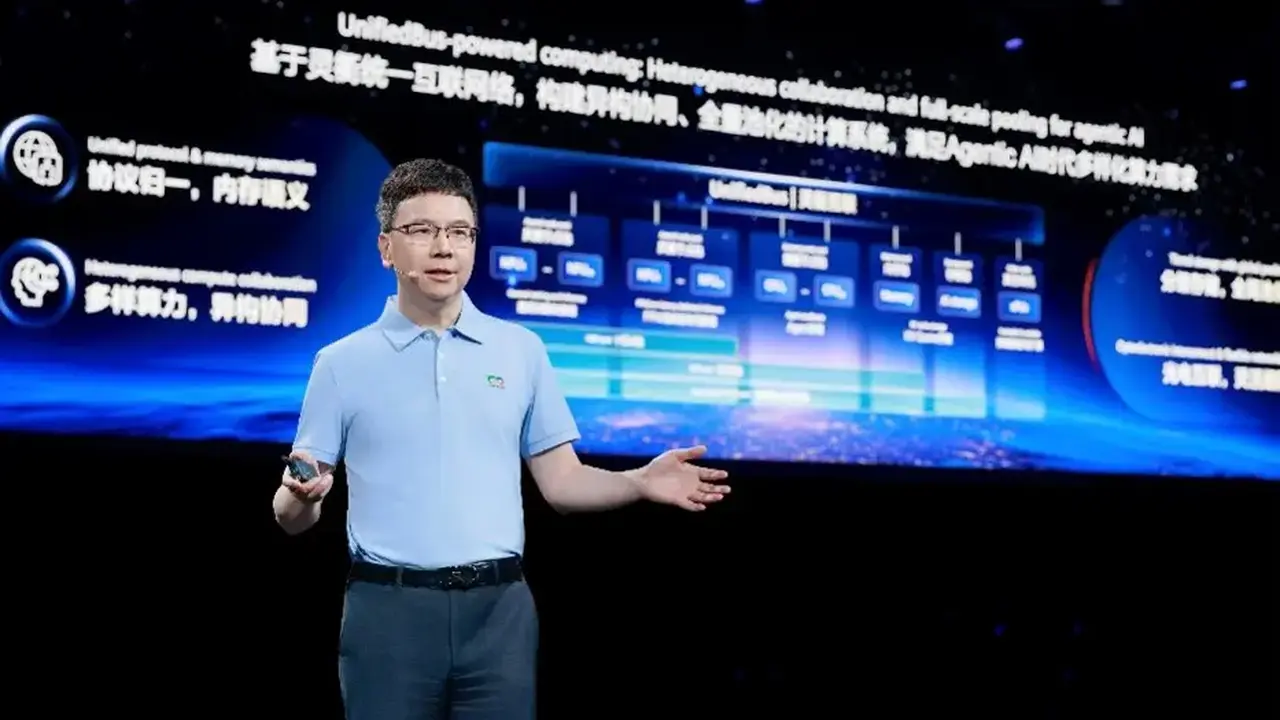
At the HUAWEI CONNECT event held in Shanghai, Huawei officially introduced its revolutionary UnifiedBus architecture, a next-generation computing framework designed to dismantle the data transfer barriers between processors, memory, and storage units. By addressing the massive processing demands of autonomous AI agents and large-scale models, this new infrastructure allows both massive data centers and small-to-medium enterprises to scale their operations with unprecedented efficiency. This breakthrough aims to resolve the critical communication bottleneck that has long hindered the performance of modern artificial intelligence systems, marking a significant milestone in Huawei’s efforts to optimize hardware for the era of agentic AI.
- The UnifiedBus architecture facilitates direct, low-latency communication between CPUs, NPUs, system memory, and storage resources.
- Huawei’s modular design enables scalability ranging from localized server connections to massive clusters supporting millions of NPUs.
- The company released the Agentic AI SuperCluster solution to provide enterprises with high-performance, cost-effective artificial intelligence deployment options.
- Huawei continues to expand its open-source ecosystem through partnerships with over 50 organizations to accelerate AI integration.
AI Performance Depends on Efficient Communication
The rapid expansion of artificial intelligence models and the emergence of autonomous, decision-making AI agents have fundamentally shifted the requirements of high-performance computing. Today, the primary technical challenge extends beyond the raw power of individual processors. Engineers must now manage the massive data traffic occurring between CPUs, memory, and storage units without introducing latency. Huawei’s UnifiedBus architecture addresses this challenge by providing a unified, high-speed conduit that connects these components directly.
By unifying these resources, the system significantly reduces bottlenecks and maximizes data throughput. This efficient allocation of hardware resources ensures that capacity is dynamically distributed to meet the specific requirements of various AI workloads, eliminating idle hardware states and improving overall system utilization.
Scalability Reaches Millions of NPUs
A defining feature of the UnifiedBus architecture is its modularity, which allows for extreme scalability. The system is designed to grow from simple, single-cabinet configurations to massive enterprise-level data center clusters that can integrate millions of NPUs. This flexibility ensures that the architecture remains relevant regardless of the size of the infrastructure.
SuperClusters Support Enterprise Needs
Huawei also debuted the Agentic AI SuperCluster, a specialized solution powered by the UnifiedBus architecture. This system leverages high-end hardware, including TaiShan 950 servers and the Atlas 960 SuperPoD, to provide robust computing power. Complementing this, the OceanStor M900 storage and Xinghe UBG network architecture ensure seamless data management. Notably, this technology is also accessible to smaller businesses; two Atlas 650E servers can be integrated via UnifiedBus to function as a unified, high-powered system, allowing small and medium enterprises to run large language models affordably.
Open Source Ecosystem Continues to Grow
Beyond hardware, Huawei is committed to strengthening its Ascend platform through open-source innovation. By supporting initiatives like DeepSeek Harness and openJiuwen, the company is facilitating faster inference and enhanced security for AI agents. With over 90 active open-source collaborations, Huawei is making it significantly easier for developers to integrate specialized AI agents into existing corporate IT systems. As noted by Yang Chaobin, Executive Director and CEO of Huawei’s ICT Business Group, these system-level innovations are essential for providing a competitive, open global computing alternative.
How do you think the integration of UnifiedBus will reshape the accessibility of large language models for smaller businesses? Share your thoughts on the future of AI hardware infrastructure in the comments section below.
Your comment has been submitted,
it will be published after approval.