
iFixit Explains Why the iPhone Duo Screen Fails

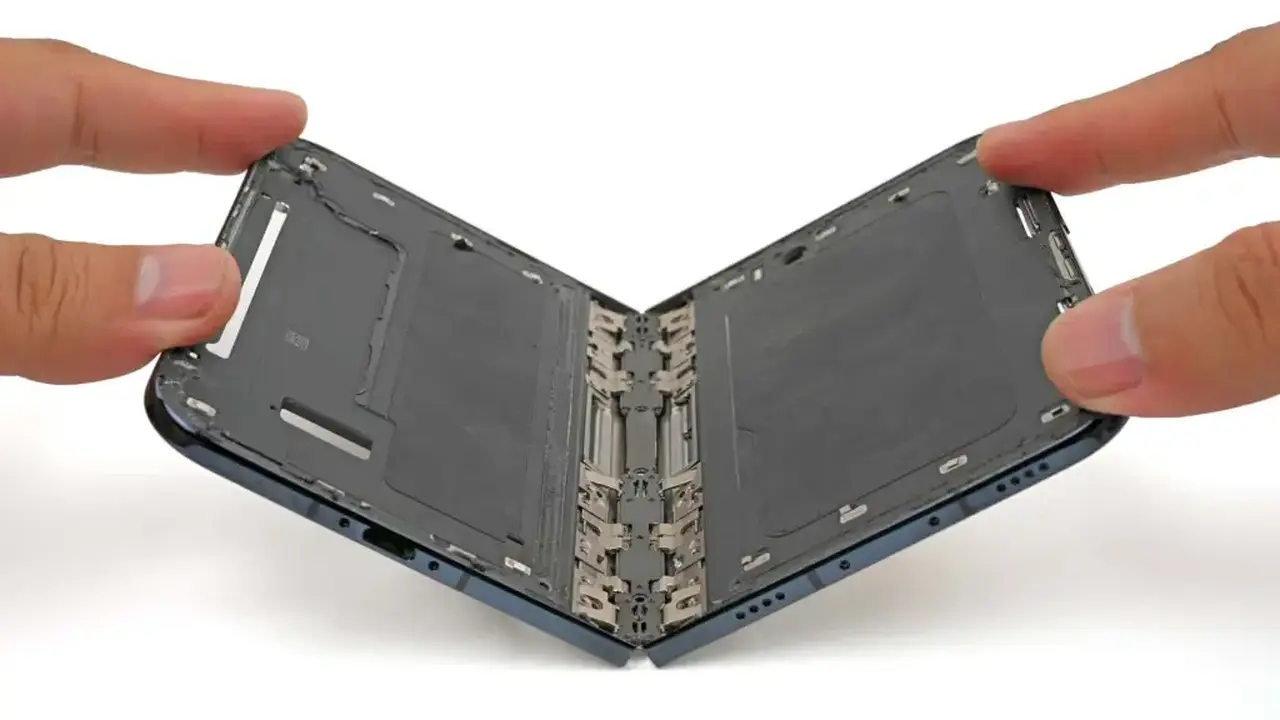
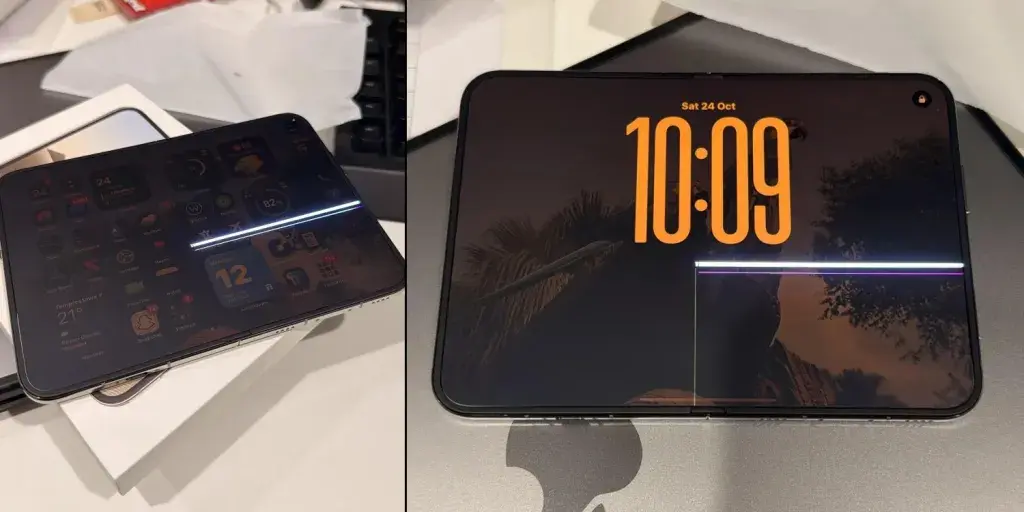
Following the highly anticipated release of the iPhone Duo, Apple’s inaugural foldable smartphone has become the center of intense debate due to a combination of innovative engineering and early user complaints regarding display malfunctions. Repair experts at iFixit have now conducted a comprehensive teardown of the device, providing a detailed look at its internal architecture and mechanical components. By analyzing the hardware, the team aimed to uncover why some units exhibit persistent screen issues, such as vertical lines and discoloration, shortly after purchase. This in-depth investigation offers a transparent view of the complex engineering choices behind the iPhone Duo and its overall durability.
- The iPhone Duo achieved a record-setting repairability score of 5 out of 10 for foldable devices.
- Engineers utilized electrically releasable adhesives to simplify the battery replacement process.
- Mechanical stress caused by the center support bar and guide rails often leads to panel failure.
- The display features a specialized sub-pixel arrangement designed to minimize the visibility of the fold crease.
Repairability Scores Reach New Heights for Foldables
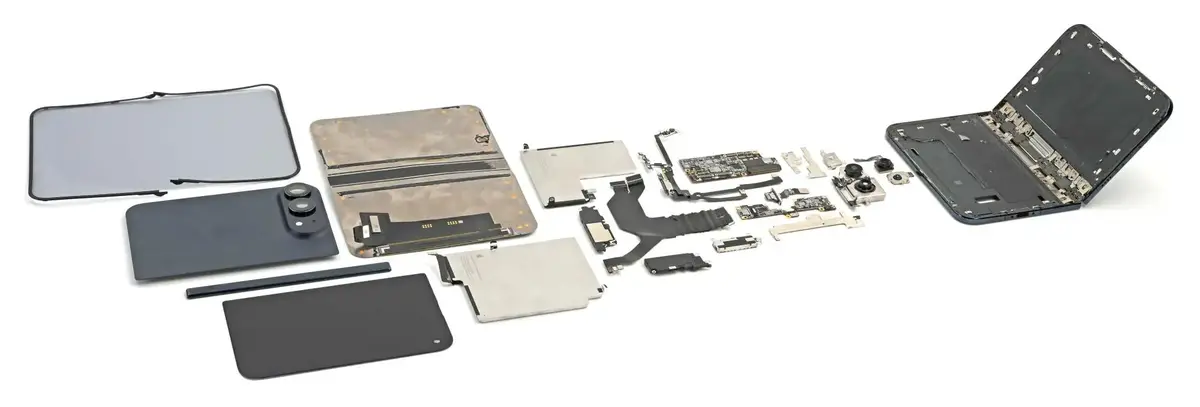
iFixit has awarded the iPhone Duo a preliminary repairability score of 5 out of 10, which currently stands as the highest rating ever assigned to a foldable handset. This score reflects Apple’s shift toward modular design, moving away from heavy adhesives and toward more accessible components. The team noted that the device is significantly easier to service compared to its industry competitors, provided that official replacement parts remain available to consumers.
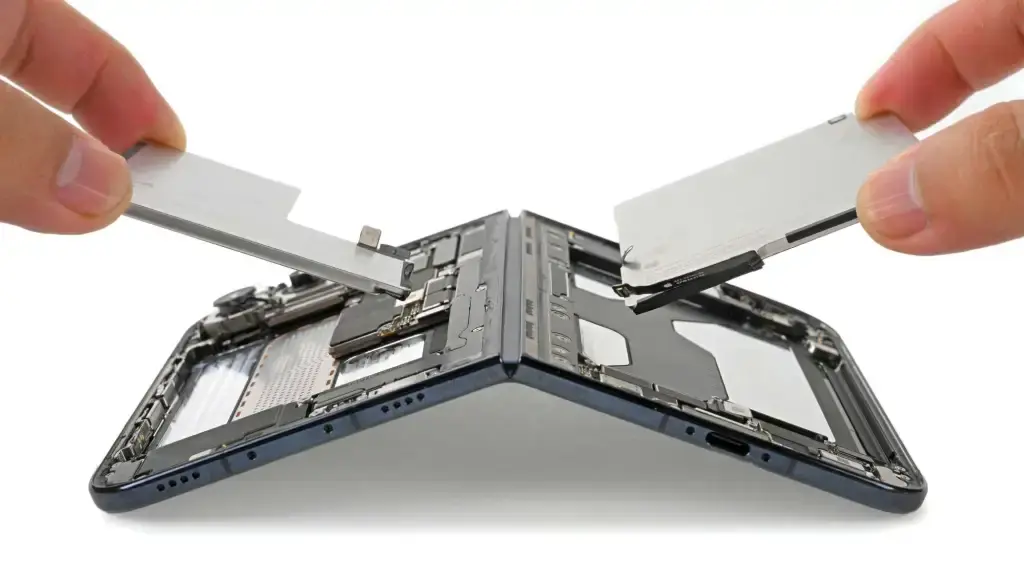
One of the most impressive design choices involves the battery system. Apple implemented an electrically releasable adhesive that allows technicians to detach the batteries without the need for chemical solvents or risky pulling techniques. Furthermore, the use of mechanical clips instead of permanent glue for the inner display frame ensures that the screen can be serviced without causing unnecessary damage to the internal housing.
Mechanical Stress Points Cause Screen Failures
The iFixit report highlights the root causes behind the “cracking” sounds and vertical lines reported by users. Through high-resolution CT scans and 3D simulations, the team identified that the central support bar occasionally fails to retract properly when the phone is folded, applying direct physical pressure to the fragile OLED panel. Additionally, curved guide rails can rub against the display layers if the mechanical tolerances deviate even slightly during the folding motion.
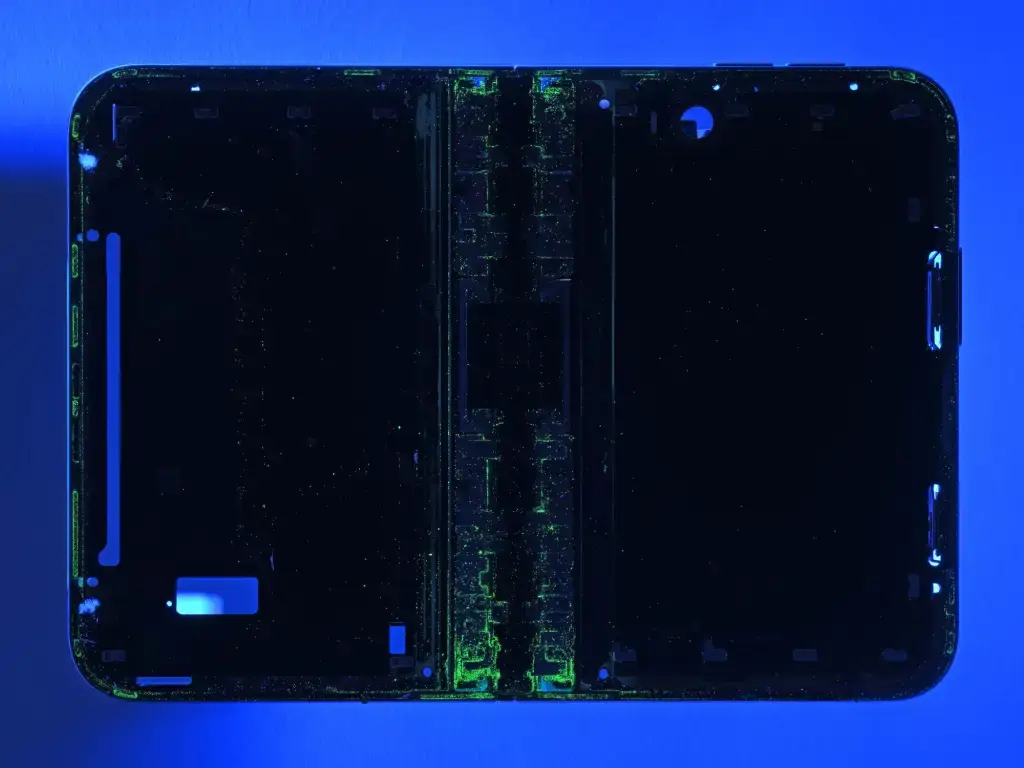
The investigation also pointed to the cable transition channel, where multiple structural layers converge. This specific area experiences high concentrations of physical stress, which can compromise the screen’s integrity over time. Despite these mechanical challenges, the device performed well in dust resistance tests, proving that the IP68-rated seals are highly effective at keeping debris out of the sensitive hinge mechanism, even if the hinge itself occasionally produces audible clicking sounds.
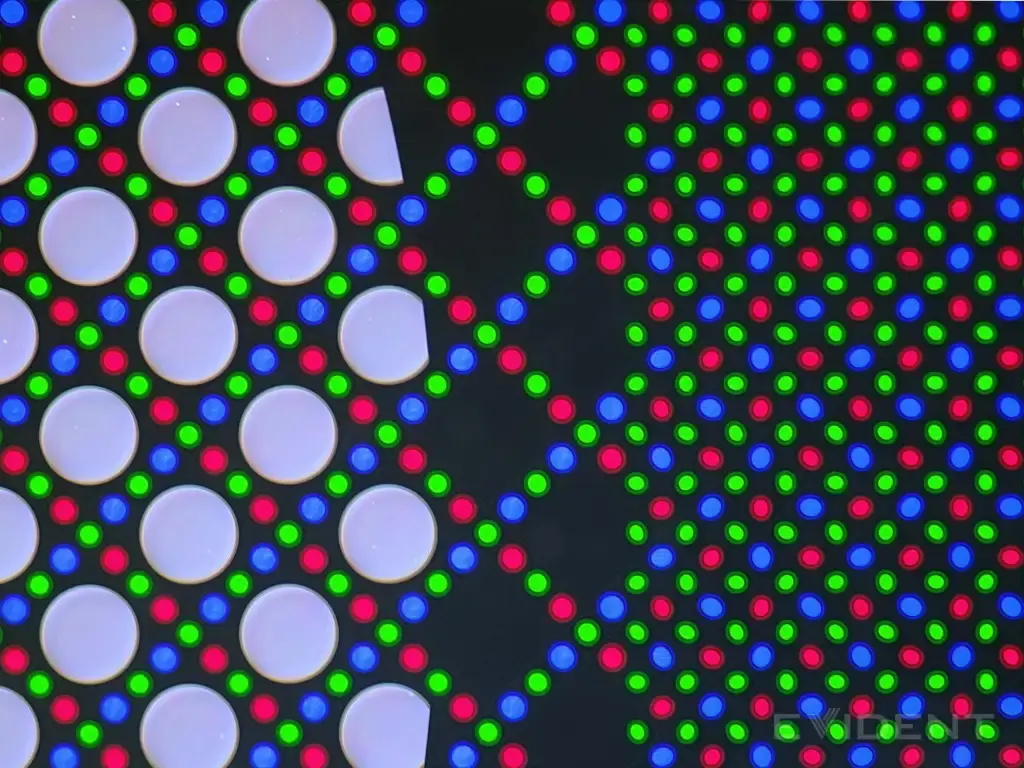
Advanced Display Technologies Minimize Visual Creases
Beyond the structural concerns, the teardown revealed how Apple masks the inevitable crease on the inner display. The screen utilizes a matte nano-texture surface combined with an ovoid sub-pixel arrangement that effectively reduces light refraction. This specialized geometry ensures that the fold line remains almost invisible under normal viewing conditions. In areas where the under-display selfie camera is located, Apple opted for a wider pixel pitch to maximize light transmission, demonstrating a sophisticated approach to balancing display aesthetics with complex hardware requirements.
Have you experienced any display issues with your foldable device, or do you believe the current engineering is sufficient for daily use? Share your thoughts and experiences in the comments section below.
Your comment has been submitted,
it will be published after approval.