
Anthropic Report Claims Single Agent Architecture Outperforms Multi-Agent Systems


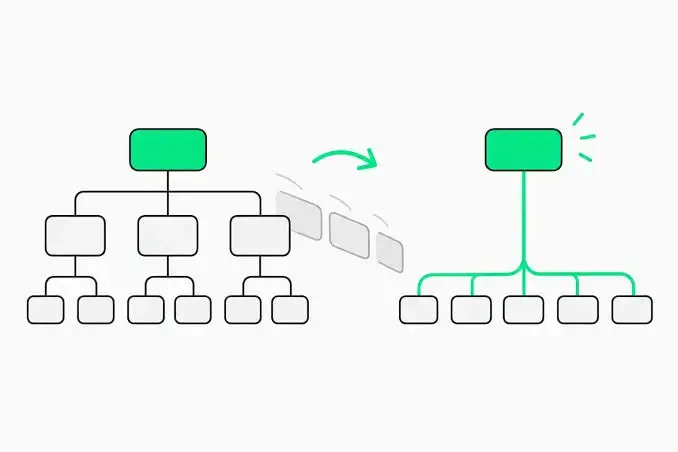
In a significant shift for artificial intelligence development, AI research firm Anthropic has released a comprehensive report challenging the industry-standard reliance on multi-agent systems. The report argues that as large language models (LLMs) continue to evolve, the necessity for decomposing complex tasks into multiple sub-agents is rapidly diminishing. Anthropic asserts that modern, advanced single-agent architectures are now more reliable, efficient, and capable of managing complex workflows autonomously than fragmented networks of smaller agents. This paradigm shift signals a move away from the long-standing industry practice of assigning specific sub-tasks to separate specialized agents to solve difficult technical challenges.
- Anthropic advocates for shifting from complex multi-agent frameworks to more efficient single-agent architectures.
- Modern large language models demonstrate improved reasoning and self-correction capabilities that eliminate the need for sub-agent delegation.
- Multi-agent systems suffer from increased latency, higher computational costs, and significant challenges in debugging.
- Developers are encouraged to prioritize robust system prompting and tool integration over building intricate agent hierarchies.

AI Architecture Experiences a Paradigm Shift
For several years, the artificial intelligence landscape has been dominated by the multi-agent approach. This strategy was initially conceived as a necessary workaround for older generation models that struggled with limited context windows and restricted logical reasoning capacities. Developers frequently built complex ecosystems where separate agents were responsible for coding, auditing, data retrieval, and error correction. By breaking down massive projects, engineers hoped to bypass the inherent limitations of individual models.
However, the latest findings from Anthropic suggest that the rapid advancement of LLMs has rendered these elaborate structures redundant. Modern models possess enhanced long-context tracking and self-correction capabilities that allow them to handle intricate logical layers within a single, unified execution flow. This evolution suggests that the industry is moving away from the philosophy that more components equate to better performance, favoring instead the efficiency of a single, highly capable, and focused AI intelligence.
Multi-Agent Frameworks Demonstrate Significant Operational Weaknesses
The Anthropic report identifies three critical engineering obstacles that emerge as multi-agent systems scale. The first issue involves communication failures and information loss. As data moves between various sub-agents, critical details are often discarded or transformed incorrectly during summarization, leading to a cascading ripple effect that compromises the entire project integrity.
Furthermore, these systems suffer from uncontrolled latency and inflated computational costs. Each sub-agent requires independent activation and subsequent API calls, which significantly extends response times and consumes massive amounts of tokens. This inefficiency leads to a ballooning of operational budgets that many organizations find unsustainable. Finally, debugging becomes an overwhelming task in multi-agent architectures. When a system failure occurs, engineers struggle to isolate which specific agent or data transition point triggered the error, making systematic troubleshooting nearly impossible.
To overcome these hurdles, Anthropic recommends that developers simplify their workflows. Instead of constructing complex agent hierarchies, teams should focus on refining system prompts, implementing consistent memory management, and optimizing tool integrations for a single, powerful agent. This streamlined approach not only minimizes the probability of system-wide errors but also ensures that organizations can maximize their computational resources while maintaining superior performance levels.
As the industry debates the future of AI development, we are curious to hear your perspective on this architectural shift. Do you believe that the era of multi-agent systems is truly coming to an end, or do you still see specific use cases where splitting tasks remains superior? Share your thoughts and experiences in the comments section below.
Your comment has been submitted,
it will be published after approval.