
Nvidia Releases DLSS 5 Update Boosting Performance and Efficiency

Nvidia has officially announced a significant update to its industry-leading DLSS 5 artificial intelligence rendering technology, marking a major leap in gaming performance. The latest iteration offers twice the processing speed of the model introduced during the March 2026 GTC event, contributing to a tenfold performance increase since earlier this year. Through advanced optimization, Nvidia has managed to reduce video memory (VRAM) consumption by 20 percent, providing gamers with a more fluid and efficient experience. This update is particularly impactful for high-demand 4K gaming scenarios, setting a new benchmark for software-driven hardware optimization.
- Nvidia successfully reduced the DLSS 5 model size by 24 percent to 118 million parameters.
- The update decreases VRAM consumption by 20 percent during 4K resolution gameplay.
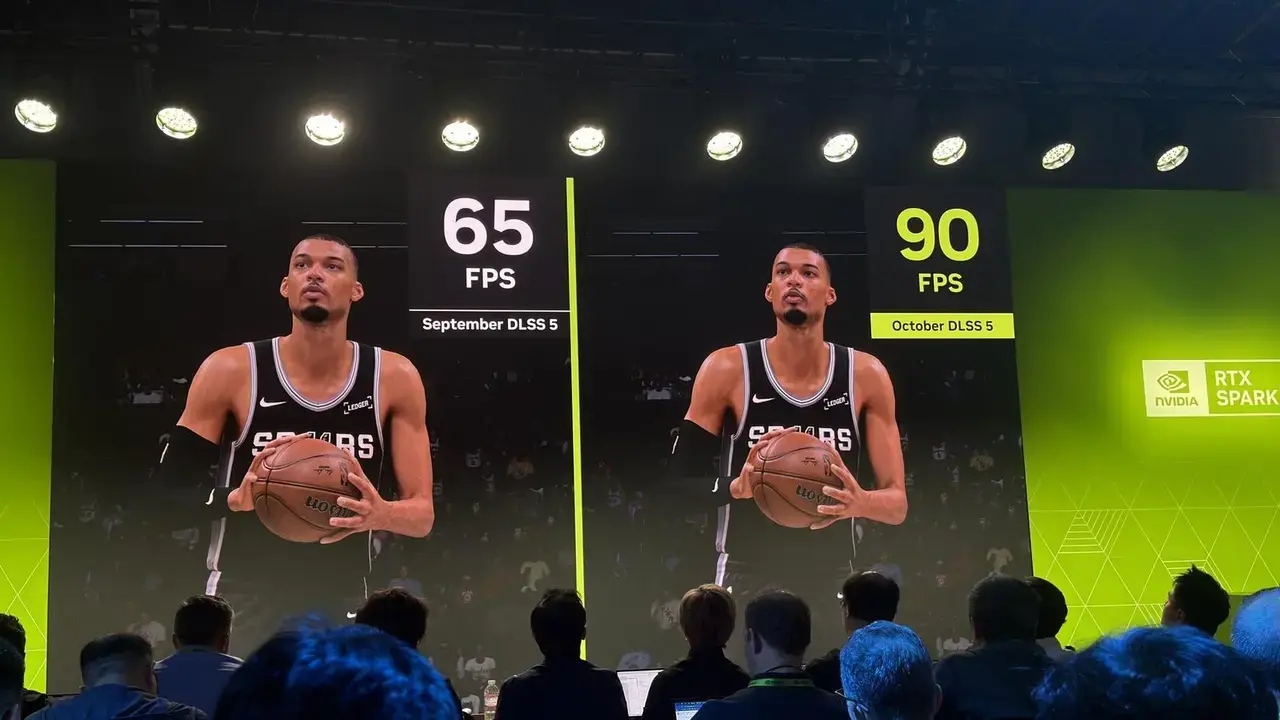
- Performance testing in NBA 2K27 demonstrates a 30 percent frame rate increase from 65 to 90 FPS.
- Hogwarts Legacy will officially adopt the new DLSS 5 technology starting November 5.
Nvidia Reduces the Artificial Intelligence Model Size
The engineering team at Nvidia has focused on streamlining the architecture of DLSS 5 to improve overall efficiency. By lowering the parameter count to 118 million, the developers achieved a 24 percent reduction in total model size. This optimization does more than just lighten the software footprint; it significantly eases the data processing burden on graphics hardware. As a result, users with limited memory capacity can now run top-tier graphical settings with greater stability.
Beyond physical size, the training data for the neural network has undergone refinement. By improving the learning process, the model now generates higher-fidelity images using fewer data points. This leads to smoother transitions between pixels and sharper texture details. Gamers benefit from these improvements by receiving higher visual clarity without placing excessive strain on their system resources.
Gaming Performance Shows Significant Gains
The advantages offered by the DLSS 5 update extend far beyond controlled laboratory environments and into real-world gaming applications. While specific performance gains depend on the individual game engine and optimization levels, initial data remains highly promising. For instance, testing on the title NBA 2K27 reveals a speed improvement exceeding 30 percent compared to the September release of the technology. 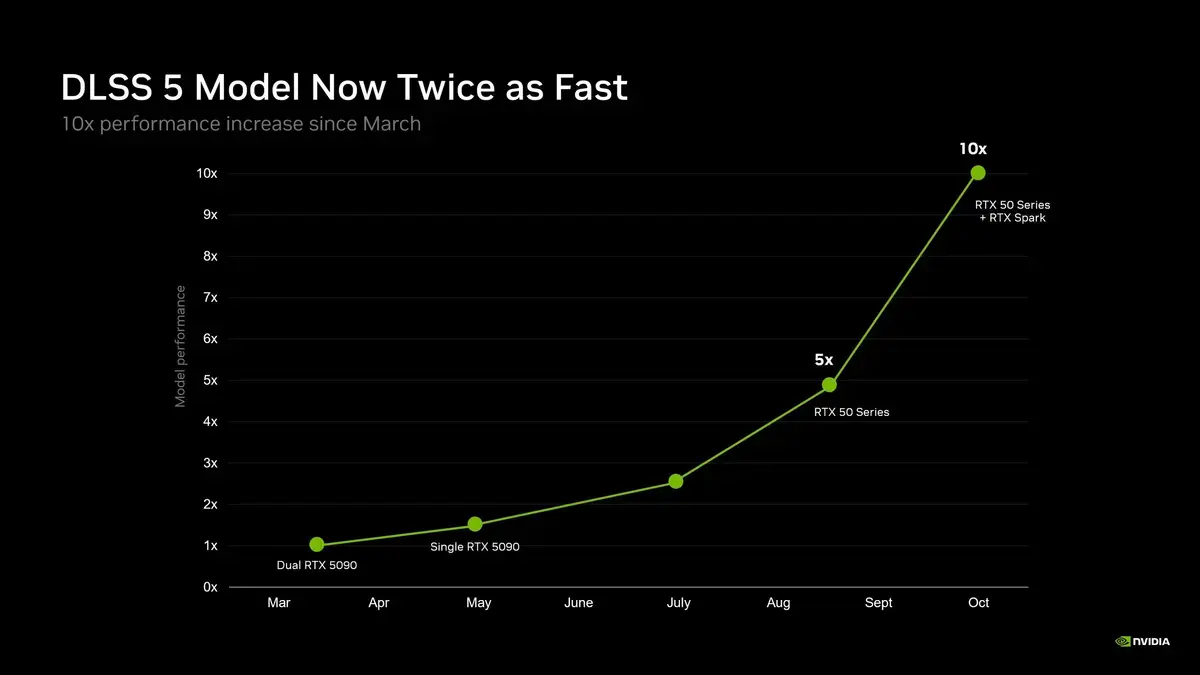 Raising the frame rate from 65 to 90 FPS at 4K resolution provides a massive boost to visual fluidity, offering a distinct advantage in competitive gaming environments.
This performance jump allows users to maximize their existing hardware potential through a simple software update. Nvidia’s AI-powered solutions effectively bypass traditional rendering bottlenecks, ensuring that players extract the full capability of their graphics cards without requiring a physical hardware upgrade.
Popular Games Adopt the New Technology
Nvidia is rapidly expanding the list of titles that support its latest technology. Among the first to integrate these features is the popular RPG, Hogwarts Legacy, which will receive an update on November 5. This patch will not only implement neural rendering but also upgrade all core libraries to ensure optimal system stability.
The developers at Avalanche Software have indicated that they utilized the flexibility of the new software development kit to enhance performance while maintaining the artistic integrity of the game. From the intricate stone textures of Hogwarts castle to the lighting effects within the Forbidden Forest, players will experience increased sharpness in every visual detail.
Advanced Rendering Features Improve Visual Fidelity
Later in November, the title Where Winds Meet will join the growing list of games featuring DLSS 5. The game will move beyond standard frame generation and Super Resolution by adopting 3D-Guided Neural Rendering. This technology analyzes the three-dimensional structure of characters and environments to inform the AI-driven image generation process. The result is a more accurate representation of facial expressions, clothing textures, and natural phenomena. This development proves that artificial intelligence is becoming a defining standard for both performance and visual quality in the gaming industry.
We are eager to hear your thoughts on the performance and efficiency gains Nvidia has introduced with the DLSS 5 update. How do you believe these AI-driven rendering technologies will influence the future of the gaming industry? Please share your perspectives in the comments section below.
Your comment has been submitted,
it will be published after approval.