


OpenAI, a leading company in the artificial intelligence sector, faces enormous financial challenges in the coming years. New forecasts released by HSBC indicate that it will take a long time for OpenAI to turn a profit, with the company expecting hundreds of billions of dollars in expenses by 2030.
OpenAI Will Spend a Fortune
HSBC points out that the AI sector is largely sustained by billions of dollars in loans, leases for data centers that don’t yet exist, and optimistic expectations that the technology will transform everything.
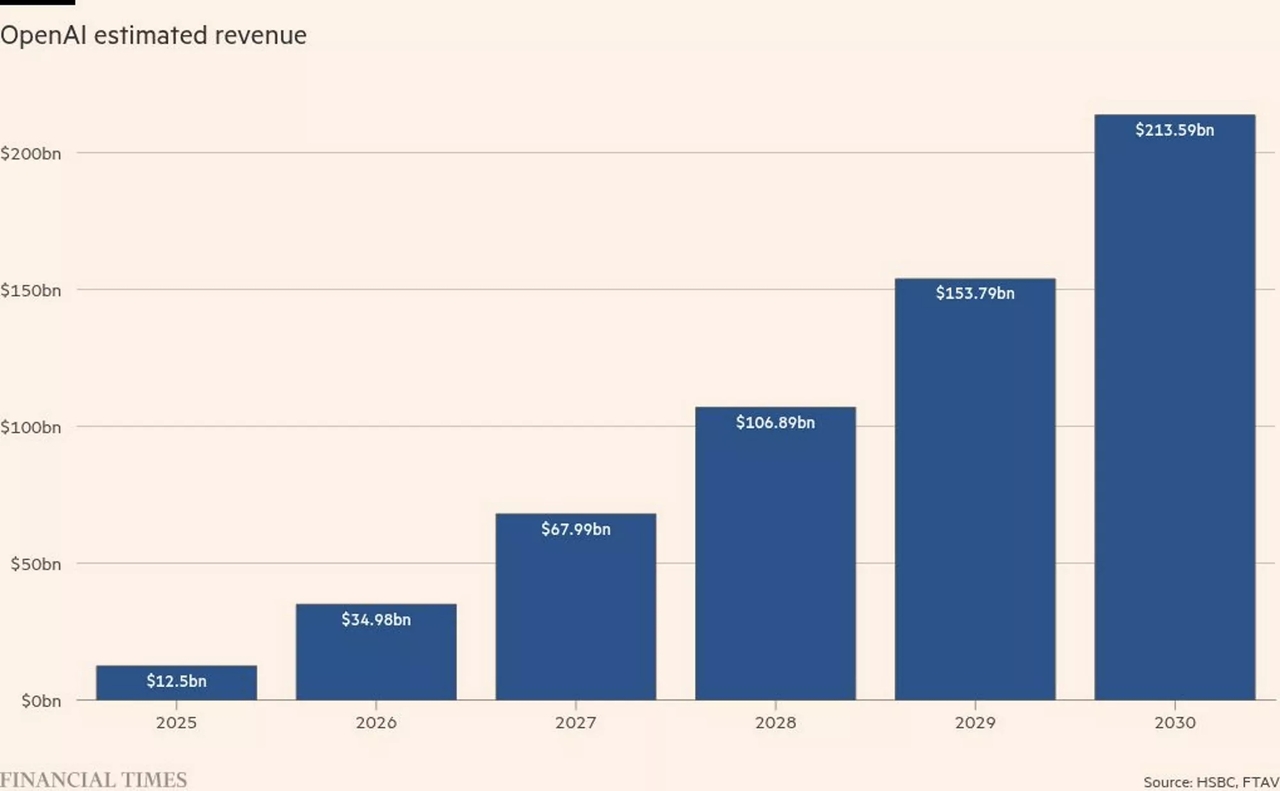
The combination of these financial structures suggests that despite OpenAI’s rapid growth in revenue and popularity, its path to profitability remains challenging and that it will continue to require hundreds of billions of dollars in loans by 2030.
According to HSBC’s estimates, OpenAI will lease a total of $792 billion in data center capacity over the next five years. This figure is estimated to reach $1.4 trillion by 2033.
To offset these enormous leasing costs, the bank assumes that OpenAI’s user base will reach 3 billion by 2030. This user base accounts for approximately 44 percent of the global adult population, excluding China.
Projects indicate that OpenAI will generate 56 percent of consumer AI revenues by 2030, reaching $129 billion in total revenue, thanks to subscriptions, advertising, agency AI services, and other commercial ventures. HSBC notes that while Google won’t be present in this market, Anthropic, xAI, and other players will still be present five years later.
Enterprise AI revenue is expected to reach $386 billion that year, with OpenAI accounting for a 37 percent share of this revenue. Overall, the company is projected to generate $282 billion in cash flow by 2030, but it’s also clear that OpenAI will face a $207 billion financing gap during that period.
Despite all this massive spending and credit needs, HSBC maintains its belief in the long-term technological miracles that AI and machine learning will deliver. The bank states that AI will become an integral part of all manufacturing and vertical processes, enabling significant global productivity gains.