
OpenAI Unveils GPT-5.6 Series: Sol, Terra, and Luna Models

OpenAI officially announced the expansion of its artificial intelligence portfolio today by introducing the GPT-5.6 series, which includes three distinct models: Sol, Terra, and Luna. Developed to meet diverse user requirements and technical demands, these new iterations are scheduled for general release next month, following specific guidance from the United States government regarding safety and deployment protocols. By launching this specialized suite, the company aims to provide developers and enterprises with more granular control over AI-driven workflows, ranging from complex cybersecurity threat detection to efficient, high-volume data management and cost-effective daily operational tasks.
- The GPT-5.6 series includes three new models named Sol, Terra, and Luna designed for varying technical demands.
- The Sol model achieves superior performance in complex command-line workflows according to Terminal-Bench 2.1 benchmarks.
- OpenAI plans to initiate a general public rollout for these artificial intelligence tools within the next month.
- The entire product line prioritizes a balance between enhanced security features and cost-effective operational performance.
The Sol Model Enhances Cybersecurity Standards
The flagship of this new collection is the GPT-5.6 Sol, which is engineered specifically to address the increasing complexity of modern cybersecurity threats. OpenAI has integrated robust safety protocols into this model to prevent misuse while providing unmatched analytical power.
The Sol Ultra version utilizes a multi-agent system to resolve highly intricate technical challenges with precision.
Testing results on Terminal-Bench 2.1 indicate that Sol establishes a new industry benchmark for planning, iteration, and tool coordination. In several critical performance metrics, both the standard Sol and the Ultra variant have demonstrated the capability to outperform existing industry leaders like Claude Mythos 5 and Fable 5, marking a significant step forward for the company’s generative AI roadmap. 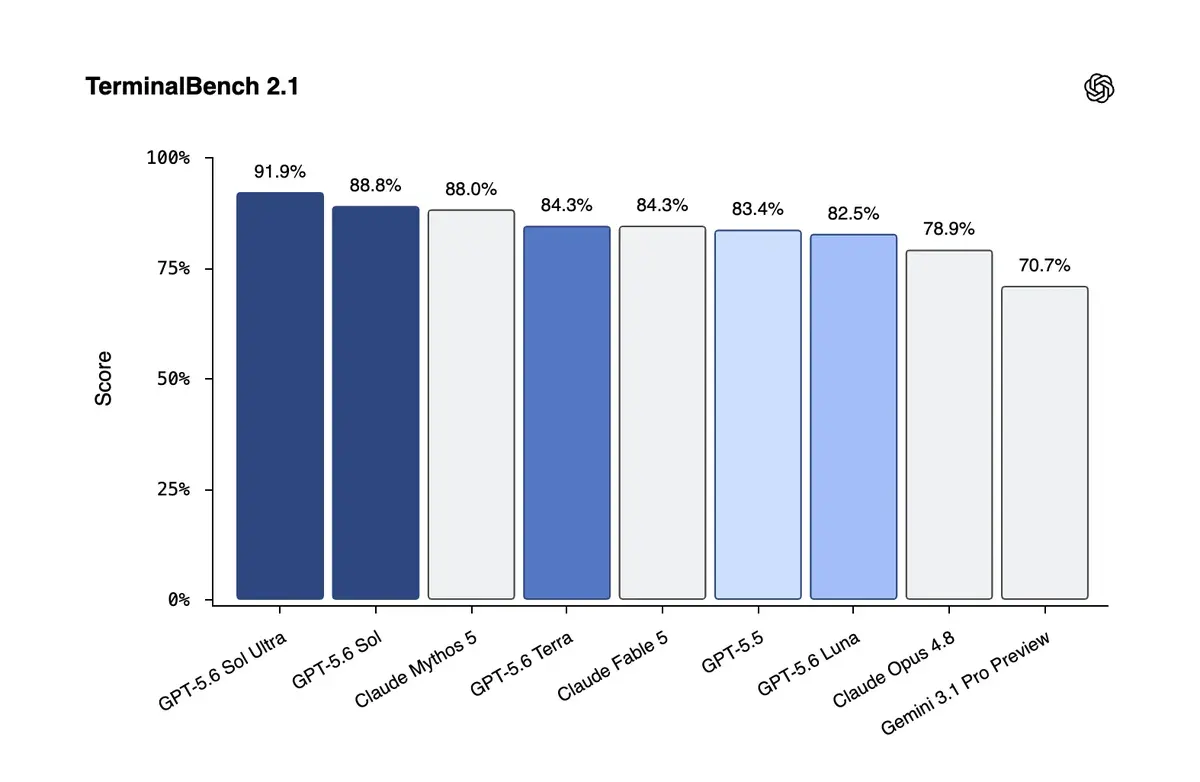
Terra and Luna Address Scaling Requirements
Beyond the high-end capabilities of the Sol series, OpenAI has introduced the Terra and Luna models to fill specific market gaps. Terra is positioned as a mid-tier solution optimized for organizations that require the management of massive, high-volume business workflows without the overhead associated with the most complex models.
For users prioritizing speed and accessibility, the Luna model offers a streamlined experience. It serves as an efficient tool for routine daily tasks, ensuring that users have access to advanced AI without sacrificing performance for cost-effectiveness. 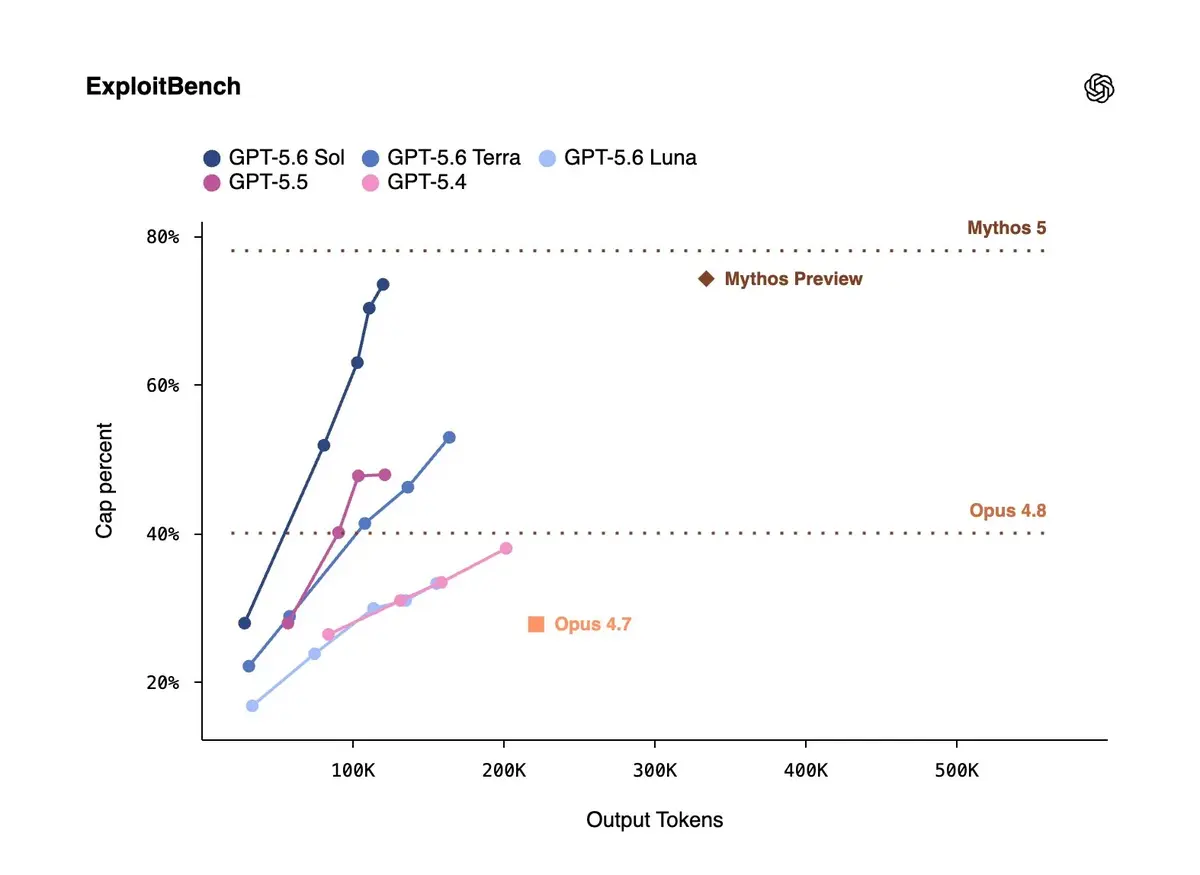
The strategic deployment of these three models ensures that specialized artificial intelligence is now accessible across a wider range of enterprise and personal computing budgets.
By diversifying the GPT-5.6 series, the company expects to see a surge in productivity across various sectors, including automated software development and administrative data processing. As these tools become widely available in the coming weeks, the industry will closely monitor how these models integrate into existing enterprise infrastructures and whether they successfully maintain their performance advantages over competing architectures.
We are eager to hear your perspective on the new GPT-5.6 series; please share your thoughts on whether these specialized models will change your daily workflow in the comments section below.
Your comment has been submitted,
it will be published after approval.