
What Is Multi-GPU and Why It Revolutionizes Artificial Intelligence

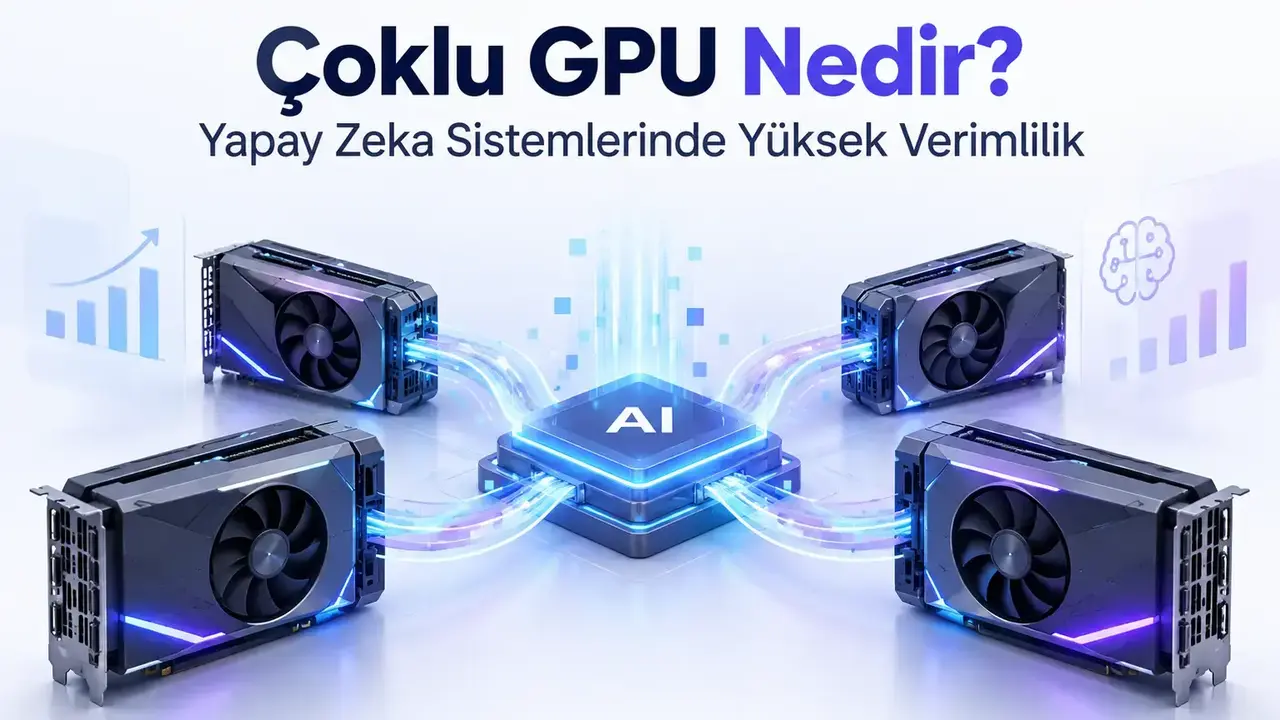
As artificial intelligence models evolve from millions to trillions of parameters, the computational demand has surpassed the capabilities of single-processor hardware. To address this, developers are increasingly turning to multi-GPU architectures to manage complex mathematical operations and massive datasets efficiently. This technology involves linking two or more graphics processing units to work in a coordinated, parallel fashion, effectively acting as the backbone for modern AI infrastructure. By distributing intense workloads across multiple processors, researchers and engineers can now execute training tasks that were previously impossible, ensuring that high-performance computing remains viable in an era of exponential data growth.
- Multi-GPU systems divide massive computational tasks into smaller segments to be processed simultaneously by multiple hardware units.
- Parallel processing significantly reduces the time required for training complex large language models and performing real-time data analysis.
- Distributed GPU architectures provide enhanced system reliability by ensuring that operations continue even if a single unit encounters a failure.
- Scalable infrastructure allows organizations to expand their computational resources incrementally based on evolving project requirements.
How Multi-GPU Systems Function Within Modern Computing
At its core, a multi-GPU setup is designed to overcome the physical memory and processing limitations inherent in standalone hardware. When a model’s parameters exceed the capacity of a single card, the workload is partitioned. Each GPU handles a specific segment of the operation, and their results are synchronized to produce a cohesive output. This collaborative approach ensures that computational bottlenecks are minimized, allowing for the handling of significantly larger datasets than were once feasible.
Why Multi-GPU Architectures Are Essential for AI Projects
The primary advantage of employing multiple GPUs lies in time efficiency. Tasks that once required days of continuous processing can often be completed in a matter of hours or even minutes. Beyond speed, these systems offer a degree of modularity that is critical for large-scale enterprise environments. As a company’s data needs grow, they can scale their infrastructure by adding more hardware to the existing cluster, providing a cost-effective path for long-term expansion.
Where Multi-GPU Infrastructure Is Currently Applied
The application of multi-GPU systems spans across numerous high-demand sectors. Leading technology firms utilize massive clusters containing thousands of GPUs to train sophisticated neural networks. Meanwhile, the film industry leverages these architectures to render complex 3D visual effects that require immense graphical fidelity. Financial institutions also rely on these setups to execute real-time risk assessments and high-frequency trading algorithms, where every millisecond of calculation matters.
How Scientific Research Benefits From Parallel Processing
Beyond commercial applications, scientific institutions are leveraging multi-GPU power to solve some of the world’s most complex problems. From climate modeling to molecular simulations in drug discovery, the ability to process multiple variables simultaneously is essential. In the healthcare sector, this technology is being used to accelerate diagnostic imaging and patient data analysis, while e-commerce platforms utilize these systems to power real-time recommendation engines. By adopting the right software frameworks and maintaining rigorous performance monitoring, organizations can maximize their hardware investment and push the boundaries of current innovation.
How do you foresee the evolution of hardware impacting the future of generative AI development in your own industry? Please share your thoughts or technical experiences in the comments section below.
Your comment has been submitted,
it will be published after approval.