
WhatsApp Beta Introduces New Artificial Intelligence Agents Integration


WhatsApp has officially commenced testing a transformative new feature in its Android beta version 2.26.35.3, allowing users to interact directly with third-party artificial intelligence agents within the messaging application. By enabling users to configure these AI bots through specialized chat interfaces, WhatsApp aims to streamline complex digital tasks without requiring users to navigate away from the platform. This rollout, currently limited to a select group of beta testers, marks a significant shift in how the Meta-owned service manages external integrations. As the company prepares for a wider release, users can now manage up to five distinct AI assistants directly through their account settings.
- WhatsApp beta version 2.26.35.3 allows users to connect up to five third-party artificial intelligence agents via API keys.
- Interactions with these integrated AI agents are not protected by end-to-end encryption protocols.
- The current implementation restricts the use of artificial intelligence agents to individual chat sessions only.
- Users maintain control over their agent configurations, including the ability to add, update, or remove them at any time.
Artificial Intelligence Agents Operate Within the Application
Unlike standard chatbots, the new AI agents integrated into WhatsApp possess the capability to interpret complex user instructions and execute tasks on their behalf. Previously, accessing such sophisticated automation required users to switch between different applications or rely on external web browsers. By centralizing these tools, WhatsApp simplifies the user experience, allowing individuals to assign names and profile pictures to their selected agents. This seamless integration ensures that users remain within their familiar messaging environment while leveraging the power of advanced automation technologies. 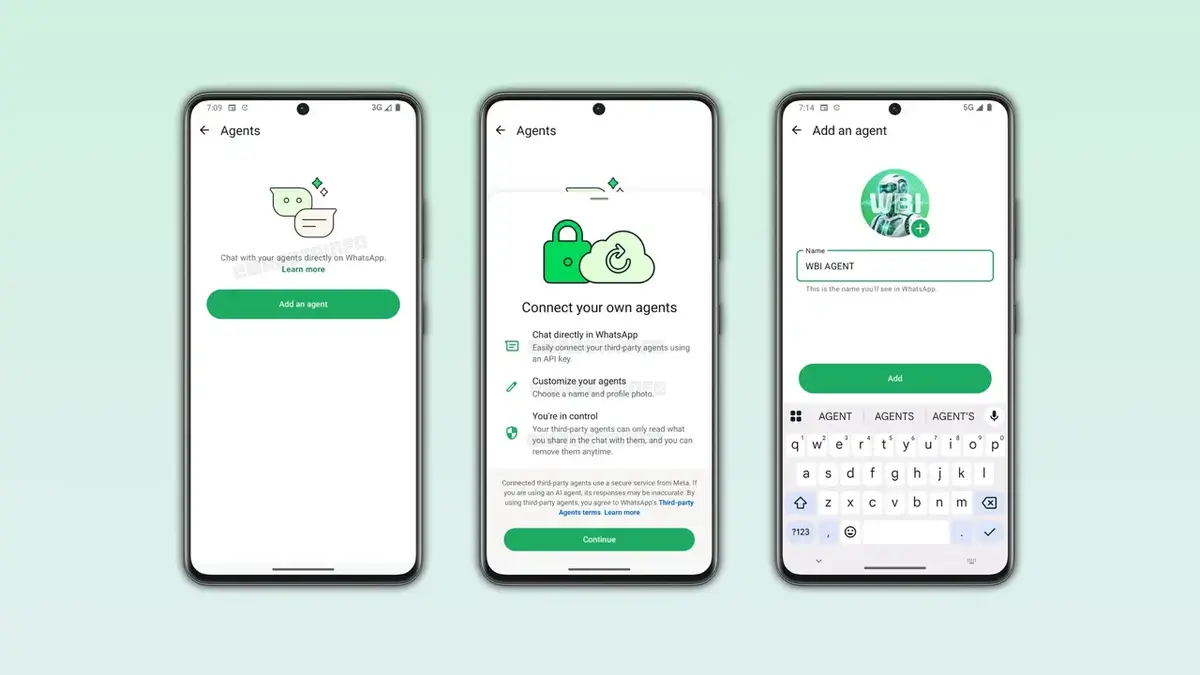
API Keys Facilitate Secure Connections
The technical architecture of this feature relies on the generation of unique API keys for every agent. Users are required to generate these keys within the WhatsApp settings menu and input them into the respective developer platforms to finalize the link. Once a connection is successfully established, the agent becomes accessible through a dedicated chat window. Should a user encounter connectivity issues or require a security update, the platform provides an intuitive interface to regenerate these credentials, ensuring that the connection remains stable and functional throughout the usage period.
Privacy Standards are Explicitly Defined
WhatsApp has maintained a transparent stance regarding the privacy implications of this feature. Because these AI agents are third-party entities, the conversations held with them do not benefit from the platform’s standard end-to-end encryption. Consequently, developers may have access to the message content shared within these specific interactions. However, the company guarantees that these agents cannot access a user’s private media, contacts, or other personal encrypted chats. Users are advised to exercise caution and avoid sharing sensitive personal information when interacting with these automated assistants to maintain their digital security.
Agent History Remains Accessible After Removal
Managing these integrations is designed to be user-friendly, as participants can modify or delete their active agents through the settings panel at any time. When a user terminates the connection, the active messaging stream is halted; however, the previous conversation history remains viewable for reference. Should the user decide to reconnect with an agent in the future, they will need to generate a fresh API key to initiate the process again. This persistent history allows users to track past interactions while ensuring that inactive agents do not continue to drain resources or receive new data inputs.
How do you anticipate these new artificial intelligence agents will reshape your daily communication routines, and which specific tasks are you most excited to automate within your chats? We invite you to share your thoughts and questions in the comments section below.
Your comment has been submitted,
it will be published after approval.