
Windows 10 Users Face Serious Security Risks Today

Eight months after Microsoft officially ended mainstream support for the Windows 10 operating system, cybersecurity analysts are issuing urgent warnings regarding the growing digital exposure of its users. A comprehensive study by the cybersecurity firm Lansweeper has revealed that devices running Windows 10 harbor an average of 1,903 active vulnerabilities, a figure that highlights the escalating danger of remaining on outdated software. In contrast, systems updated to Windows 11 show significantly lower risk profiles, with only 652 identified vulnerabilities. This disparity underscores the urgent necessity for organizations and individual users to prioritize system migrations to maintain a secure computing environment.
- Windows 10 devices contain nearly three times as many security vulnerabilities as Windows 11 systems.
- Approximately 16.9 percent of enterprise-level devices continue to operate on the unsupported Windows 10 platform.
- Cybercriminals utilize patch-diffing techniques to exploit unpatched security flaws in older operating systems.
- Insurance companies frequently reject claims due to the use of outdated, non-compliant software.
Vulnerability Gaps Expose Critical Systems
The research data indicates that the older operating system is roughly three times more susceptible to malicious exploitation compared to its successor. As Microsoft continues to roll out security patches for newer versions, the gap between the two platforms grows wider, leaving Windows 10 users increasingly isolated from essential protections. 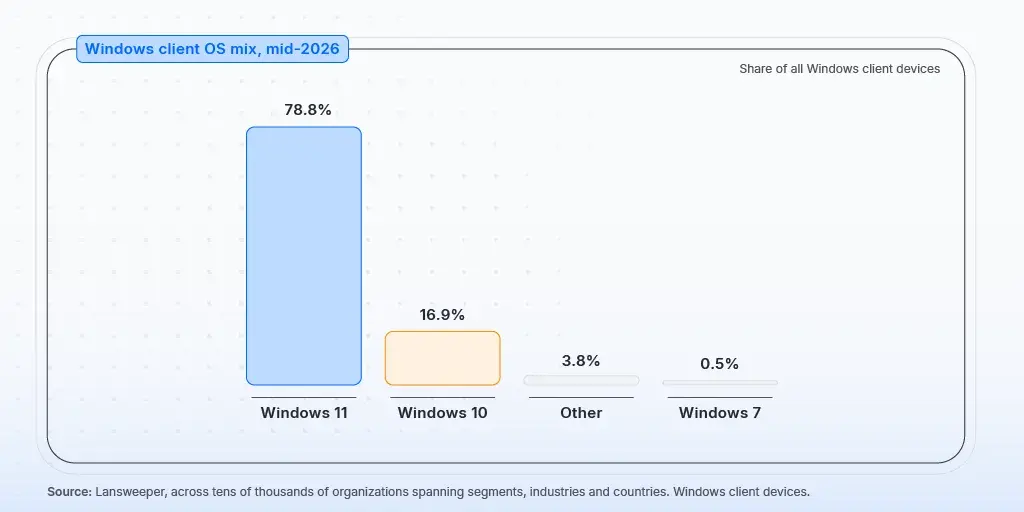
More than 66 percent of existing vulnerabilities in Windows 10 are classified as high or critical threat levels.
Despite these clear warnings, a significant portion of the global infrastructure remains tethered to the legacy system. Approximately 16.9 percent of corporate devices still rely on Windows 10, with particularly high adoption rates in sensitive sectors such as healthcare, retail, and small-to-medium enterprises. This widespread usage creates a massive target for threat actors looking to capitalize on known weaknesses.
Attackers Exploit Reverse Engineering Methods
Sophisticated cybercriminals employ a technique known as patch-diffing to compromise vulnerable machines. By analyzing security updates released for Windows 11, attackers can identify the specific flaws that have been corrected in the new system but remain unpatched in Windows 10. This reverse engineering process allows malicious actors to weaponize these gaps with alarming speed and precision, putting organizations that fail to upgrade at constant risk of data breaches and ransomware attacks.
Maintaining outdated software now leads to significant financial and legal repercussions for businesses.
Financial Consequences Affect Insurance Coverage
Beyond the immediate risk of cyber-attacks, the decision to continue using Windows 10 carries heavy economic weight. 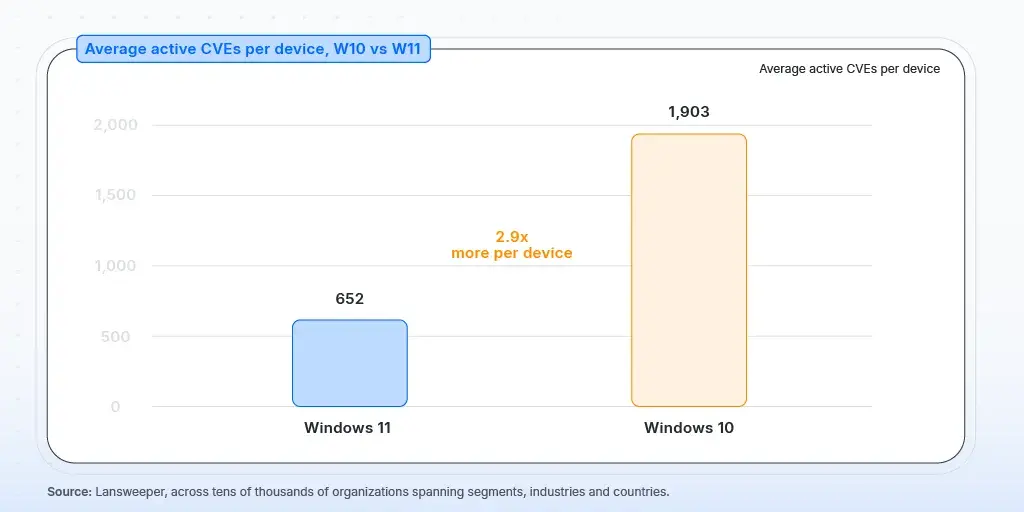 Insurance providers have become increasingly stringent regarding digital hygiene. Recent data shows that companies failing to maintain updated software may have their cyber-insurance claims denied, with approximately 25 percent of such requests currently being rejected due to negligence in system maintenance. This shift in the insurance landscape proves that the cost of inaction extends far beyond mere technical instability, potentially threatening the financial viability of businesses that refuse to transition to supported, modern platforms.
We are interested in hearing your perspective on this critical transition; are you currently migrating your systems, or are you still relying on Windows 10 for your daily operations despite the risks?
Your comment has been submitted,
it will be published after approval.