
Cybersecurity Expert Transforms Smart Bulb Into Offline Digital Library

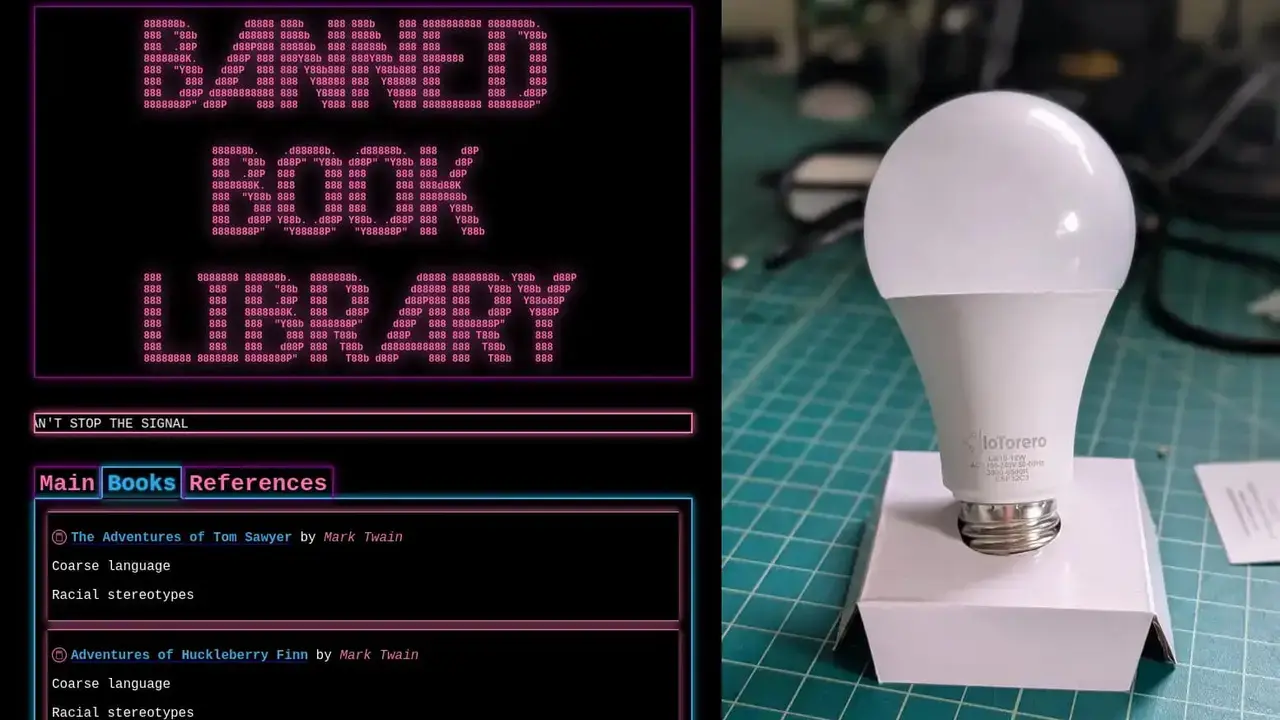
Cybersecurity expert Richard Osgood has successfully engineered a unique, decentralized digital library by repurposing an ordinary smart bulb to function without internet access. Operating out of the United States, Osgood utilized an ESP32C3 microcontroller and Tasmota firmware to convert the mundane lighting device into a localized Wi-Fi hotspot that provides e-book access. This innovative project demonstrates how common household smart technology can be repurposed into a secure, independent server for content dissemination. By leveraging the device’s hardware, Osgood has created a functioning digital repository that challenges conventional ideas about the limitations of smart home infrastructure.
- The system facilitates offline file sharing through a localized Wi-Fi network that requires no internet connection.
- The device allocates 2 MB of its total 4 MB internal memory specifically for hosting text-based literary works.
- The hardware architecture ensures an anonymous reading experience by eliminating the need for user registration or cloud-based services.
- System updates are performed wirelessly via over-the-air (OTA) protocols to maintain operational efficiency.
The Technical Modifications Enable Dual Functionality
At the heart of this project lies the ESP32C3 microcontroller, which allows the smart bulb to perform its primary lighting function while simultaneously operating as a dedicated web server. 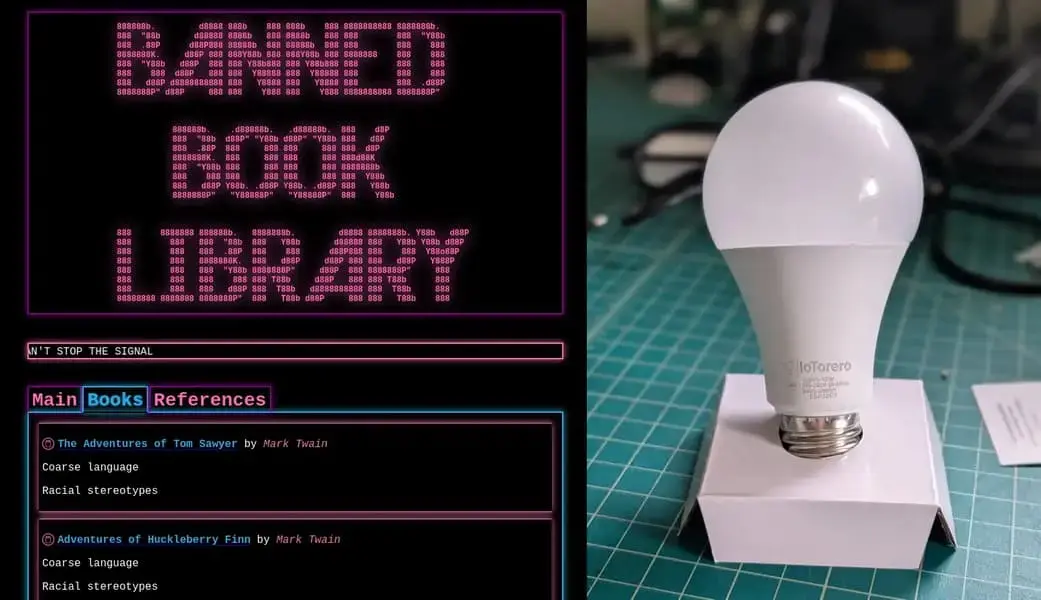
Osgood initially explored the possibility of integrating a microSD card slot to expand storage capacity for a larger library. However, due to the severe physical space constraints inherent in the bulb’s chassis, this hardware modification proved impractical.
Instead, the developer turned toward sophisticated software optimization to maximize the utility of the existing internal memory. This approach successfully carved out a digital space large enough to host dozens of texts.
This project proves that creative software engineering can effectively overcome significant physical hardware limitations.
Operational Advantages Focus on User Privacy
The primary benefit of this system is its total independence from external network dependencies. When users connect to the Wi-Fi signal emitted by the bulb, they are granted immediate access to the hosted book list through their web browsers.
Because the data transmission occurs entirely on a local level, there is no risk of personal information being harvested or transferred to third-party cloud servers. This design architecture prioritizes user anonymity and data sovereignty above all else.
Decentralized networks foster a new environment of freedom for the exchange of digital information.
Future Developments Seek Enhanced Performance
Richard Osgood acknowledges that the current iteration of the system is best suited for small, text-based files. While high-resolution images or large media files would quickly exceed the current memory capacity, the design remains forward-thinking.
The inclusion of OTA (Over-the-Air) update support ensures that the firmware can be refined and optimized for better performance in the future. This “cyberpunk” inspired library serves as a compelling proof-of-concept for the potential of household gadgets.
It suggests that smart devices are no longer confined to simple utility tasks and can instead evolve into robust, localized knowledge hubs.
How do you think the repurposing of everyday items for offline data sharing will shape the future of digital access? Would you consider transforming your own smart home devices into independent information hubs? Share your thoughts in the comments section below.
Your comment has been submitted,
it will be published after approval.