
Sacramento Police Use Drone to Disarm Suspect in Operation

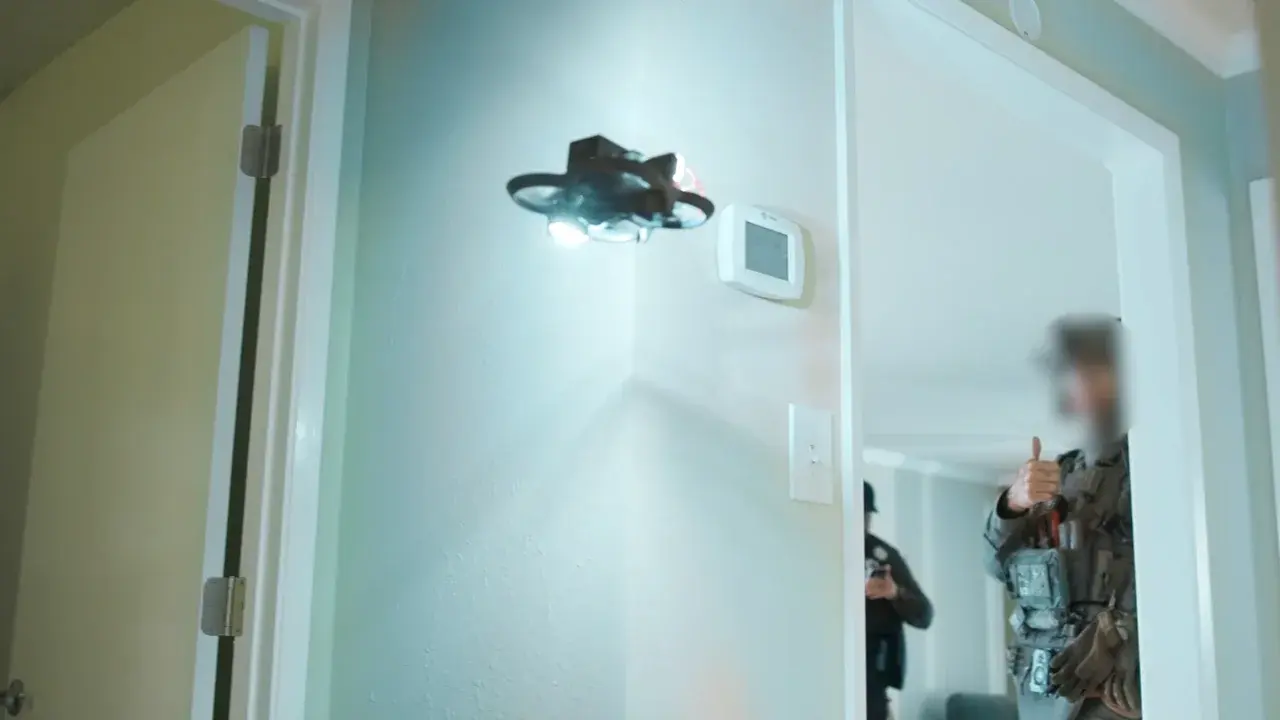
In a pioneering tactical maneuver on June 22, 2026, the Sacramento County Sheriff’s Office successfully utilized drone technology to disarm a suspect who refused to surrender. During the high-stakes operation, a specialized quadcopter drone equipped with a magnetic device approached an unresponsive suspect hiding in a garage and safely removed a knife from their possession. This incident marks a significant milestone in law enforcement history, as authorities believe it is the first time a drone has been used in such a capacity to neutralize an armed threat without direct human intervention, potentially preventing a violent confrontation.
- Sacramento deputies used a magnet-equipped drone to disarm a knife-wielding suspect inside a garage.
- Law enforcement officials claim this innovative tactic successfully mitigated risks to both officers and the suspect.
- Over 1,800 police agencies across the United States currently utilize drone technology for various operational tasks.
- Privacy advocates express significant concerns regarding the expanded use of aerial surveillance by local law enforcement.
Tactical Operations are Evolving Through Robotics
The operation unfolded after the Sacramento County Sheriff’s Office identified the suspect’s location and established a perimeter with SWAT teams. Following an initial aerial reconnaissance sweep, a second drone modified with a custom magnetic attachment was deployed into the structure. The recorded footage shows the drone hovering over the individual before successfully extracting the weapon. Sheriff Jim Cooper highlighted the success of the mission, noting that the technology provided a non-lethal alternative that prioritized the safety of all parties involved.
This innovative deployment of remote technology may change standard police protocols for handling armed suspects.
Public Debates are Emerging Regarding Drone Usage
While the operation was hailed as a tactical success by department leadership, the methodology prompted immediate scrutiny from industry experts and the public. Critics pointed out that because the suspect appeared to be unresponsive during the interaction, the level of danger and the difficulty of the maneuver were less pronounced than in a volatile, active confrontation. Furthermore, the incident has reignited broader discussions regarding the normalization of police drones in urban environments.
Law Enforcement Agencies are Increasing Drone Inventories
Across the United States, the adoption of drone technology by police departments is accelerating at an unprecedented rate. According to data provided by the Electronic Frontier Foundation, more than 1,800 law enforcement agencies now integrate unmanned aerial vehicles into their daily operations for surveillance and situational awareness. The Sacramento County Sheriff’s Office maintains a diverse fleet, including multi-rotor systems from DJI and Autel, alongside fixed-wing aircraft from Event 38, with plans for further expansion following recent budget approvals.
The rapid integration of aerial surveillance systems raises significant questions about civil liberties and data privacy.
Privacy Concerns are Growing Among Advocacy Groups
Despite the operational advantages, organizations like the Electronic Frontier Foundation continue to monitor the implications of this expansion. The ability of these drones to record high-definition footage of private residences and restricted areas creates complex challenges for data security and individual privacy rights. As departments continue to incorporate these devices into their standard toolkits, the balance between public safety and the right to privacy remains a contentious issue in modern policing.
We value your perspective on this evolution of police technology; do you believe the use of drones for tactical disarming is a necessary advancement or an overreach of surveillance, and we invite you to share your thoughts in the comments section below.
Your comment has been submitted,
it will be published after approval.